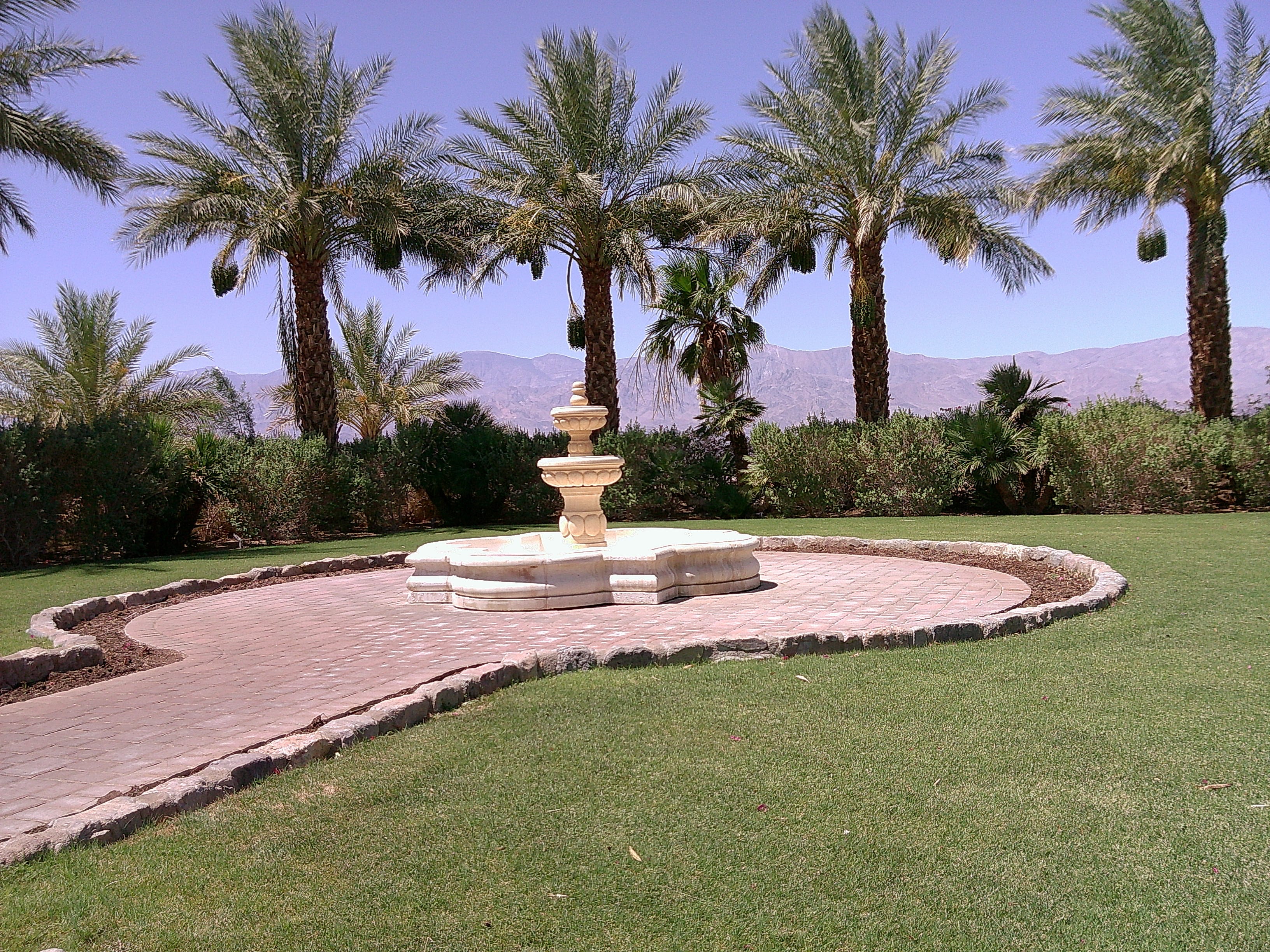
A Love Letter to the Inn at Death Valley
A photo essay highlighting my favorite pool inside a National Park - which may just be an unsuspecting biohacking tool

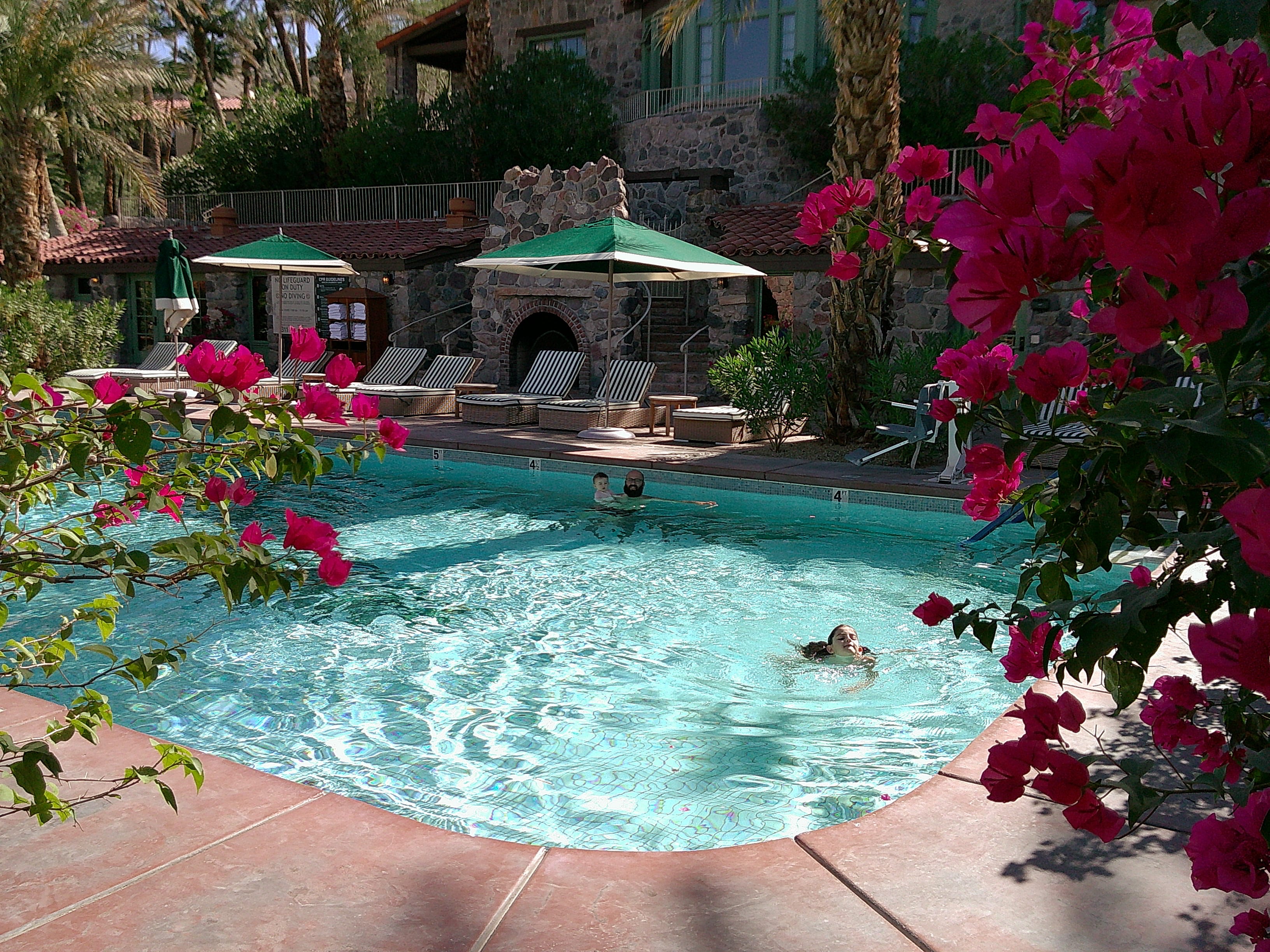
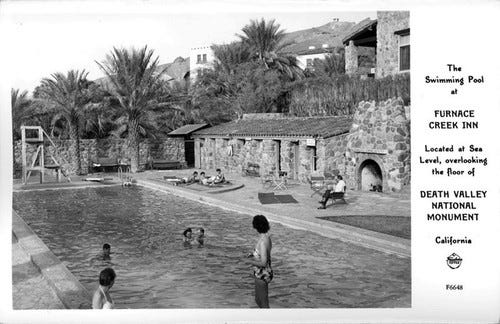
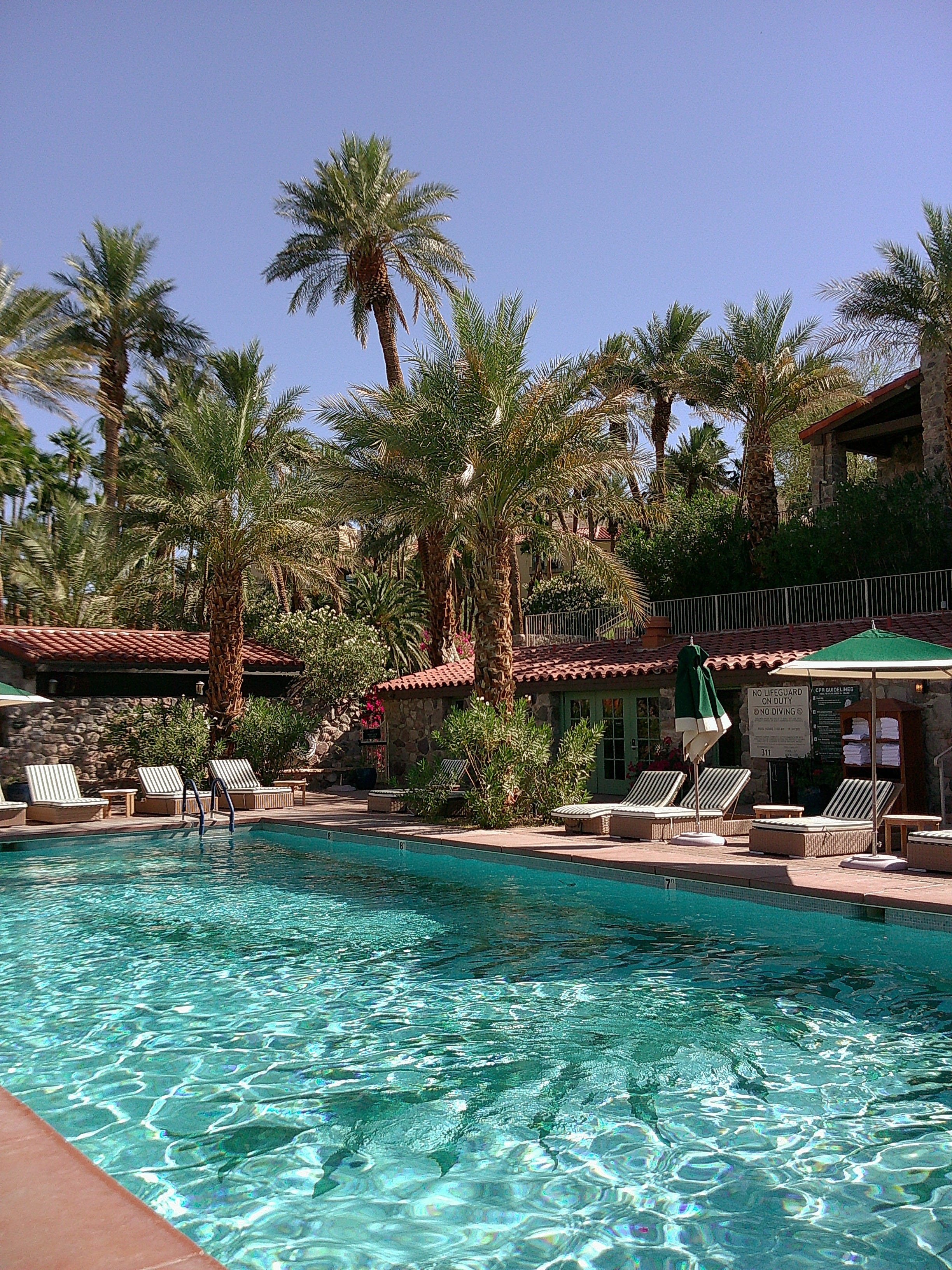
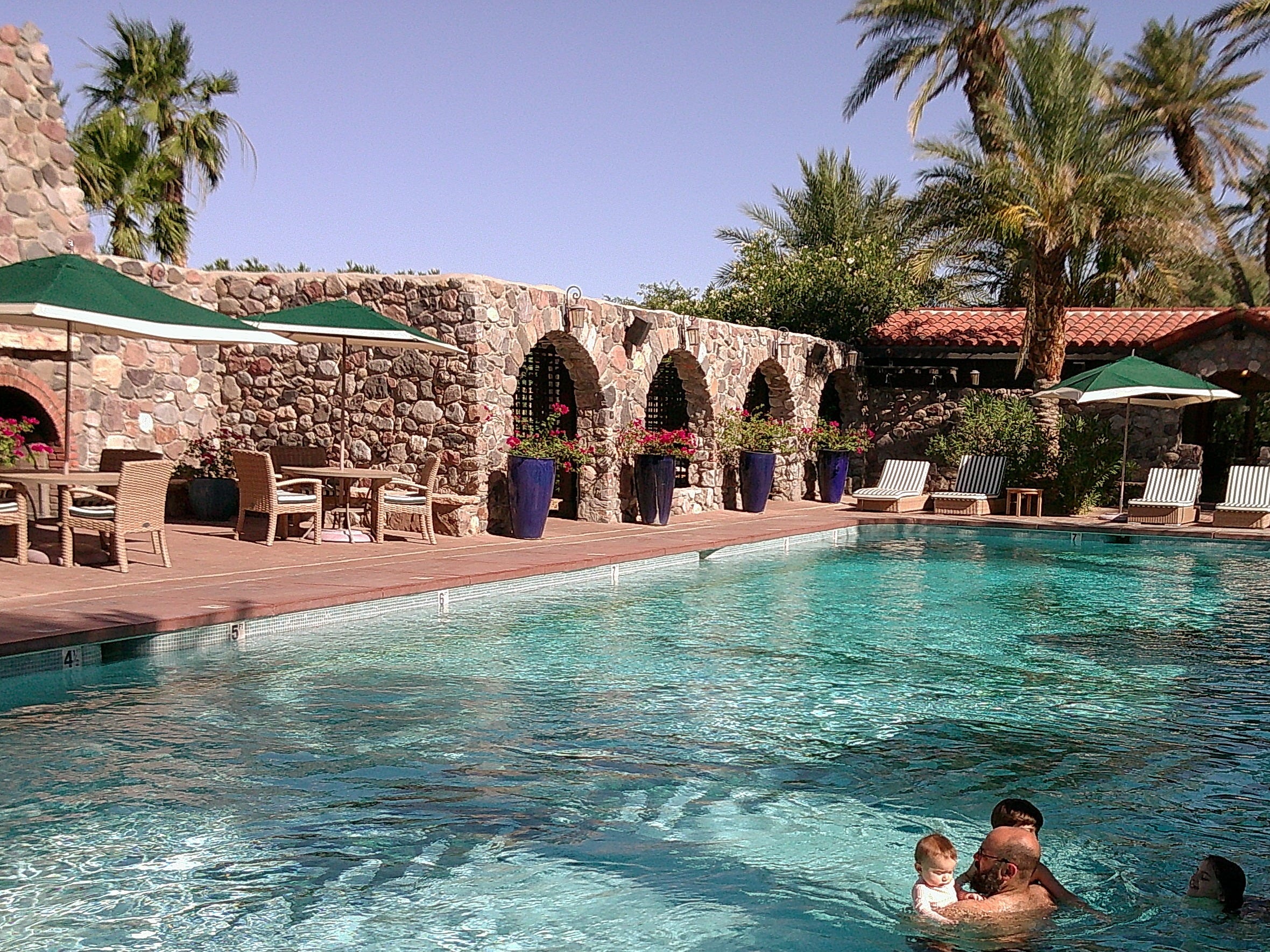
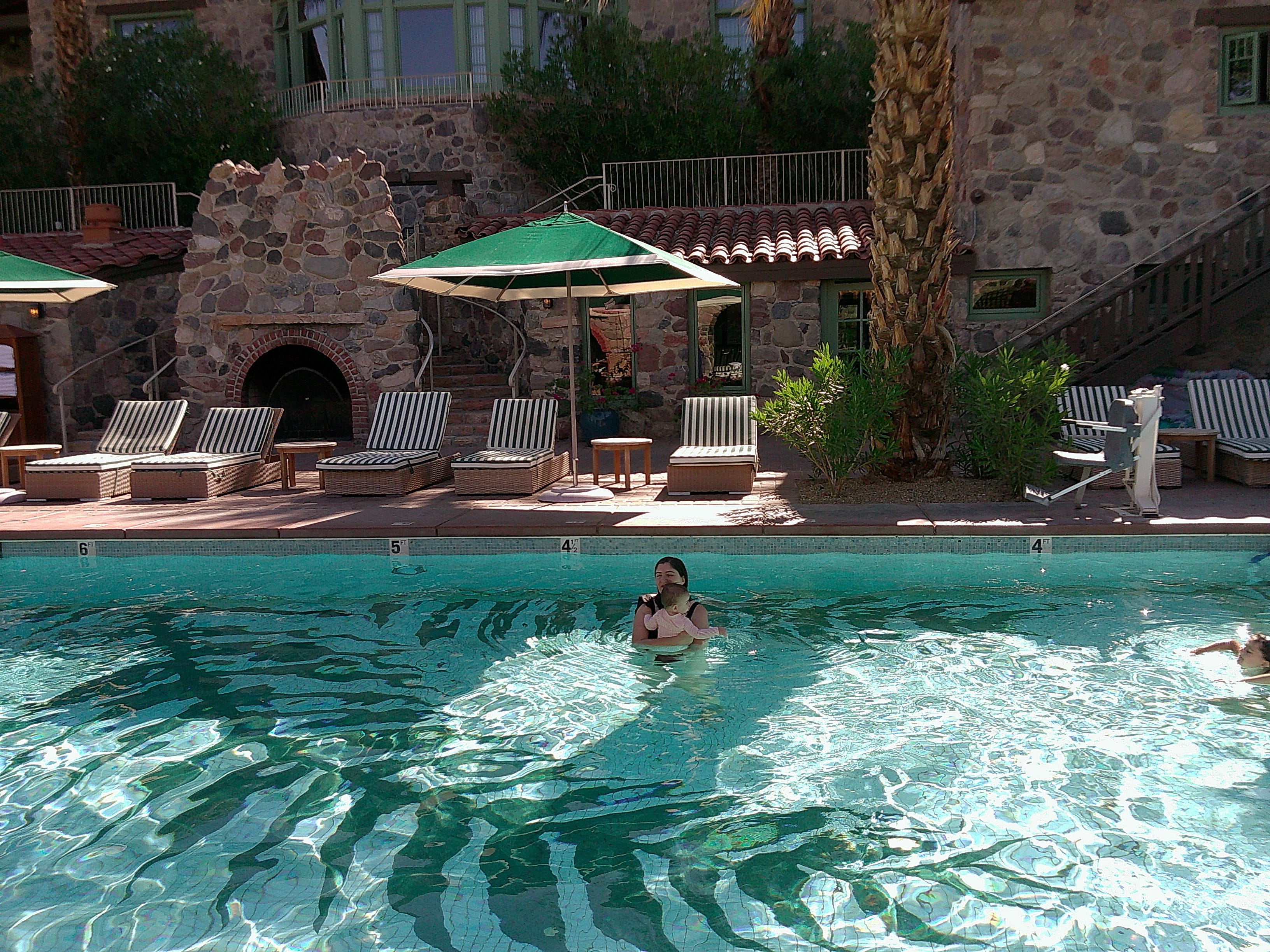
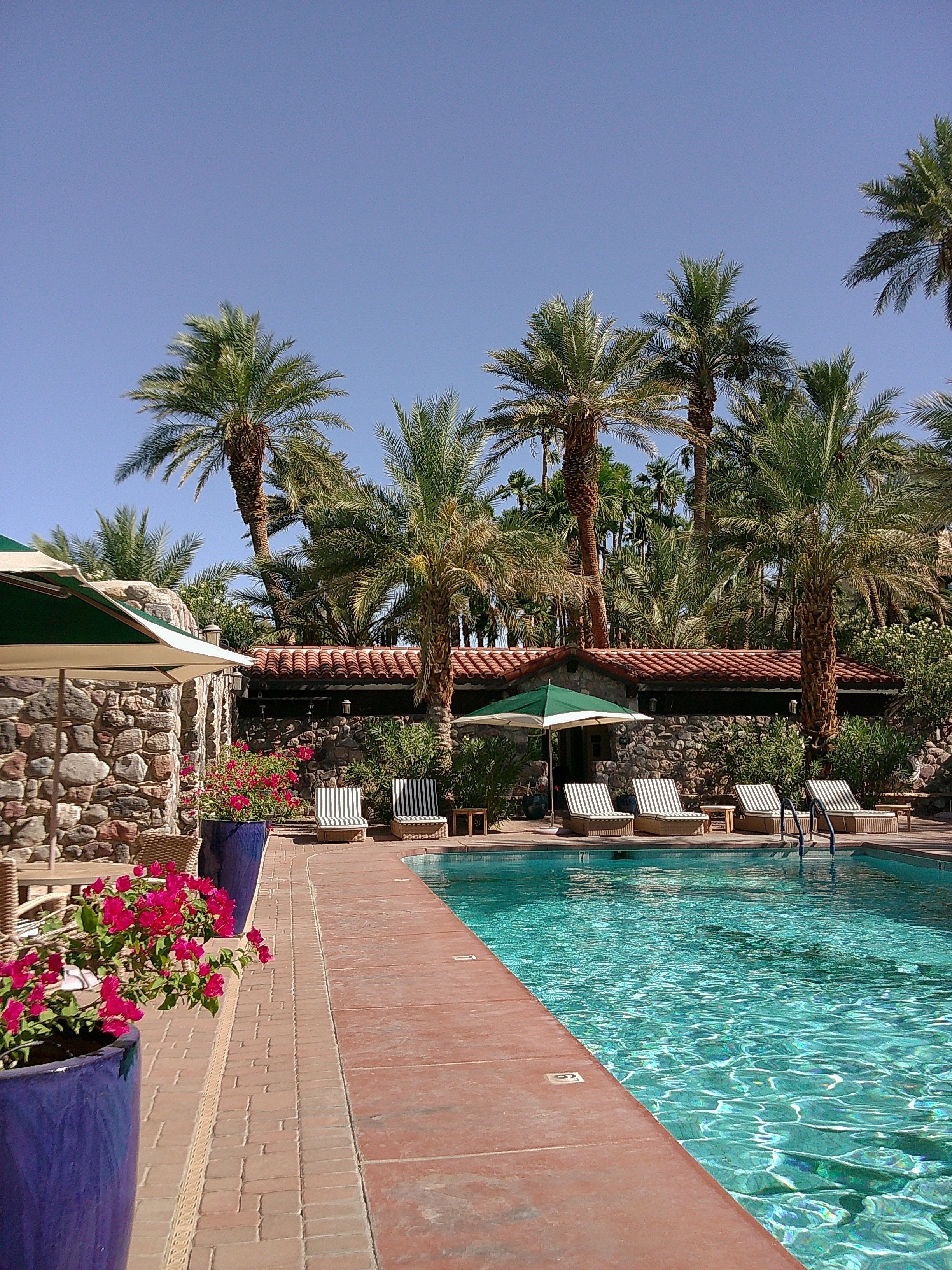
The Inn at Death Valley has been on my bucket list for years, ever since I saw pictures of the 1920s era pool and learned that it remains at a constant 87 degrees, fed by an on-site mineral spring. Because the pool is constantly replenished with fresh water from the mineral-rich underground spring, there is no need to chemically treat it.
We arrived to Death Valley after a short 7-hour drive from Sedona, with 3 tired kids, during a dust storm so severe we were getting blaring emergency alerts on our phones warning us of potential white out conditions and urging us to pull over and wait it out.
Capitalism & Glitter is a reader-supported publication.
If you’d like to support us and receive articles like this one directly in your inbox, please consider a paid subscription.
Paid subscribers receive:
Full-length weekly cultural deep dives
The Edit newsletter, and access to all community chats
The entire archive of content on health and wellness, secret societies, and more (75+ articles)
Discounts on merch and upcoming ebooks
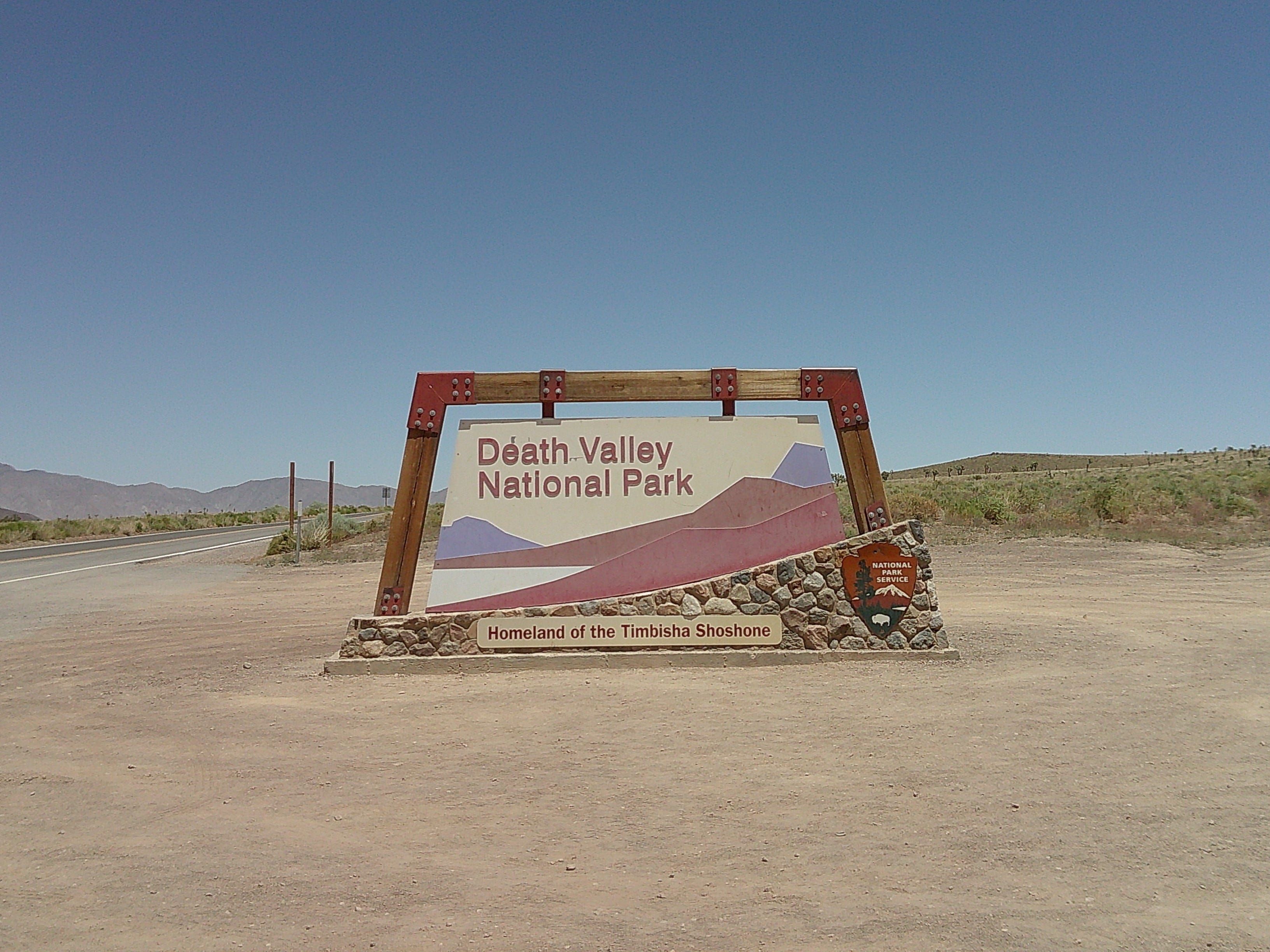
Fortunately, we were minutes from our hotel when the storm got really bad.
With the need to stay indoors during the dust storm, we decided our first stop would be the Ice Cream Parlor at the Ranch at Death Valley. It’s styled like an old-timey soda fountain. Unfortunately, as soon as we walked through the doors, the power went out.
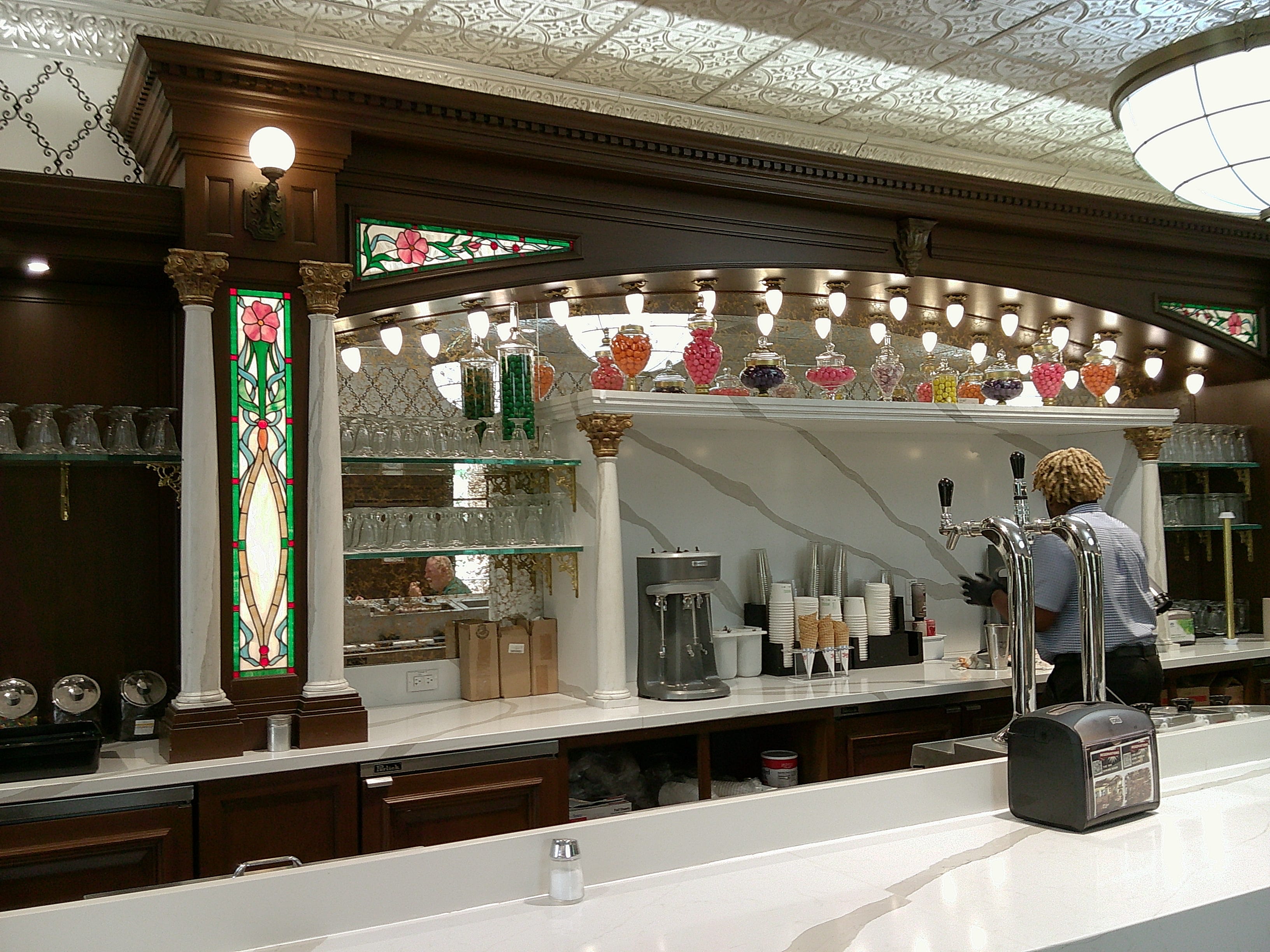
Our family shared a hot fudge sundae, then went to our hotel to check in.
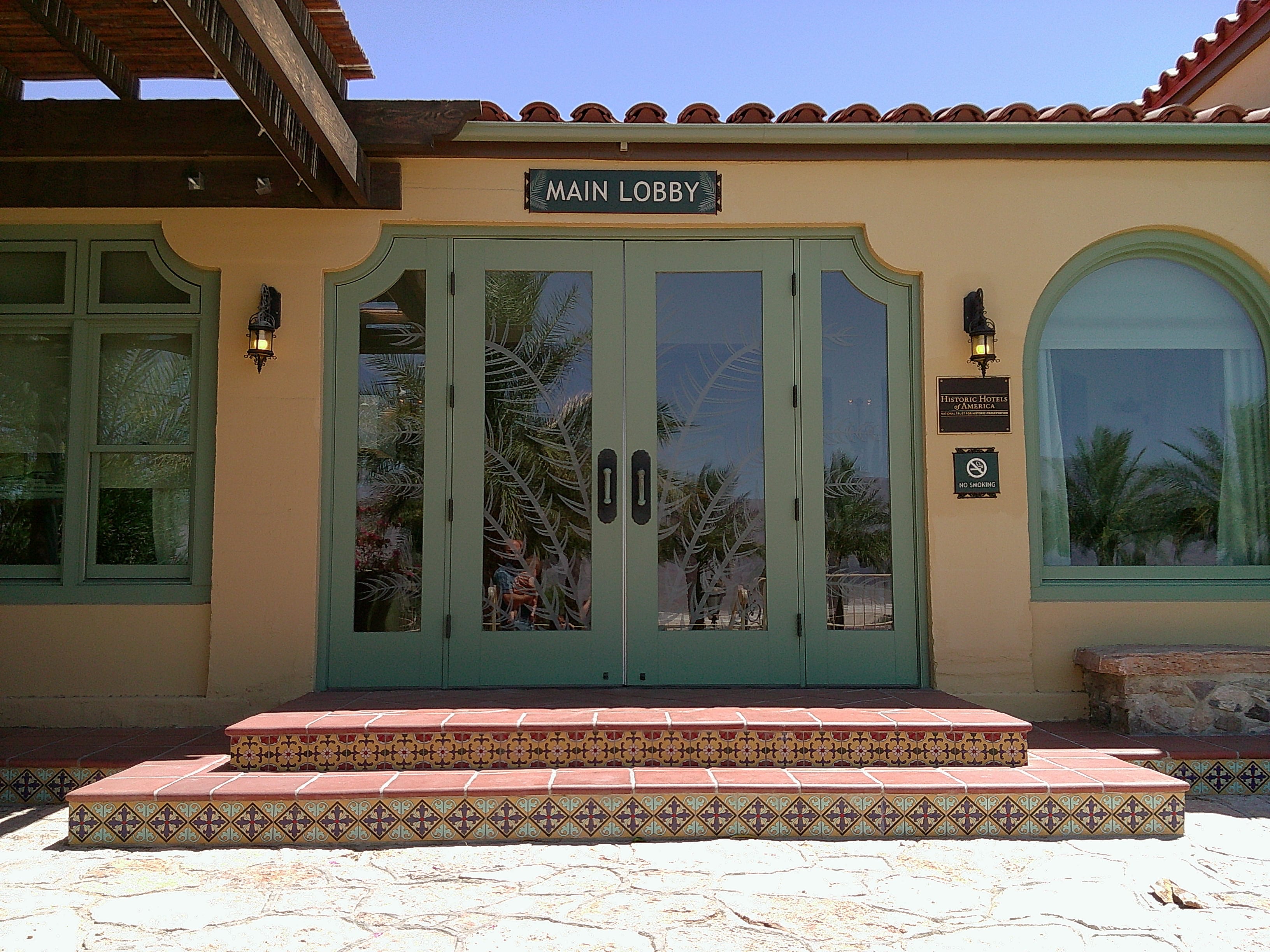
This area of Death Valley was established as Furnace Creek in 1890 by Francis Smith, a.k.a. the Borax King, who produced the famous 20 Mule Team Borax household cleaning product. Furnace Creek was the basecamp for the Pacific Coast Borax Company.
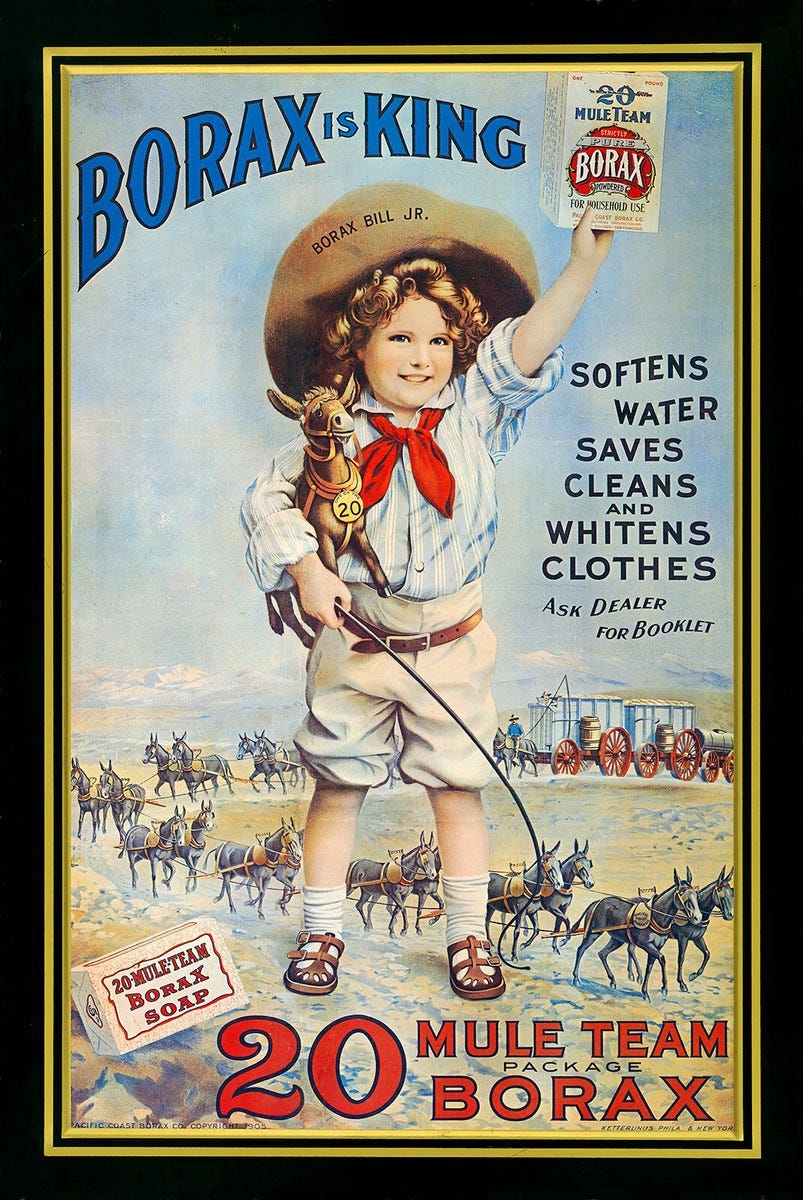
Borax is a naturally occurring mineral composed mainly of sodium, boron, oxygen, and water, and large deposits of it were found in the middle of what is now Death Valley National Park.
The Borax King saw a need — the largest borax deposits were far away from railroads — and provided a very marketable solution, using teams of 18 mules and 2 horses attached to a wagon to bring the borax out of the desert and into the hands of the consumer.
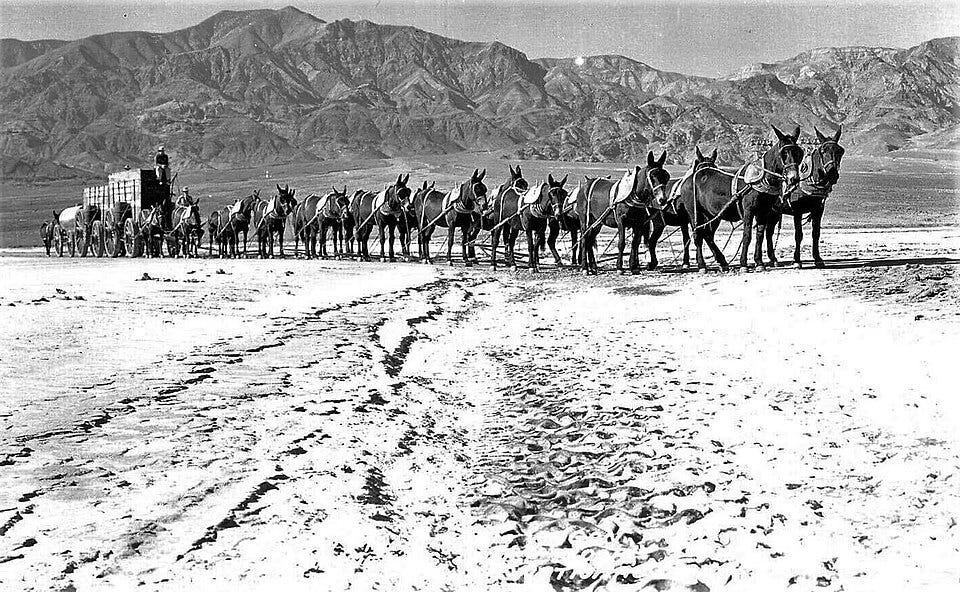
As the mining in the area declined, the Borax King pivoted to tourism. The luxury Inn was opened in 1927 with just 12 rooms initially, and the Ranch was opened in 1933 as a more family friendly property.
In 2018, Furnace Creek underwent a $200-million renovation to update the historic properties and become the Oasis at Death Valley (comprised of the Inn and the Ranch) — modernizing the properties, enhancing the dining and pool amenities, and adding a whole grove of date palms and 22 new casitas to the Inn’s previous 66 rooms (yes, the Inn at Death Valley previously had 66 rooms).
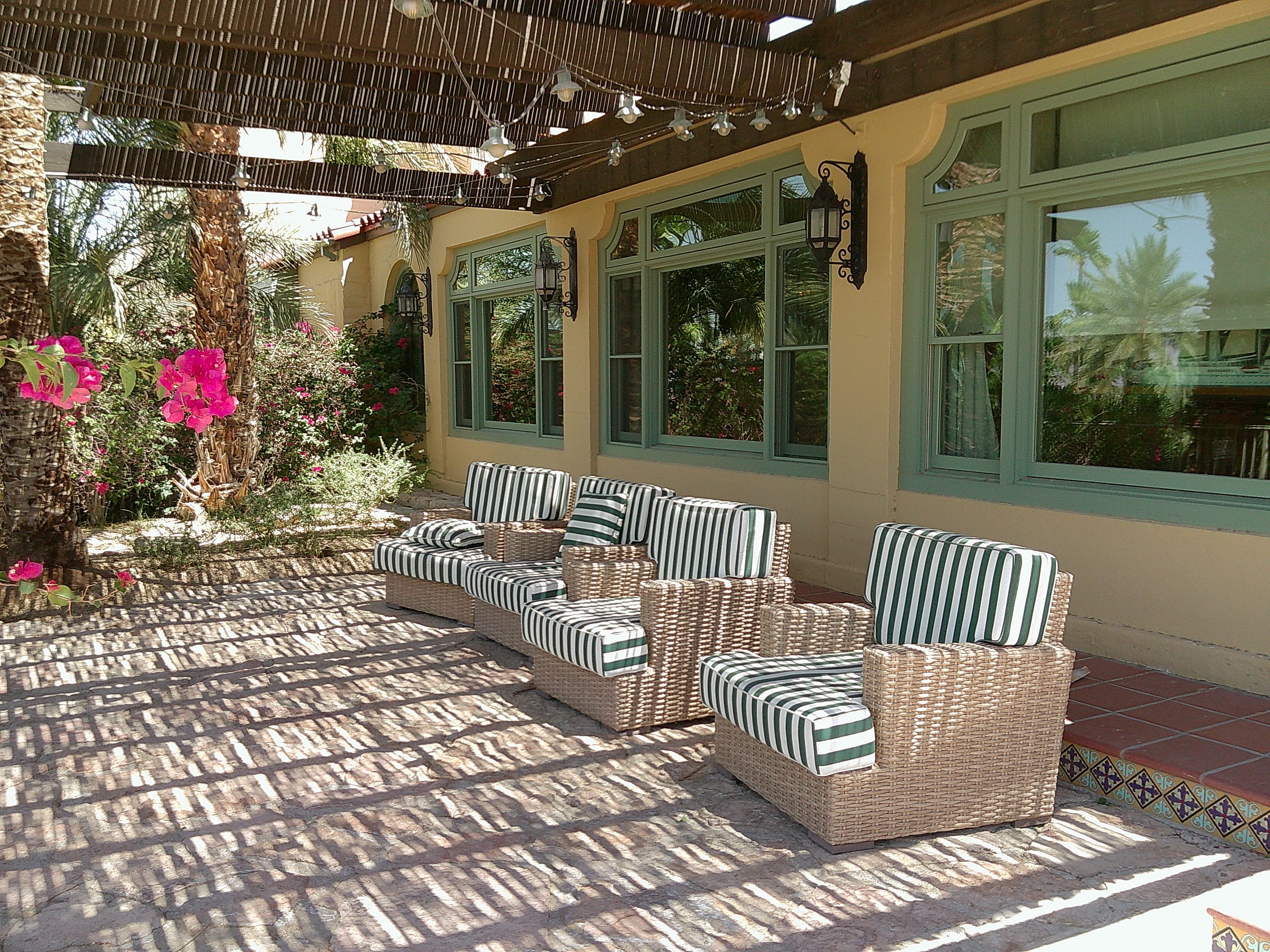
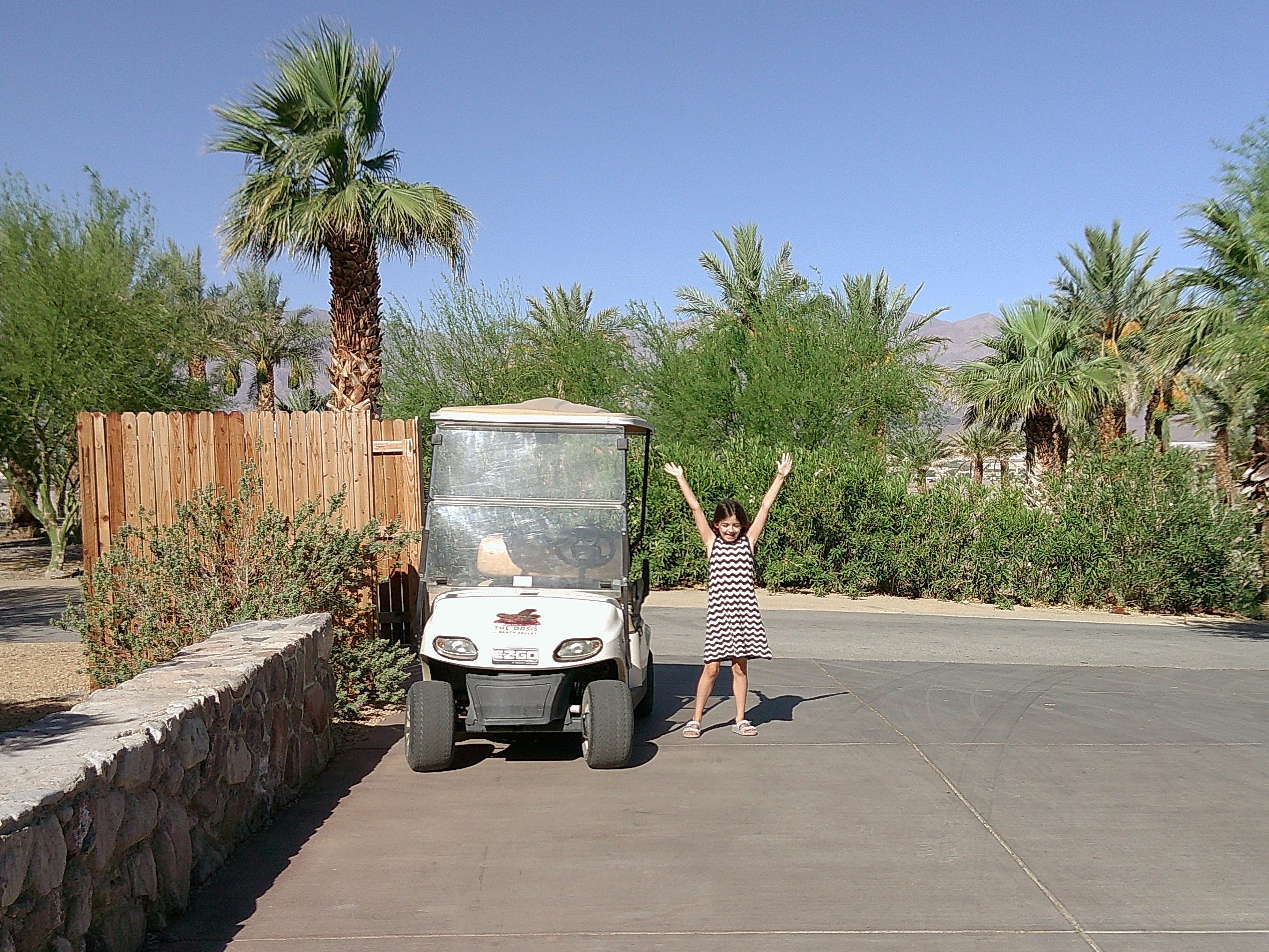
A highlight of our stay in one of the new casitas was that it came with a golf cart rental to use getting around the property, because there is no car parking at the casitas. The kids loved it.
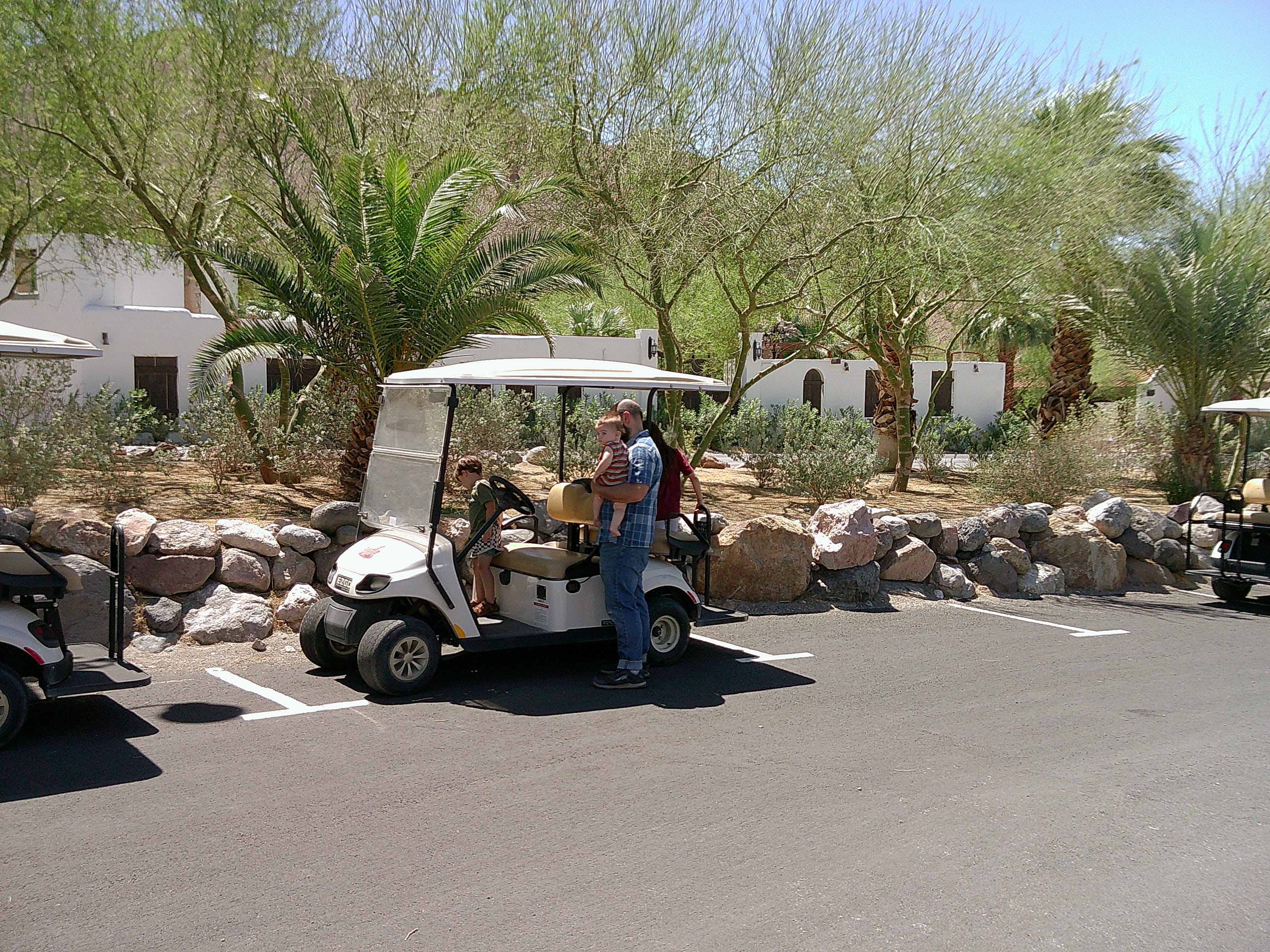
We arrived at our casita around dinner time — and the power promptly went out. It turns out the power going out will become a running theme of our overnight stay at the Inn at Death Valley. While they do regularly get dust storms, they apparently aren’t normally this intense and they don’t usually last longer than 20 minutes or so. Lucky us.
I should note that the Inn at Death Valley can be exorbitantly expensive. It’s a 4-diamond luxury resort located in an extremely isolated and harsh desert, an unmatched luxury oasis in a National Park. The price, especially for the new casitas — the most luxury accommodations for hundreds of miles — is steep, but it makes sense. If you are a bargain hunter (like me) you can find deals for the Oasis at Death Valley in the summer months, when tourism is down and temperatures soar (regularly reaching temps over 120° in July). We visited mid-May, and saw temps in the 80s and 90s, which was perfect (I could have handled even hotter tbh!).
Unfortunately, due to the dust storm and power outages, we weren’t able to visit the pool on our first day. We enjoyed a very dark dinner at the Last Kind Words Saloon, which was running on a generator due to the power outage. They had a limited menu given the situation and we were lucky to be the last order they took that night.
We spent the evening playing games by flashlights and glow sticks in our casita, and awoke the next morning to clear skies and a fully functioning resort once again.
Pool time!
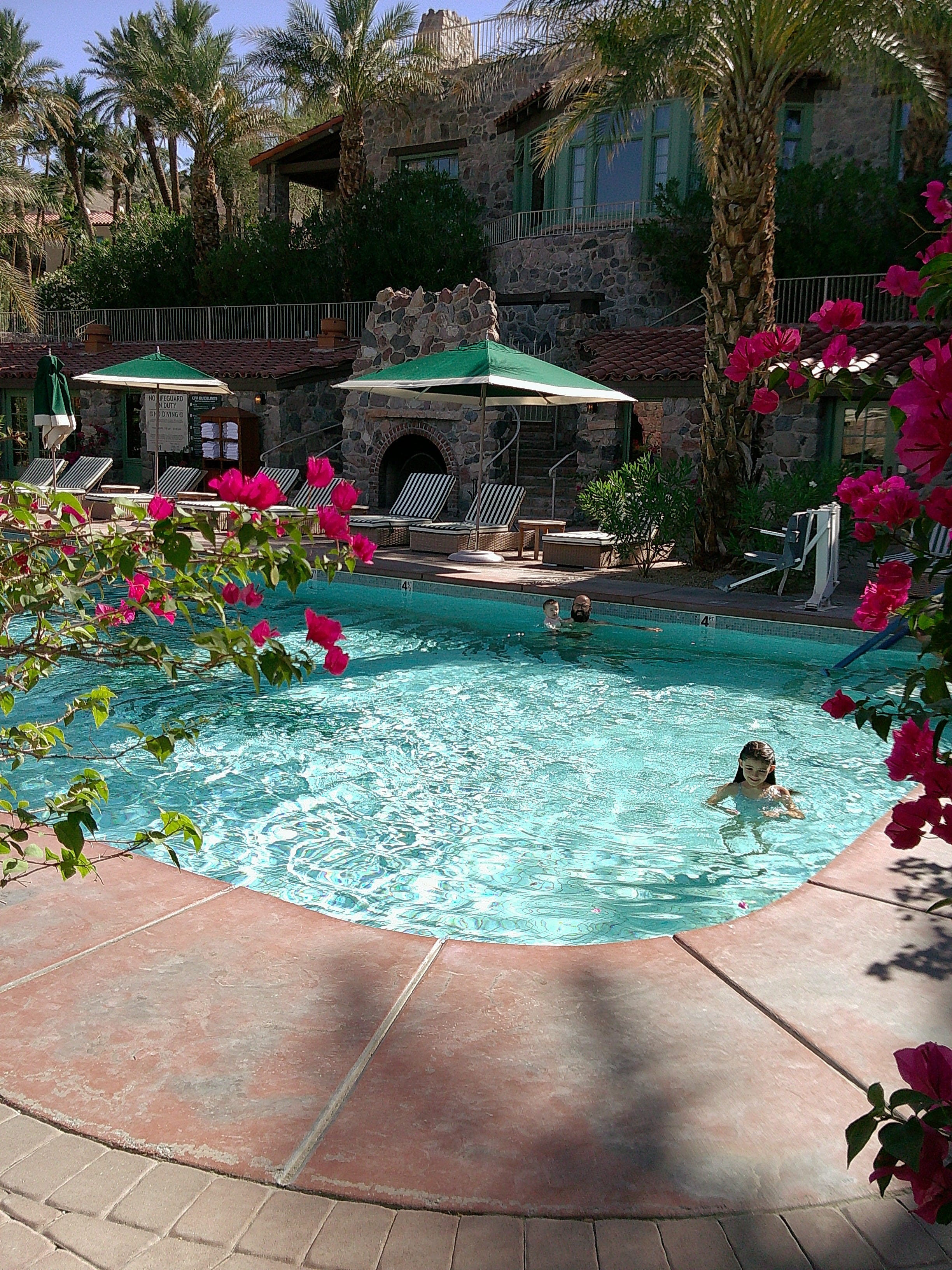
Fun fact about this pool: It’s an unsuspecting biohacking device.
I discovered the Inn at Death Valley, and specifically the pool, when I investigated the claims that Borax has been used as a traditional medicinal remedy for over a thousand years and could have modern uses to aid in the complaints of those suffering chronic ailments.
Indeed, during the pandemic, the discussion around borax/boron grew tremendously, often getting labeled as misinformation.
So how do you sort fact from fiction?
Like this:
Boron is a trace mineral that aids in absorption, particularly with calcium and magnesium. It’s possibly an essential human nutrient in very small amounts, we still don’t know how essential it is to the human body as it is still being studied, but we do know that it helps with metabolism, brain function, and inflammation. It’s found in foods like fruits, nuts, legumes, and coffee.
And borax contains boron.
Borax has been used in traditional medicine for thousands of years to aid in digestive complaints, skin disorders, wound cleaning, skin treatments, mouth ulcers, eye conditions, coughs and respiratory complaints, infections, gynecological preparations, and in compound mineral medicines.
From Asia to the Middle East, Europe to North America, there is evidence of indigenous use of borax spanning centuries across all continents. Medicinal use of borax has its earliest documentation in ancient Tibetan and Traditional Chinese Medicine, later appearing in India in Ayurvedic medicine, and ultimately spreading from Europe to North America with the later colonization of the Americas.
It’s important to note that there is a difference between boron, a naturally occurring chemical element rarely found in it’s pure form; borax, a naturally occurring mineral salt that contains boron alongside sodium, oxygen, and water; and boric acid, which is a newer man-made compound that is a more refined, acidic derivative of borax (boric acid is also used in medical preparations today).
While borax has fallen out of favor in mainstream due to its danger of toxicity in larger quantities, boron and boric acid are both used regularly in supplements and medicine.
The claims that borax can be used to treat parasites, arthritis, inflammation, etc., which are regularly labeled as “misinformation,” are likely actually true as there are thousands of years of historic evidence of use. However, there are two major issues with this: one, borax is toxic in large quantities, and two, as a naturally occurring mineral it cannot be patented. So there is not a lot of money to be made in the medicinal use of borax, and in fact it may undercut the use of patentable pharmaceuticals by providing an alternative solution.
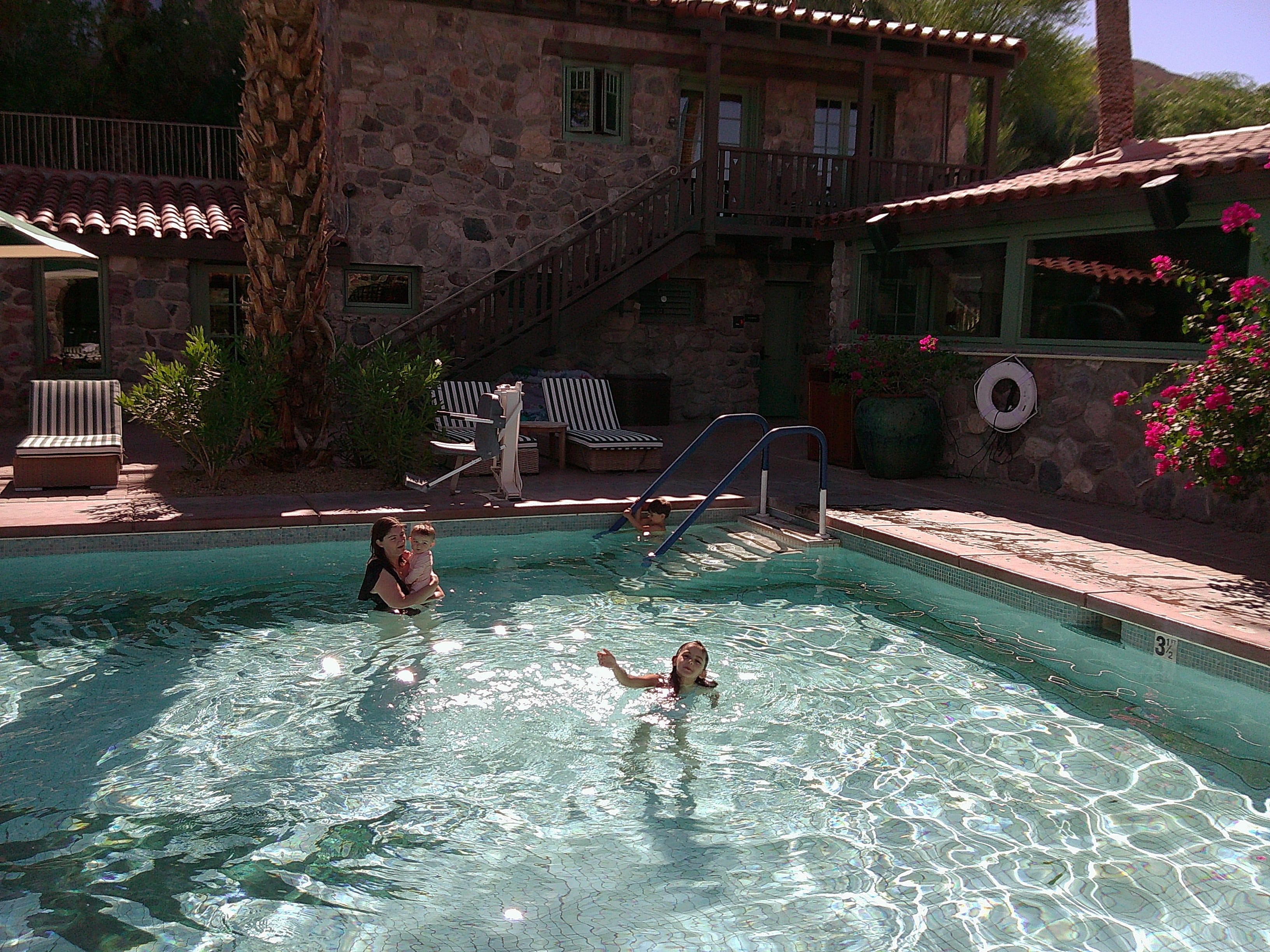
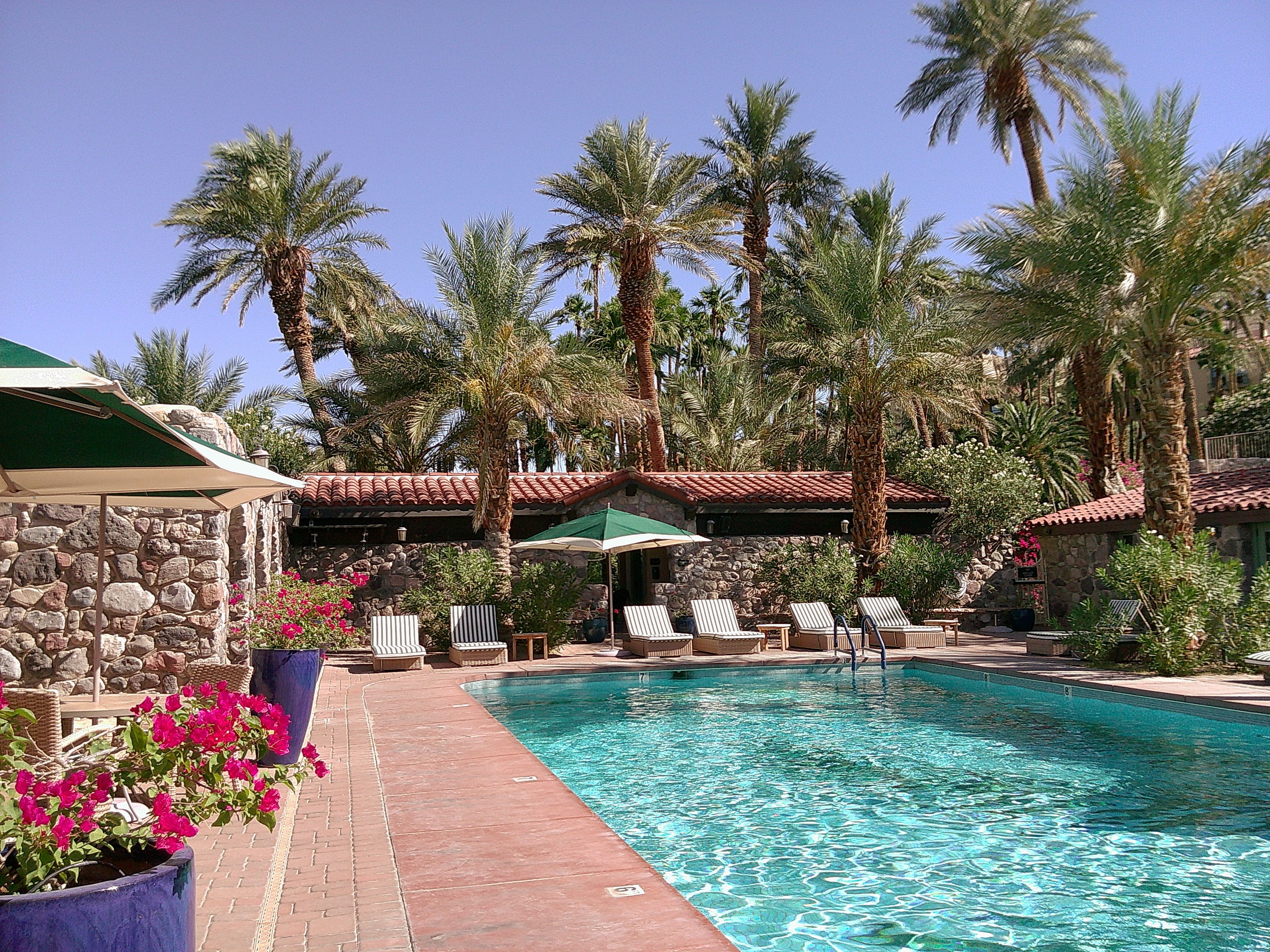
Learning about borax led me to figure out that the stunning pool at the Inn at Death Valley is actually one of the world’s most beautiful biohacking devices. It naturally contains sodium, bicarbonate, sulfate, calcium, magnesium, potassium, and boron. Just stepping into this pool, you can feel that the quality of the water is unlike any other pool in the world.
You heard it here first, folks: swimming in this luxury pool is good for my health.
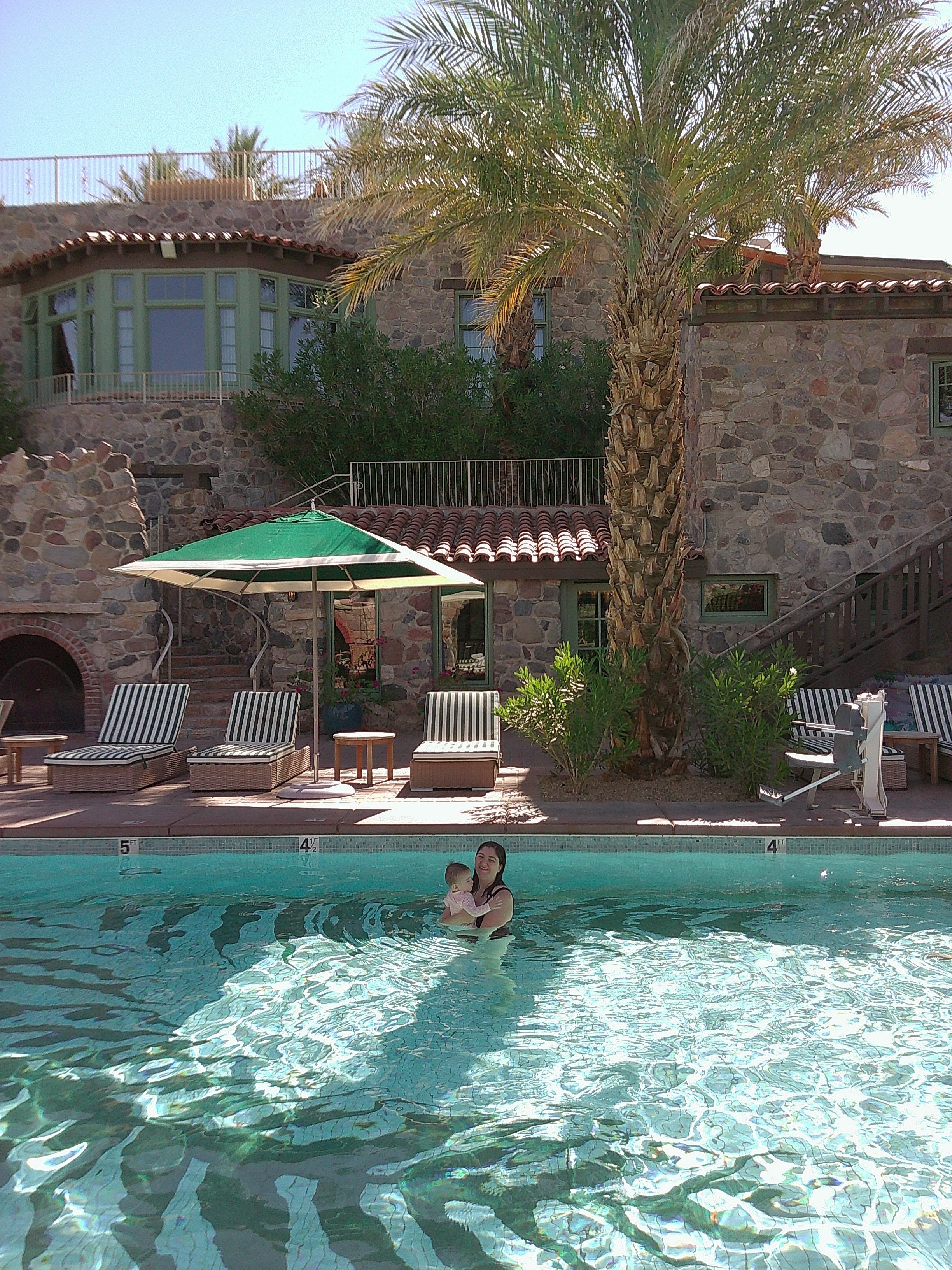
This pool is a true oasis in the desert, a stunning retreat I would love to recreate in my own backyard. The water feels smooth and luxurious as you step into it. The temperature is perfect. It naturally refreshes 4 times a day, every six hours, and is not chemically treated. It should be noted that the pool at the Ranch at Death Valley, the Inn’s sister property, is also fed by this spring and constantly replenishing, forgoing the need for chemical treatment (though it does not quite have the same vibe, lacking the giant palm leaf shadows tiled on the bottom of the pool).
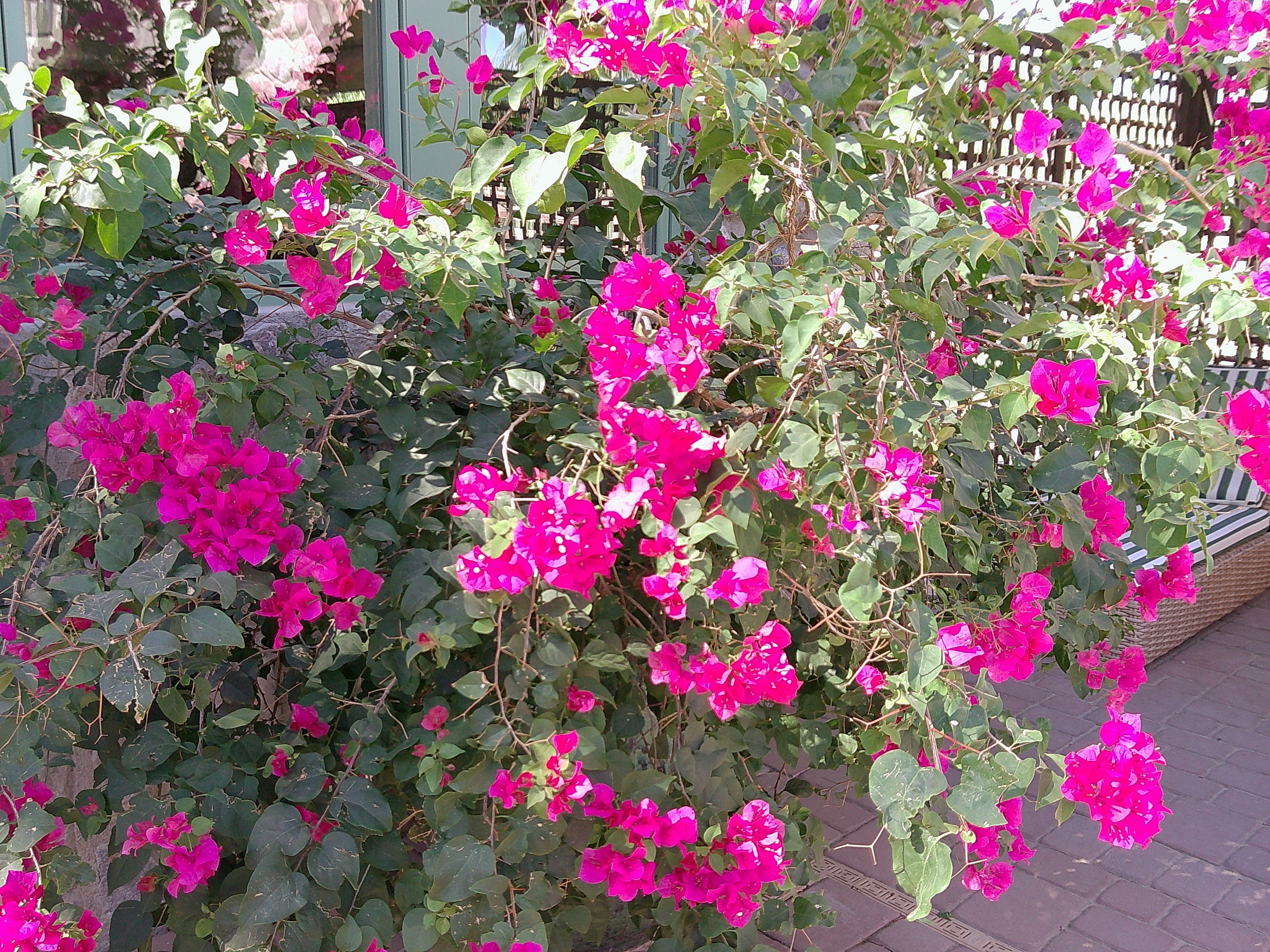
After our luxurious morning at the best pool in the world, we went back to our casita to pack up and continue along our California road trip. On our way out, we took the golf cart for a little joy ride to explore the rest of the grounds that we missed the day before due to the storm.
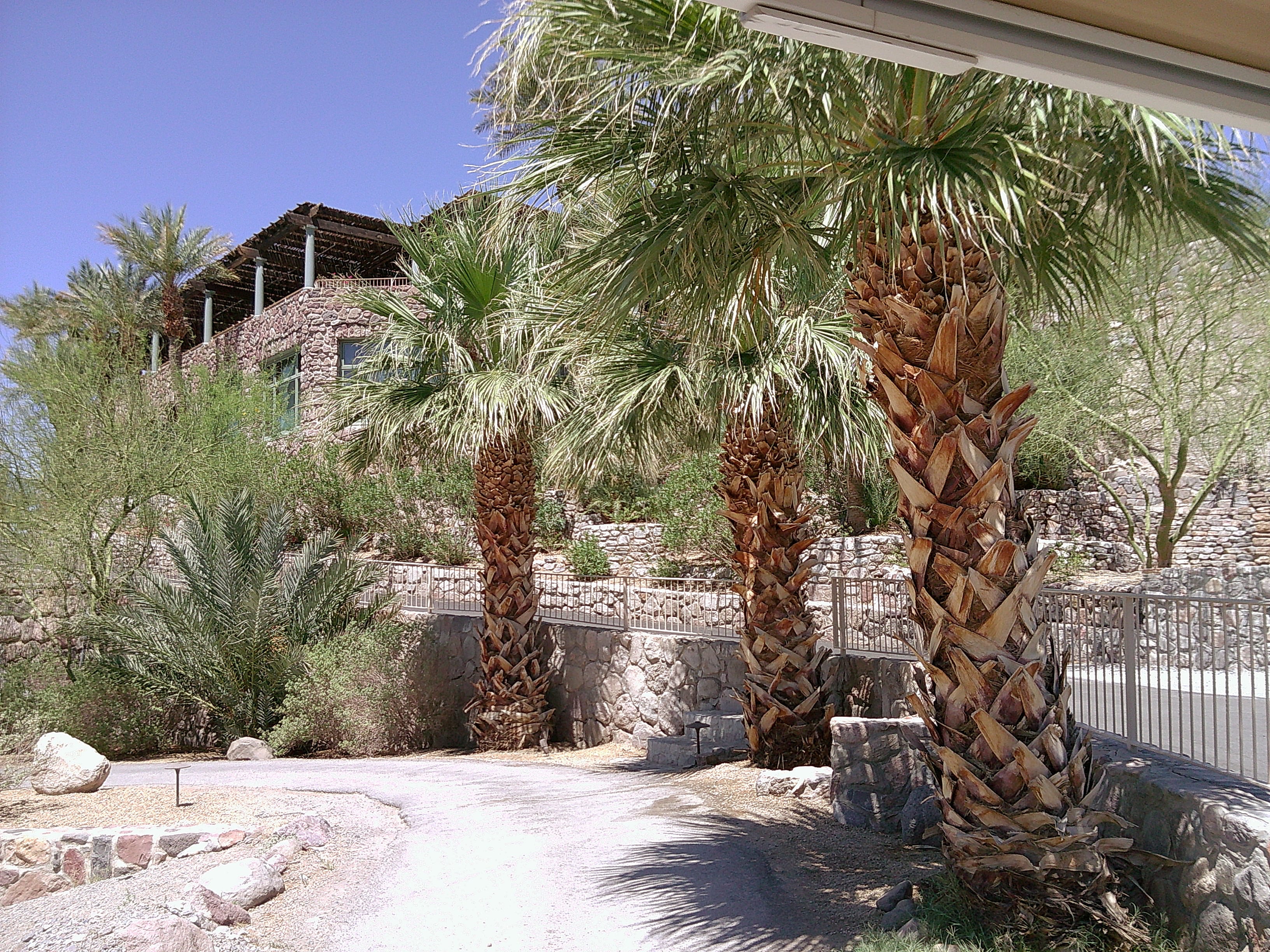
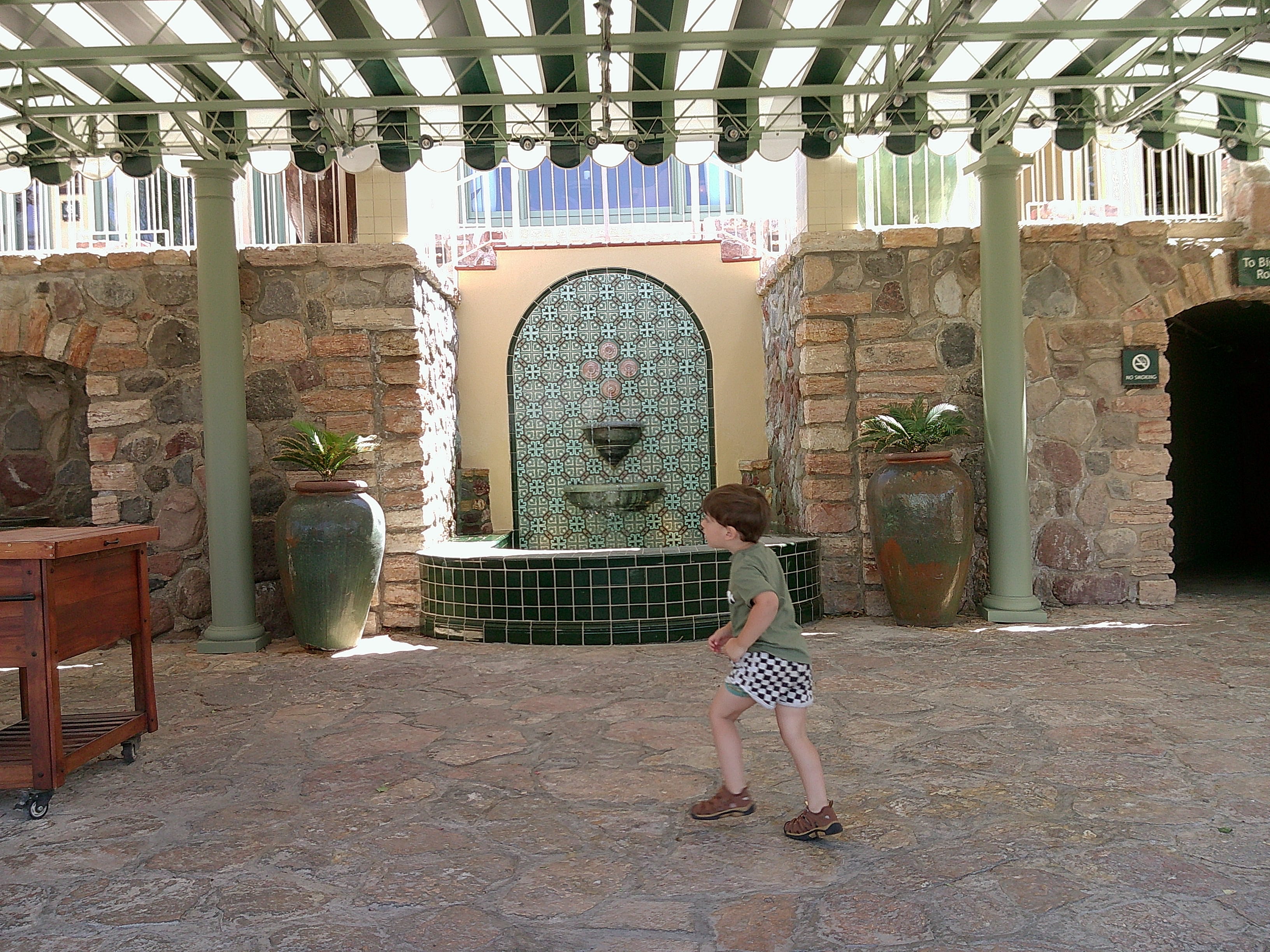
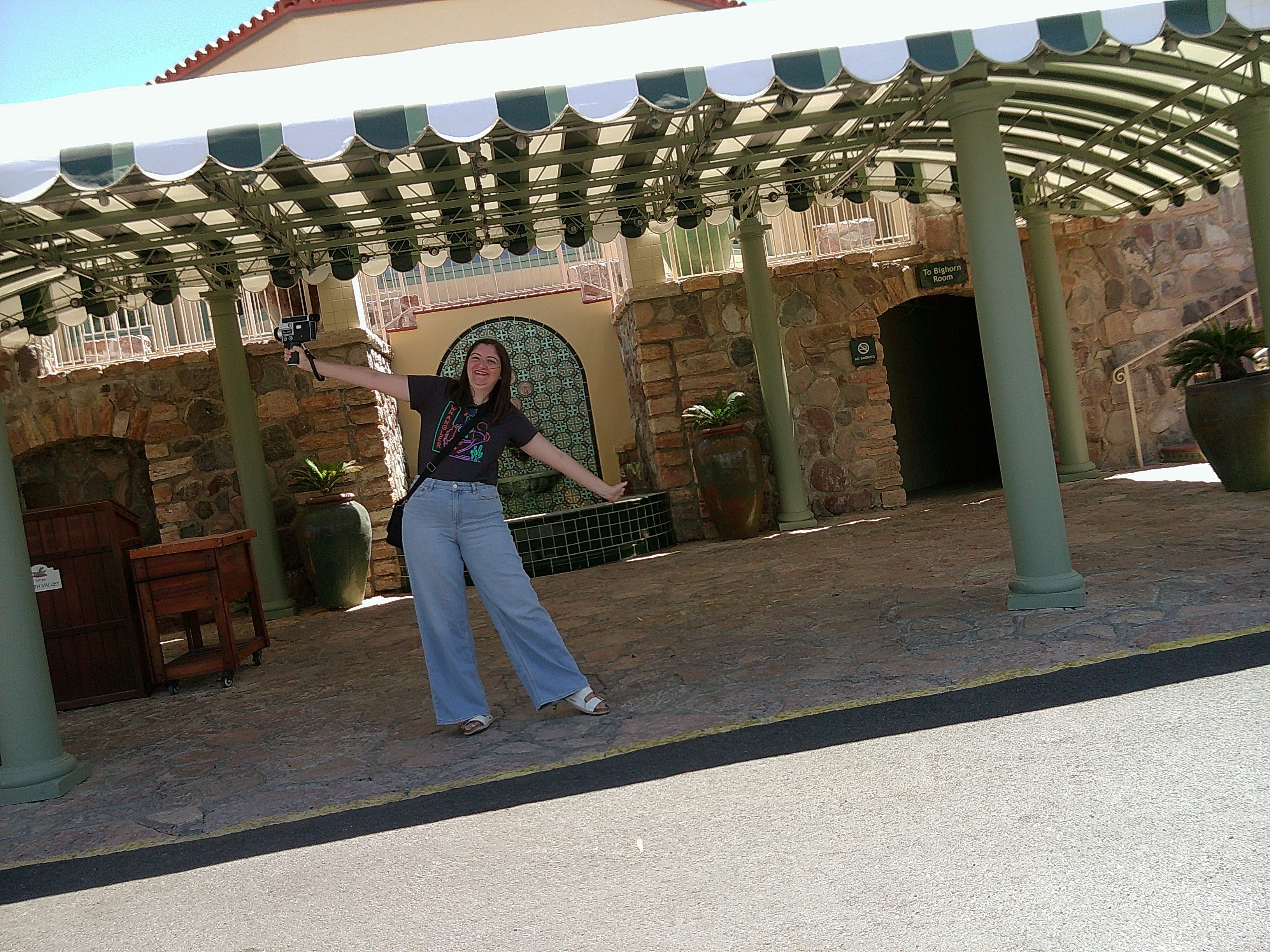
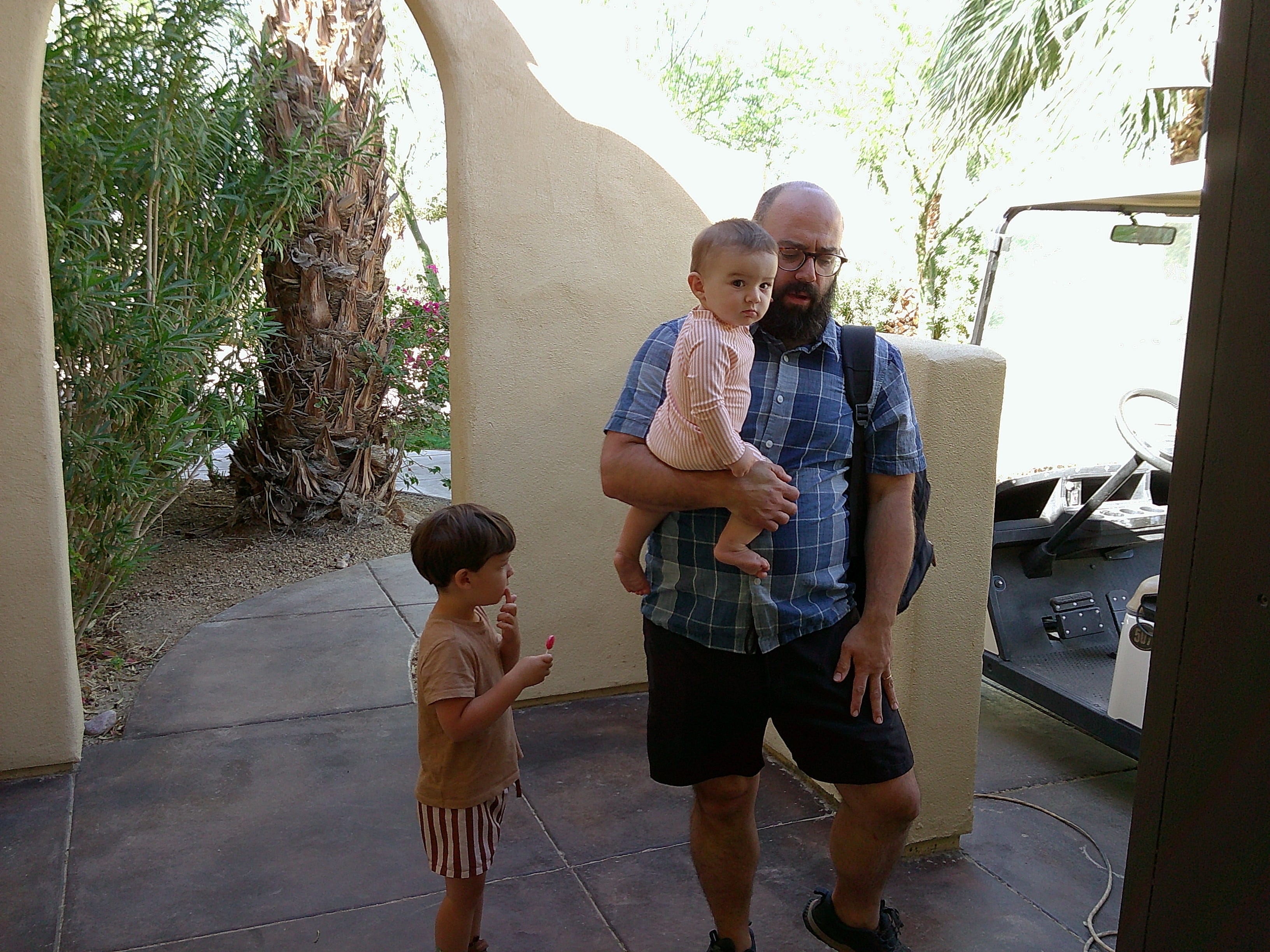
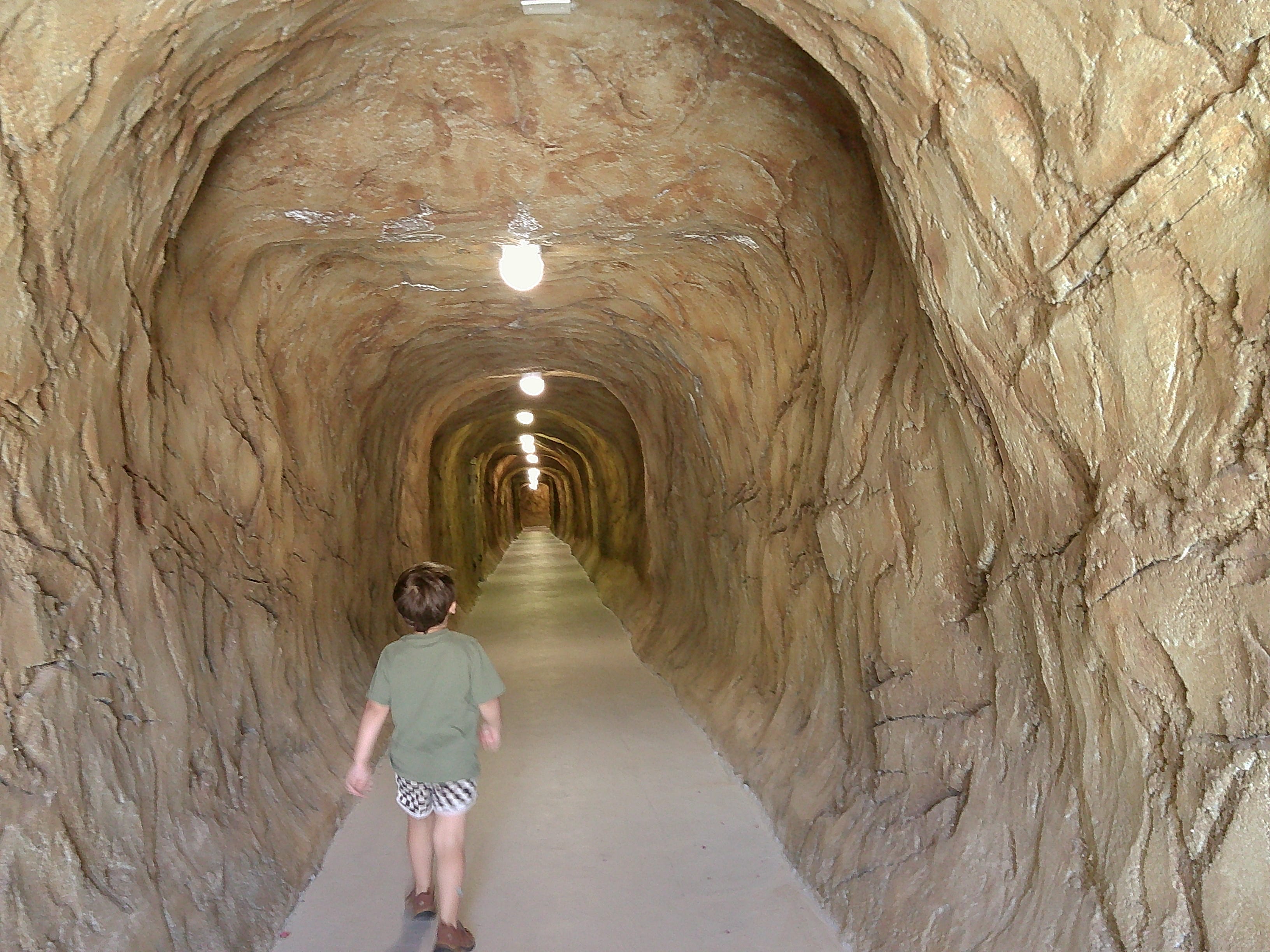
Below is the tunnel you walk through from the parking lot to the elevator up to the lobby. It was closed for maintenance when we checked out, and I was horrified to learn that Alex willingly got into this rinkydink elevator the night before in between power outages.
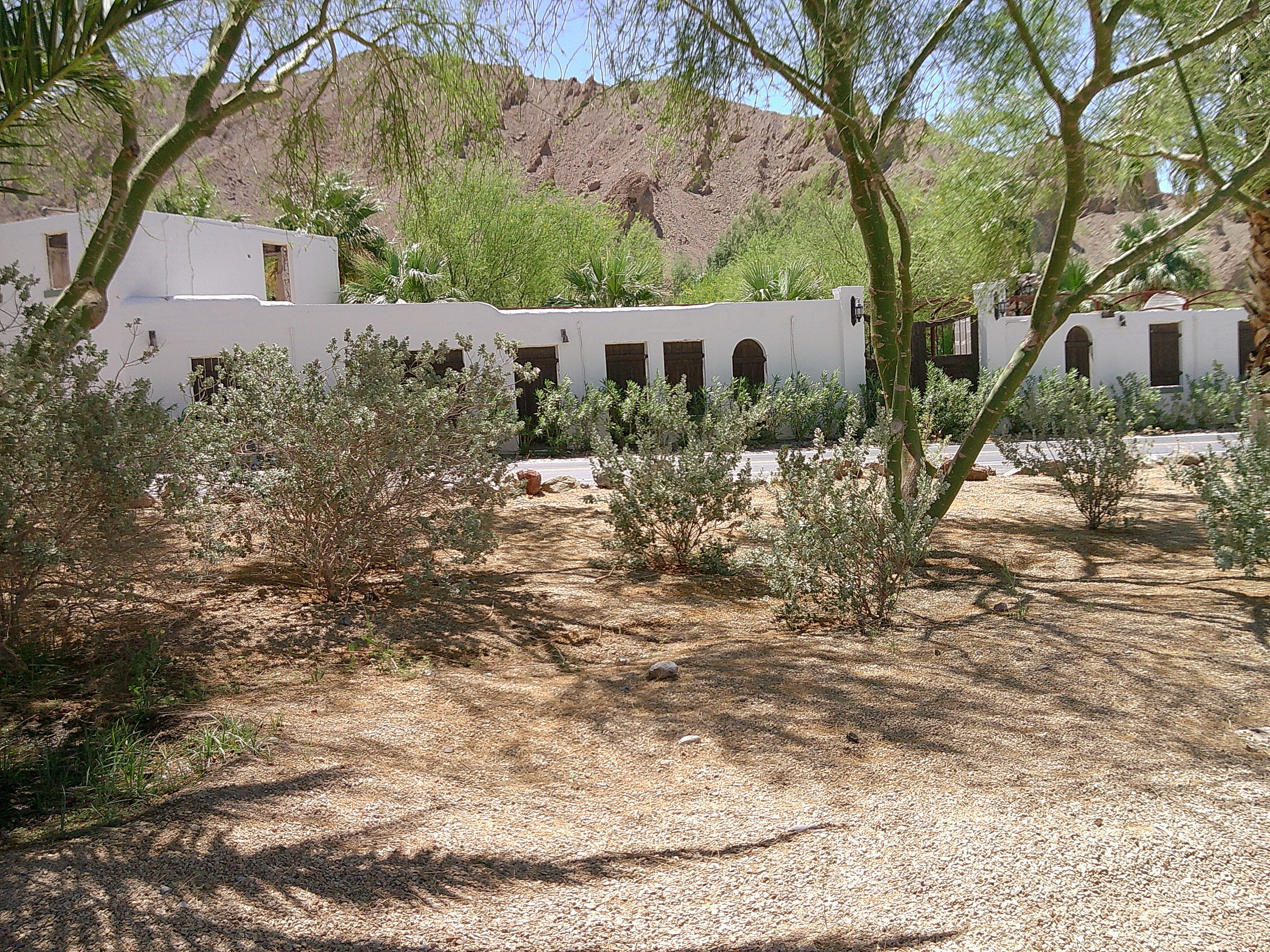
Across from the parking lot is an event space, the Mission Gardens, where people can host weddings.
And that’s it!
Short but sweet and full of adventure, we really enjoyed our less than 24-hour stay at the Inn at Death Valley and can’t wait to go back.