

Is the Real New Years Day... Today? The Hidden Architecture of Biblical Time
What Year Is It, Really? Exploring Calendars, Creation, and Biblical Chronology


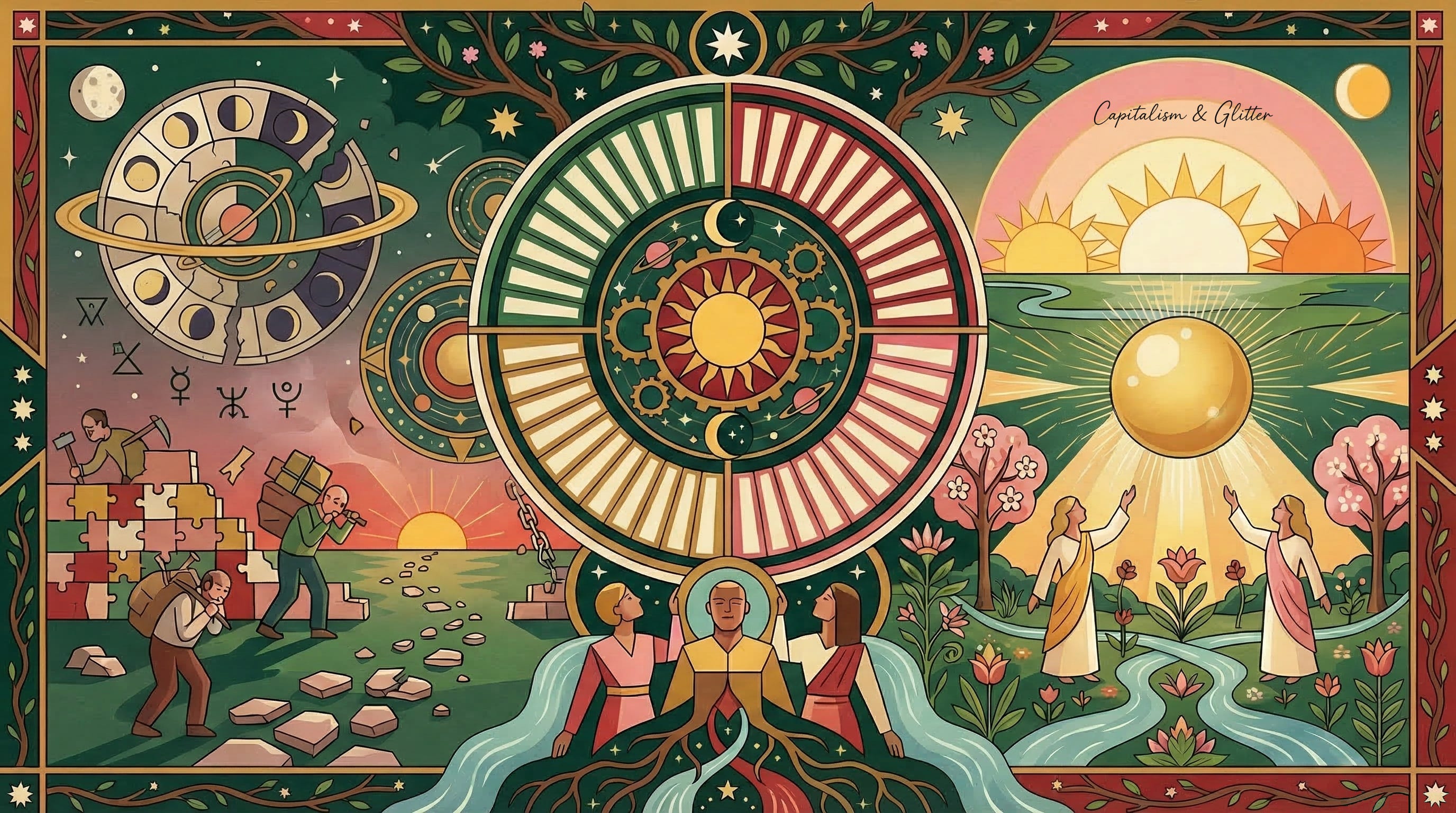
We generally operate under a comfortable collective delusion: that the date at the top of our smartphone screen is an objective fact of the universe. To most of the world, the date this article was published was Thursday, March 19, 2026.
But if you were to step into a synagogue in Jerusalem, it would be the year 5786.
Cross into a mosque in Riyadh, and it is 1447.
Travel to Ethiopia, and you might find yourself back in 2018 — roughly seven years “behind” the West due to a different calculation of Jesus’ birth year.
While there are a multitude of exceptions across various cultures with alternate calendars, the vast majority of the world is aligned to what we know as the Gregorian Calendar, which is a purely solar calendar, meaning its primary goal is to keep the calendar year synchronized with the tropical year (the time it takes the Earth to orbit the Sun, roughly 365.2422 days).
To account for that extra quarter of a day, the system uses a precise leap year rule where we add an additional day every four years except in certain centurial years (1700, 1800, 1900.) which are not leap years unless they are divisible by 400 (like 1600 or 2000). Super simple, right? This very manual correction gives us an incredibly close approximation of the solar year that only drifts by one day every 3,236 years.
This manual override obviously feels totally aligned to nature and how God had planned for the Sun, Moon and stars to govern our timekeeping, and not at all just a complex approach to making a completely fabricated system make sense. I’m sure God has this mapped out in a similar fashion in His spreadsheet.
1 Nisan: God’s New Year
The day this article was published, March 19, 2026, isn’t just another Thursday. This date also marks 1 Nisan, the Biblical New Year.
While the modern Jewish New Year (Rosh Hashanah) is celebrated in the autumn (and this year it begins on September 11th — the date Ethiopians celebrate the New Year), the Torah is explicit: the year begins in the Spring. God told Moses and Aaron to make the month of the Passover (Nisan/Abib) the new, foundational beginning of the calendar for Israel just before the Israelites left Egypt.
While the Gregorian world waits for January, the Biblical clock explicitly resets in the spring — reminding us that there are major separations between human record-keeping and God’s original calendar.
“This month shall be for you the beginning of months. It shall be the first month of the year for you.”
Exodus 12:2, ESV