


This Week
We are reading:
Exodus 10-30
Psalm 114, 77, 78, 79, 119
Summary
We’re continuing the story of Exodus this week, and God repeatedly hardens Pharaoh’s heart for the plot.
Pharaoh continues going back and forth about letting God’s people go. The plagues culminate in the Passover origin story. Pharaoh finally decides to release the Israelites, who begin the exodus out of Egypt, when he changes his mind again and chases after them — culminating in Moses’ infamous parting of the Red Sea, which allows the Israelites to escape while, at the last minute, the waves crash down and wipe out the Egyptian army.
The Israelites then wander in the wilderness, where they IMMEDIATELY complain about being freed from slavery. God provides water and food in the form of manna and quail. He reveals Himself to Moses at Mount Sinai, delivering the Ten Commandments, and establishing the laws that shape Israel’s moral, social, and religious life. God’s covenent expands the people formally enter into covenant with God, and detailed instructions are given for building the tabernacle, its furnishings, and the priesthood, emphasizing that the God who saved them intends to dwell among them and be worshiped according to His holiness.
This Bible study is free for everyone, made possible by the support of our paid subscribers.
If you’d like to support us, please consider a paid subscription. Paid subscribers receive:
Full-length weekly Biblical and archaeological deep dives
The entire archive of content on health and wellness, secret societies, and more (50+ articles)
New! A weekly newsletter, and access to all community chats
The Sacraments
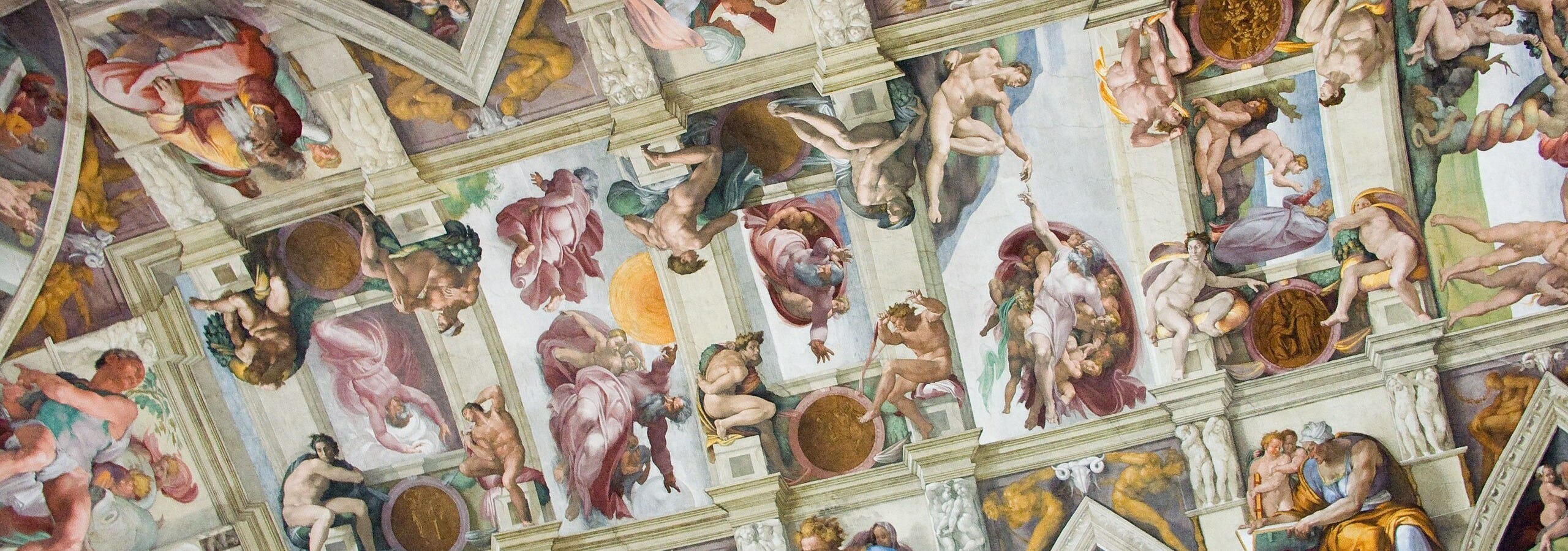
Exodus begins to foreshadow the sacraments.
The sacraments are sacred Christian rites, which are considered to be representative of God.
Different traditions hold different beliefs about the sacraments. In a nutshell, Catholic and Orthodox traditions believe the sacraments confer God’s grace, whereas Protestants believe they are symbolic acts of obedience. Simply put, in the former tradition, sacraments confer action by God, and in the latter sacraments are an action taken by a believer.
Catholic and Orthodox traditions have 7 sacraments, and Protestants only recognize 2 (numbers 1 and 3 on this list):
Baptism — Entry into the Christian life; washes away sin and makes you part of God’s family and begins a new life in Christ
Confirmation —Strengthening of baptismal grace; seals you with the Holy Spirit and gives spiritual strength to live the faith publicly
Eucharist (Holy Communion or the Lord’s Supper) — The Body and Blood of Christ; nourishes the soul and unites believers with Jesus and each other
Reconciliation (Confession) — God’s forgiveness after sin; restores relationship with God and brings healing and peace
Anointing of the Sick — Prayer and anointing for the ill or suffering; brings spiritual (and sometimes physical) healing; gives strength in illness or near death
Holy Orders — Ordination for service and leadership; configures a man to Christ as deacon, priest, or bishop and serves the Church sacramentally
Matrimony (Marriage) — A lifelong covenant between spouses; makes God’s love visible through faithful love, and gives grace to live out marriage
They are often grouped as follows:
Sacraments of Initiation: Baptism, Confirmation, Eucharist
Sacraments of Healing: Reconciliation, Anointing of the Sick
Sacraments of Service: Holy Orders, Matrimony
All of the sacraments come out of the New Testament and the story of Jesus, however, as with Jesus Himself, we see a lot of foreshadowing in the Old Testament of the sacraments to come.
As we continue reading Exodus this week, we can see that Moses parting the Red Sea is a foreshadowing of baptism, leaving slavery for a new life ahead. As well, the manna that rains down to provide the Israelites with daily bread is a foreshadowing of the Eucharist.
Our Father, who art in heaven,
hallowed be thy name.
Thy kingdom come,
thy will be done,
on earth as it is in heaven.
Give us this day our daily bread.
And forgive us our trespasses,
as we forgive those who trespass against us.
And lead us not into temptation,
but deliver us from evil.
For thine is the kingdom,
the power and the glory,
for ever and ever.
Amen.
The Lord’s Prayer
Here is the daily breakdown from our annual plan:
Day 40 — Monday, 2/9 — Exodus 10-12, Psalm 114
Day 41 — Tuesday, 2/10 — Exodus 13-15, Psalm 77
Day 42 — Wednesday, 2/11 — Exodus 16-18, Psalm 78
Day 43 — Thursday, 2/12 — Exodus 19-21, Psalm 79
Day 44 — Friday, 2/13 — Exodus 22-24, Psalm 119:1-56
Day 45 — Saturday, 2/14 — Exodus 25-27, Psalm 119:57-88
Day 46 — Sunday, 2/15 — Exodus 28-30, Psalm 119:89-177
Day 40 — Monday, 2/9 — Exodus 10-12, Psalm 114
God sends the last plagues on Egypt: locusts and darkness, then the devastating death of the firstborn.
God institutes the Passover, marking Israel’s doors with lamb’s blood so death “passes over” them.
Pharaoh finally lets the Israelites go.
Israel leaves Egypt after 400+ years of slavery, carrying gold and silver from the Egyptians.
Day 41 — Tuesday, 2/10 — Exodus 13-15, Psalm 77
Moses takes Joseph’s bones with him as they leave Egypt.
God leads them with a pillar of cloud by day and fire by night.
Pharaoh changes his mind and pursues Israel.
God parts the Red Sea — Israel crosses safely, and the waves crash down before the Egyptian army can make it to the other side, destroying them.
Moses and the people sing a song of victory.
Day 42 — Wednesday, 2/11 — Exodus 16-18, Psalm 78
Following this miraculous freedom from Egypt, the Israelites immediately begin complaining about Moses, Aaron, saying they were better off as slaves of Egypt than they are wandering in the wilderness. They had owned nothing, and they were happy.
God provides water, manna, and quail to eat. Moses is instructed to strike a rock to draw water, and manna rained down onto the ground and was collected each morning.
Israel defeats the Amalekites with God’s help.
Moses’ father-in-law Jethro witnesses Moses taking common complaints from 9 to 5 every day and advises him to delegate leadership.
The LORD asked Moses, “How long will these people refuse to obey my commands and instructions?”
Exodus 16:28
Day 43 — Thursday, 2/12 — Exodus 19-21, Psalm 79
Israel arrives at Mount Sinai.
God reveals His presence with thunder, fire, and smoke. (Yet another instance of mythology copying God when the secular world claims it’s the other way around.)
God gives the Ten Commandments and additional laws are given about justice, worship, and daily life.
God instructs the Israelites how to build an altar — and explicitly tells them not to build idols out of silver or gold.
God gives a lot of rules about how to handle slavery. It’s uncomfortable for a modern reader, but it’s important to read this was clearly a very different time, with God’s people still recovering in a fallen world.
An eye for an eye, a tooth for a tooth, a hand for a hand, a foot for a foot.
Exodus 21:24
Day 44 — Friday, 2/13 — Exodus 22-24, Psalm 119:1-56
God continues laying out rules that don’t make sense to us in modern times, but we have to remember that there was basically no moral code at this time. God literally had to tell them not to exploit widows and orphans.
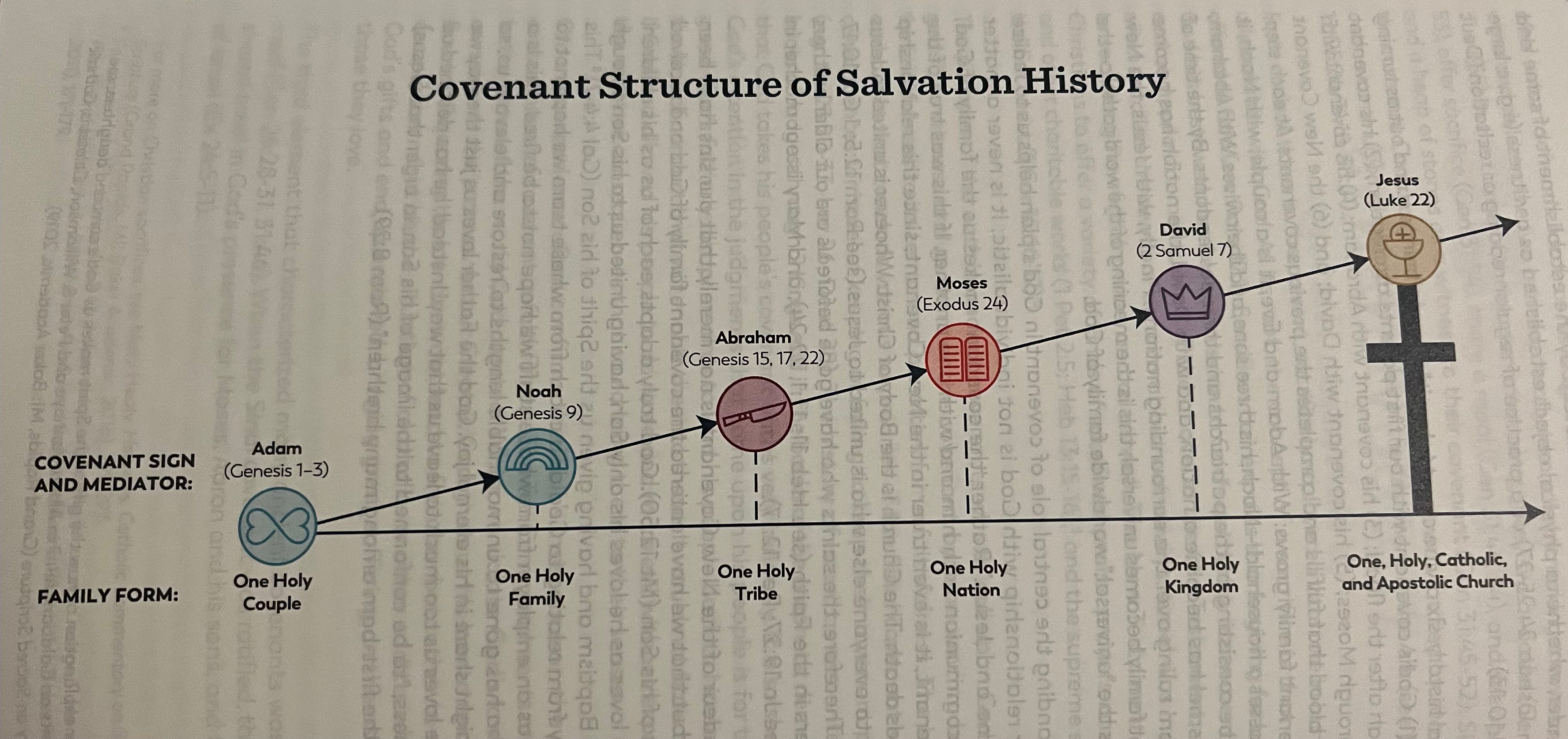
God makes a formal covenant with Israel; the people agree to obey and eat a meal with God. This covenant differs from the covenant with Abraham in that it does require that the people follow the laws given in order to receive bestowed blessings.
Moses ascends Mount Sinai to receive further instructions.
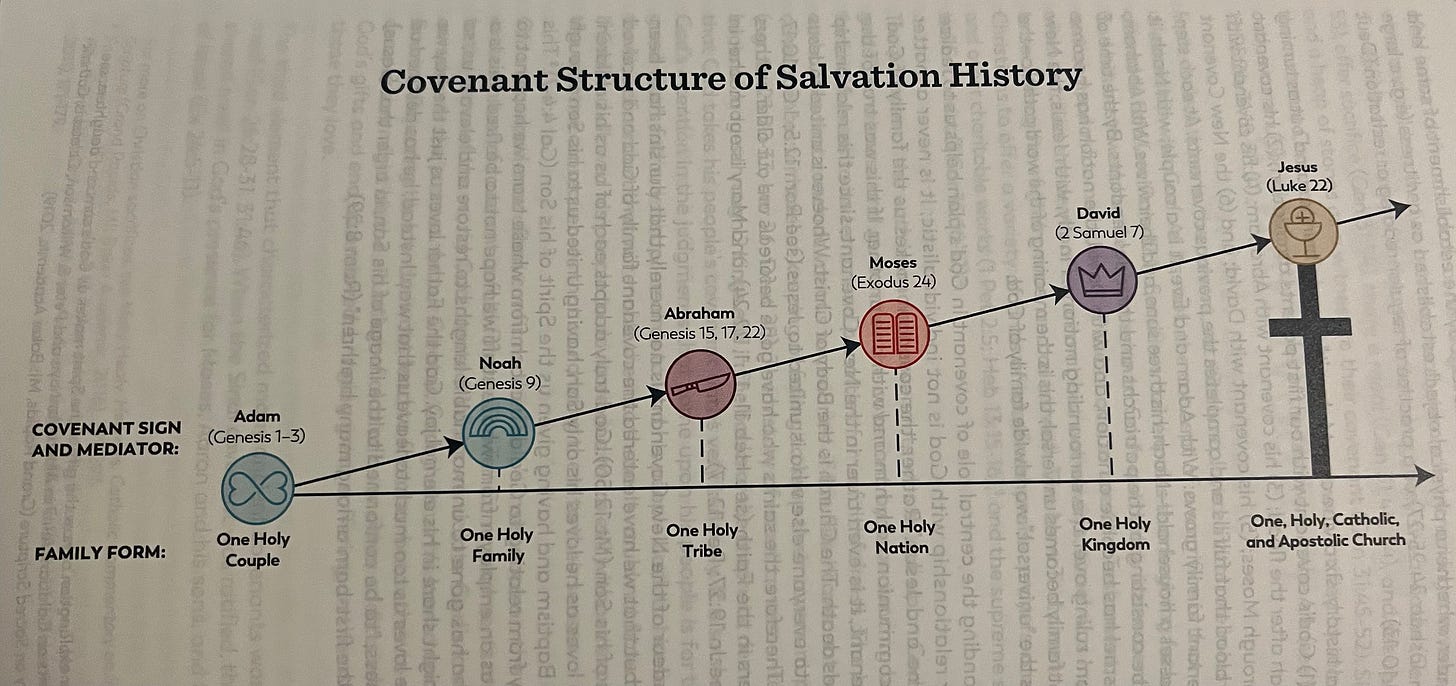
Evolution of Covenant structure, from the Great Adventure Bible
Day 45 — Saturday, 2/14 — Exodus 25-27, Psalm 119:57-88
God gives detailed instructions for building the Tabernacle, where He will dwell among His people. Descriptions include the Ark of the Covenant, the Table of Showbread, the Golden Lampstand, the altar, courtyard, and olive oil to keep the lamps perpetually burning
I often neglect the Psalms and Proverbs in my weekly write-ups in favor of discussing the narrative in the main books we are reading — but this week we are reading the longest chapter in the Bible, Psalm 119. It is an alphabetic acrostic, with 22 sections (one for each Hebrew letter), 8 verses per section, and every verse in the section starting with the same Hebrew letter. This chapter is a way of saying: “From A to Z, all of life is meant to be shaped by God’s Word.” And, man, the author of this Psalm was going through it.
How long must I wait? When will you punish those who persecute me?
Psalm 119:84
Day 46 — Sunday, 2/15 — Exodus 28-30, Psalm 119:89-177
God establishes the priesthood with Aaron and his sons.
Fun Fact! The chestpiece adorned with rows of gemstones is the basis for birthstones. (To be clear, I’m not saying birthstones are biblical, but I am saying they have a biblical origin.)
Instructions are given to use myrrh, cinnamon, calamus (which is apparently a psychoactive herb used for medicine that is banned in the US 👀), and cassia to make incense and an anointing oil. Further instruction is given to make incense.
While a lot of the rules being laid out in Exodus seem excessive and specific, after what we’ve read in the Book of Enoch, I think the reason for the focus on holiness and order makes a lot of sense for establishing God’s closeness to His people of Israel.
Extra credit: Watch The Promised Land — a laugh-out-loud mockumentary in the style of The Office following the Israelites out of Egypt.
This Bible study is free for everyone, made possible by the support of our paid subscribers.
If you’d like to support us, please consider a paid subscription. Paid subscribers receive:
Full-length weekly Biblical and archaeological deep dives
The entire archive of content on health and wellness, secret societies, and more (50+ articles)
New! A weekly newsletter, and access to all community chats
“They had owned nothing, and they were happy.”
🤯
Awesome. Thank you so much for explaining the sacraments. For this newbie! 😬