


Last Week
Whoops! I missed last week. But we read:
2 Kings 7-17
Hosea 1-14
Amos 1-9
Psalms 127, 101, 103, 108, 109, 110, 122
This Week
We are reading:
Jonah 1-4
Micah 1-7
2 Kings 18-25
2 Chronicles 29-34
Psalms 124, 138, 139, 140, 141, 143, 144
Summary
I missed last week. We continued reading through 2 Kings and got insight from two prophets: Hosea and Amos. The northern kingdom of Israel continued its slow-motion collapse despite the prophets who were trying to stop it.
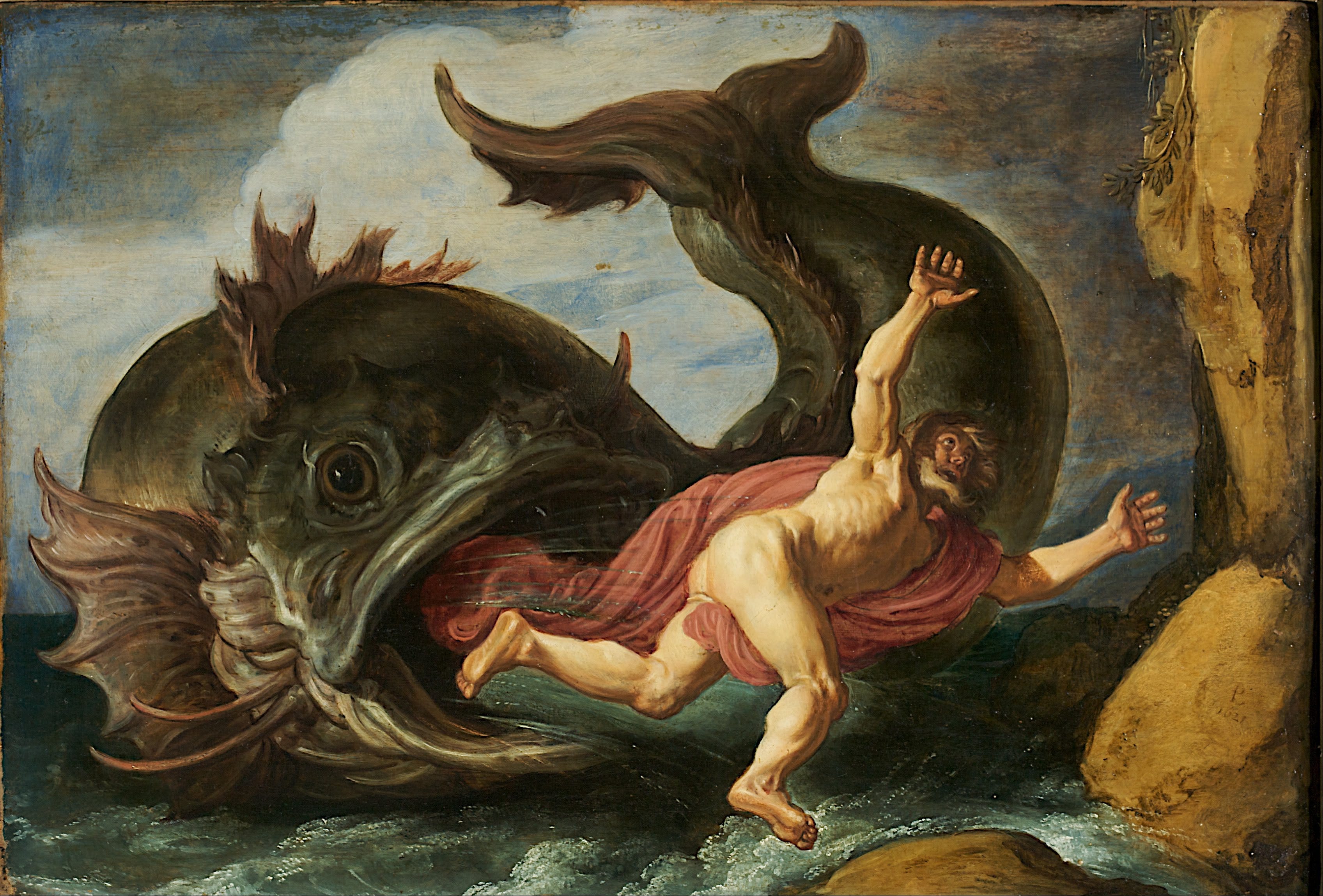
We open this week with the most famous reluctant prophet in the Bible: Jonah. A man so opposed to his assignment that he tries to sail away in the opposite direction and promptly gets swallowed by a whale — who takes him exactly where he’s supposed to go.
This Bible study is free for everyone, made possible by the support of our paid subscribers.
If you’d like to support us, please consider a paid subscription.
Paid subscribers receive:
Full-length weekly cultural and Biblical deep dives
The Edit newsletter, and access to all community chats
The entire archive of content on health and wellness, secret societies, and more (75+ articles)
Last Week
My quick thoughts on last week:
2 Kings 7-17
We witness the fall of the Northern Kingdom of Israel with the common pattern — anointed kingship, turning away from God, corruption leads to failure.
Jehu is anointed king of Israel with a specific mandate to destroy the house of Ahab, killing King Joram, Ahaziah, and Jezebel, avenging the deaths of the prophets that Jezebel had killed.
Joash repairs the temple, which had fallen into disrepair.
Elisha dies — and the power of the prophet continues from the grave.
Finally, Assyria invades, Samaria falls after a three-year siege, and the people of Israel are deported. The northern ten tribes disappear from history as a coherent nation.
Hosea
God tells Hosea to marry a woman who will be unfaithful to him and the marriage, as told through this book, becomes the metaphor for Israel, an unfaithful wife, with God as the husband who keeps taking her back.
Amos
Amos is a shepherd and a fig farmer from Judah who goes north to Israel during the reign of Jeroboam II and starts preaching about God’s judgment on Israel’s neighbors before turning to issue God’s judgment on Israel itself.
Amos closes with five visions — locusts, fire, a plumb line, a basket of ripe fruit, God at the altar.
This Week
Here is the daily breakdown for this week from our annual plan:
Day 180 — Monday, 6/29 — Jonah 1-4, Psalm 124
Day 181 — Tuesday, 6/30 — Micah 1-4, Psalm 138
Day 182 — Wednesday, 7/1 — Micah 5-7, Psalm 139
Day 183 — Thursday, 7/2 — 2 Kings 18-21, Psalm 140
Day 184 — Friday, 7/3 — 2 Kings 22-25, Psalm 141
Day 185 — Saturday, 7/4 — 2 Chronicles 29-31, Psalm 143
Day 186 — Sunday, 7/5 — 2 Chronicles 32-34, Psalm 144
Day 180 — Monday, 6/29 — Jonah 1-4, Psalm 124
Just an all around great story with Jonah and the Whale. God tells Jonah to go to Nineveh — capital of Assyria, Israel’s greatest enemy — and preach. Jonah says no thanks and boards a ship going the other direction.
God sends a massive storm and the sailors find out Jonah is the cause and throw him overboard. He is swallowed by a “great fish.” He prays from inside it and is deposited on shore three days later.
God tells him again: go to Nineveh. This time he goes, gives a brief sermon, and the entire city repents.
Jonah is furious. This is what he was afraid of. He knew God would forgive them and he did not want that for Nineveh. He sits outside the city hoping God will destroy it anyway. God grows a plant to shade him, then kills the plant, and Jonah is more upset about the plant than the city. The book ends with God’s question hanging unanswered: “Should I not have concern for the great city of Nineveh?”
Jonah is the rare prophetic book where the prophet is the problem. It’s less about Nineveh than about what kind of God this is, and whether Jonah can accept it. I have a lot of empathy for Jonah because I, too, believe cities full of sinners deserve the wrath of God. But it is not I but God who decides who gets the Ninevah treatment and who gets Sodom and Gomorrahed.
Day 181 — Tuesday, 6/30 — Micah 1-4, Psalm 138
Micah is yet another prophet warning Israel of the coming consequences of their widespread corruption.
Micah details how the leaders, priests, and false prophets are exploiting the poor, taking land by force, and turning religion into a profit-making enterprise. He foretells that as a consequence, Samaria will be destroyed and Jerusalem and its temple will be reduced to ruins.
He issues this edict not without hope, though. Micah pictures a day when all nations will stream to the mountain of the Lord, weapons will be beaten into plowshares, and everyone will be under their own vine and fig tree.
Day 182 — Wednesday, 7/1 — Micah 5-7, Psalm 139
Chapter 5 is yet another of the many predictions of Jesus as the Messiah, prophesying that He will be born in Bethlehem.
God brings a formal "lawsuit" against His people, summing up His ultimate requirements: to act justly, to love mercy, and to walk humbly with Him.
Day 183 — Thursday, 7/2 — 2 Kings 18-21, Psalm 140
We finally get a good king! Hezekiah is one of the best kings in the entire Books of Kings. Removes the high places, smashes the Asherah poles, even destroys the bronze serpent Moses made in the wilderness because people had started burning incense to it.
Hezekiah gets sick and is told he will die. He prays, weeping bitterly, and God gives him fifteen more years.
His son Manasseh undoes everything. Rebuilds the high places, erects altars to Baal, sacrifices his own children in fire, practices divination, fills Jerusalem with innocent blood. The longest-reigning king of Judah — fifty-five years — and the one apparently most responsible for the eventual fall of Jerusalem. Unfortunately, our legacies are not just our own.
Day 184 — Friday, 7/3 — 2 Kings 22-25, Psalm 141
Josiah becomes king at eight years old and reigns well. He issues sweeping reform, he destroys every altar, every high place, every idol, every shrine to foreign gods across the entire land. He rediscovers the Book of the Law. He reinstates the Passover for the first time since the judges.
Josiah dies in battle. His son Jehoahaz reigns three months, taken to Egypt. Jehoiakim, Jehoiachin, Zedekiah follow in quick succession, Babylon tightening its grip each time.
Finally, Jerusalem falls. The temple is burned. The walls are broken down. The leading people are deported to Babylon. The bronze pillars, the basins, the lampstands — everything Solomon made — are broken up and carried away to Babylon. The kingdom of Judah is over.
Day 185 — Saturday, 7/4 — 2 Chronicles 29-31, Psalm 143
Hey, didn’t we just read this? Chronicles’ version of Hezekiah is even more expansive than Kings.
Day 186 — Sunday, 7/5 — 2 Chronicles 32-34, Psalm 144
Manasseh’s reign gets a bit more exposition in Chronicles than in Kings — Chronicles includes his captivity in Babylon, his repentance there, his prayer, and God’s restoration of him to Jerusalem.
Josiah’s reform in Chronicles adds a detail Kings omits: Josiah begins his personal spiritual seeking at sixteen, and begins the physical reform at twenty, before the scroll of Law is even found. The scroll confirms and accelerates what was already in motion. The man was looking for something before he found the text. I love this detail because, in my personal experience, God will move us to find something before we think we are ready, before we even know what we are looking for.
HALLELUJAH we are just about finished with Kings and Chronicles! I am so excited to start Isaiah next week! #nokings
What are your thoughts on this week or last week’s readings? Drop them below or join us in the chat! Thanks to everyone keeping the conversation going.
#nokings 😂