


Do you struggle with allergies, unexplained rashes, digestive issues, or brain fog?
You might be dealing with Mast Cell Activation Syndrome or Histamine Intolerance.
But what exactly is going on in your body?
One of the most confusing things about this phenomenon is that the allergic reactions and rashes seem to be random - one day you may be able to tolerate a particular food, but the next day it immediately gives you hives.
Why is that?
One helpful way to understand it is through the Histamine Bucket Theory. This metaphorical model helps explain why certain people experience symptoms even when exposed to “normal” levels of histamine.
What Is Histamine?
Histamine is a naturally occurring compound involved in several bodily functions:
Immune Response & Inflammation – it's released during allergic reactions and immune system responses, causing vasodilation, increased blood vessel permeability, and swelling, triggering symptoms like itching, hives, redness, runny nose, and bronchoconstriction, and in severe reactions, causes anaphylaxis
Digestion and Motility – it helps regulate stomach acid, which can result in too little or too much and can cause acid reflux and ulcers
Neurotransmission – it acts as a signaling molecule in the brain affecting wakefulness and alertness, appetite regulation, learning and memory, and can result in brain fog, insomnia, excessive sleepiness/narcolepsy symptoms
While histamine plays essential roles, too much of it can cause a range of symptoms: headaches, hives, itching, flushing, nasal congestion, and more.
The Histamine Bucket Theory
The Histamine Bucket Theory suggests that your body has a limited capacity to tolerate histamine. Imagine a bucket slowly filling with water. Every time you're exposed to a source of histamine, the bucket fills a little more:
Food sources: Aged cheese, wine, smoked meats, fermented products, etc.
Environmental sources: Pollen, mold, pet dander, dust mites.
Endogenous production: Your body produces histamine during stress, injury, or illness.
Reduced breakdown: Enzymes like DAO (diamine oxidase) and HNMT (histamine N-methyltransferase) are responsible for breaking histamine down. Genetics, gut health, and certain medications can impair these.
Your innate genetic makeup and your environment determine how big your bucket of histamine tolerance is. When the bucket overflows, symptoms occur.
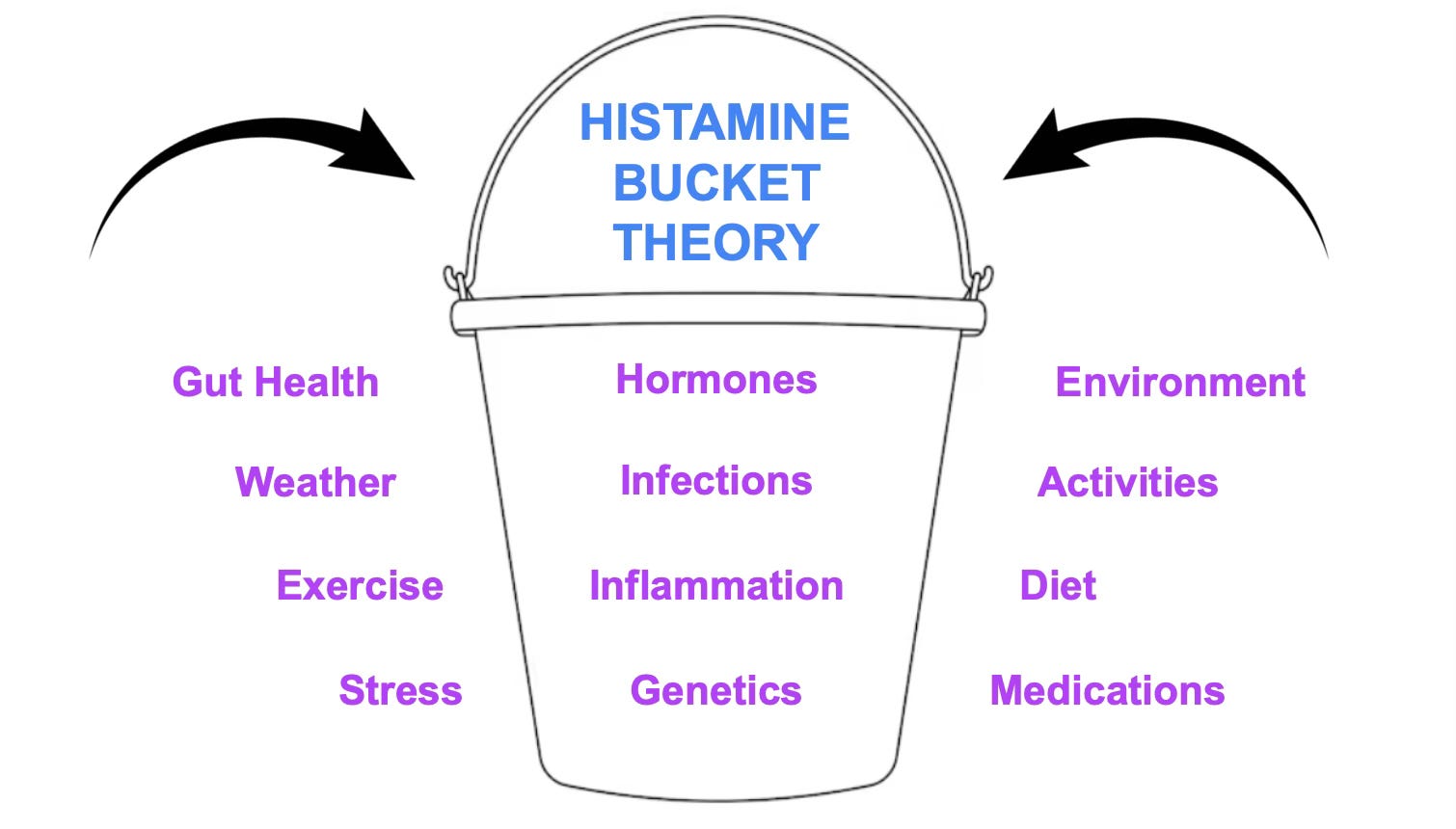
Why It Matters
This model explains why someone can tolerate certain foods or environments one day, and react severely the next. It’s not always about a single trigger - it’s the cumulative load.
You could have a high level of histamine due to multiple contributing factors, but only be noticing the final trigger — the straw that broke the camel’s back.
This often happens with stressful and traumautic situations in our lives. Certainly, stress and trauma are mast cell triggers — but experiencing severe histamine symptoms during a stressful or traumatic situation typically means your bucket was pretty full to begin with. So while addressing your nervous system is certainly a needed aspect of healing, addressing the underlying contributors to high histamine is critical.
Managing Your Histamine Load
If you're dealing with symptoms and suspect MCAS or histamine intolerance, here are some strategies that align with the bucket theory:
Reduce high-histamine foods – especially during flare-ups.
Support your DAO enzyme – with supplements or foods rich in vitamin B6, copper, and vitamin C.
Limit histamine-releasing triggers – like alcohol, stress, and certain medications.
Support gut health – imbalanced microbiomes can increase histamine production.
Manage stress – cortisol produced during the acute stress response is a major mast cell trigger.
Track your symptoms – keeping a food, environment, and symptom diary can help identify patterns.
Final Thoughts
The Histamine Bucket Theory provides a practical way to visualize how your body might be overwhelmed by histamine and how to manage symptoms and avoid histamine overload. Traditional allergy tests and MCAS diagnostic tests often result in false negatives, but looking at histamine through a lens of tolerance can help you understand your individual threshold and make more informed choices and better manage your health.
If you suspect you are dealing with MCAS or histamine intolerance, check out my in-depth post on managing MCAS to learn more about specific high histamine foods and other histamine triggers, how MCAS can trigger unnecessary histamine release, how this affects pregnancy, how I’ve put symptoms into remission for over 4 years now — and how you can heal, too.
Explore more of our health-related articles below:
Mast Cell Activation Syndrome (MCAS) - Much More Than Just A Histamine Issue
RCCX Theory: The Complex Gene Set Linking Trauma, Immunity, and Identity
Your Pocket Guide to Understanding and Managing Hypermobility and Ehlers-Danlos Syndrome
What type of tests do you think would be best/beneficial for figuring out histamine intolerance, doa, hmmt, comt etc?