

My Beef With Tallow or: How I Learned to Stop Worrying and Love the Balm
Why you should know about barrier repair, and my experience with popular "clean" skincare brands

A few years ago, something strange happened.
Almost overnight, I became allergic to nearly every skincare and beauty product I owned.
I’ve written a lot about my health crisis and how it changed almost every part of my life: my routines, my priorities, my diet, my home, and my understanding of my own body.
What I don’t talk about nearly as often is what happened to my bathroom cabinet.
At 35 years old, I had to rebuild my entire approach to personal care from the ground up.
Shampoo. Conditioner. Soap. Lotion. Deodorant. Perfume. Toothpaste. Face cream.
Things that had always been part of my daily routine suddenly became things my body could not tolerate, making my skin burn, itch, flush, or swell, and even triggering perioral dermatitis.
It forced me to look much more closely at what I was putting on my skin.
Behind the glossy packaging and alluring claims, most conventional skincare formulas contain a cocktail of chemicals that raise serious health concerns. From endocrine disruptors that interfere with hormone function to carcinogenic ingredients linked to cancer to simply chemicals that sensitive immune systems don’t tolerate, these hidden hazards are more common than most consumers realize.
For most of my life, none of that mattered.
Then suddenly it mattered a lot.
Clean Beauty Didn’t Find Me. Chronic Illness Did.
Today, “clean beauty” has become its own lifestyle.
People arrive in the clean beauty space for all kinds of reasons. Some want to reduce their exposure to certain chemicals. Others are concerned about endocrine disruptors. Some simply prefer shorter ingredient lists. Plenty are drawn in by wellness culture or whatever ingredient happens to be trending on TikTok.
I arrived through a very different door.
I wasn’t trying to optimize my health or maximize my skincare routine, I was just trying to find a face cream that didn’t burn my skin.
After developing Multiple Chemical Sensitivity (MCS) alongside Mast Cell Activation Syndrome (MCAS), products labeled as gentle, dermatologist-tested, or even hypoallergenic often caused severe reactions.
That experience permanently changed the way I think about product safety.
Something can be considered safe for the average consumer while still being a terrible choice for someone whose immune system doesn’t behave like the average consumer.
The mainstream conversations around product and ingredient safety are built on population-level research, which don’t always reflect the experience of people whose immune systems don’t behave like everyone else’s. Population-level studies aggregate the data and don’t take into account that 20% of the population is hypersensitive.
Outliers are tossed out of studies as a fluke, but outliers are still people. Something can be tolerated by the majority of people and still be a serious problem for a significant subset of the population — a subset that may be overrepresented in areas like clean beauty or non-toxic living, as they seek out options suitable for their sensitive skin and bodies.
A simple comparison to illustrate why the data on product safety is often flawed: peanuts are considered safe for most people, but that obviously doesn’t mean they’re harmless for someone with a peanut allergy. And while about 2% of people have true peanut allergies, about 22% of people have a peanut sensitivity. So while a population level study would deem peanuts as safe, nearly a quarter of the population has an issue with them.
The same logic applies when we talk about the thousands of ingredients used across personal care products: Who is being studied? What reactions are being measured? Were researchers looking for major diseases years later? Were they paying attention to chronic irritation, inflammation, allergic responses, and subtle immune reactions that can dramatically affect quality of life? And so on. It’s the same as any other consumer product we question.
Some people will brush off this kind of critical thinking as fear-mongering, but there is a huge difference between fear-mongering and education and awareness.
My experience forced me to stop assuming that a product was safe simply because it was popular, widely used, approved for the general population, or even talked about as fine from popular “clean beauty” influencers.
I had to learn to read labels differently. I had to simplify. I had to rebuild my routines from scratch.
And ultimately, I had to develop a much deeper understanding of the relationship between our bodies and the environments we create around them.
My Beef With Tallow
After throwing away nearly every beauty product I owned, I spent more than a year using almost nothing.
Most days I washed my face with water.
Sometimes raw honey.
I remembered my Nana standing at the kitchen sink rubbing olive oil into her skin, so I tried that too. For a while, it was one of the only things my skin could tolerate.
Then I discovered tallow.
At the time, it felt like exactly what I needed: a simple, minimally processed moisturizer, a single ingredient cream that my skin didn’t immediately react to. I found tallow in 2021 and used it for years, long before it became one of the internet’s favorite skincare products.
Then tallow exploded. Suddenly it seemed like everyone was rubbing rendered beef fat on their faces, with some proclaiming it the perfect natural moisturizer.
I understood the appeal because I’d been there myself.
But after using tallow for several years, I started noticing something.
While tallow never caused breakouts or obvious irritation for me, my skin never seemed truly healthy either. I dealt with a patch of persistent dryness that I eventually realized wasn’t improving. I realized that, upon closer inspection, there was a slight redness and roughness to the very top layer of my skin, instead of a dewy glow. At first I blamed this on my recovering gut health, but once I dug into the science of skincare, I realized it was the tallow. I can now spot this skin texture effect in people who use a lot of tallow on their face.
When I started learning more about skin barrier science everything finally clicked.
Corneotherapy: Terrain Theory for Skin
Corneotherapy is scientific skincare approach focused entirely on repairing and maintaining the outermost layer of the skin (the stratum corneum). Pioneered in the 1970s, its core philosophy is to protect the skin barrier, microbiome, and acid mantle rather than disrupting them through harsh treatments.
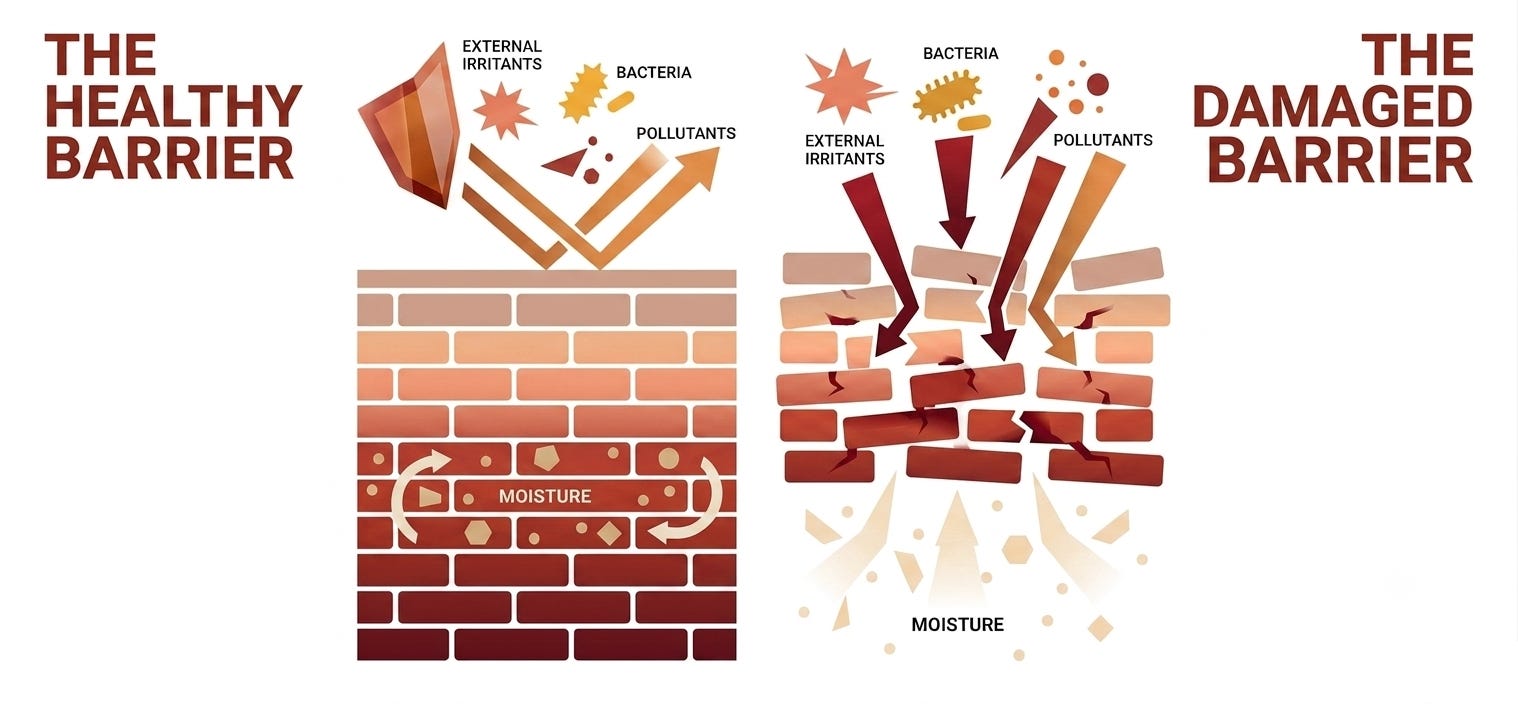
Corneotherapy isn’t just about using “natural” products. It generally emphasizes:
Mimicking the skin’s natural lipids (especially ceramides, cholesterol, and fatty acids).
Using the fewest necessary ingredients.
Avoiding unnecessary exfoliation.
Avoiding fragrances and ingredients that may compromise a damaged barrier.
Supporting skin to heal itself rather than continually stimulating it.
While corneotherapy is a theory and approach that applies to everyone, it is especially important for those with sensitive skin.
When you begin to learn about corneotherapy and barrier repair, the underpinning of the tallow craze slowly falls apart, because…
Tallow is not a complete face moisturizer.
Now before I get into it, I have to say — people really love an absolute. They love to be able to say tallow = good, or tallow = bad, and unfortunately the world is just not black and white, and I’m not here to tell you tallow is all bad.
But what I am telling you is that, contrary to popular claims, tallow alone is not bio-identical to human sebum. And because of this, tallow alone is not a sufficient skin care routine, especially longer term or if you have aging or acne-prone skin.
While tallow can be an excellent occlusive (a substance that creates a top level seal), it isn’t a complete moisturizer. On its own, it does not provide the balance of humectants, barrier-supporting ingredients, and lipids needed for long-term skin health. Tallow is completely missing about half of the molecular profile of actual human sebum. Human sebum contains about 50% triglycerides, ~26% wax esters, ~12-20% squalene, and approximately 5% cholesterol. Tallow only contains triglycerides, at 95%.
In short, tallow contains, at most, about half of what your skin barrier needs to be healthy.
Because sealing moisture in and adding moisture aren’t the same thing. Healthy skin needs more than oils. It also relies on humectants that draw water into the skin, along with barrier-supporting ingredients that help replenish what the skin naturally loses over time.
Tallow is an occlusive that creates a top level seal, and if you have a damaged skin barrier or dry skin, tallow is simply sitting on top of that and not repairing or moisturizing what’s underneath. This is why many people who use tallow alone can have a skin texture that looks dewy but still a bit red and somehow dry underneath. It’s not a complete moisturizer.
And moisture isn’t the only thing tallow seals in. In acne-prone skin, tallow can seal in dirt, sweat, and bacteria, and is highly comedogenic, meaning it can clog pores and create more acne.
So while tallow can absolutely be part of a healthy skincare routine, it just isn’t the complete moisturizer the internet often claims it is. In my personal experience, it is much better as a body moisturizer, and is a great option for kids and for use with skin issues like eczema that need top layer barrier protection.
How I Evaluate Skincare
After years of trial and error and education, all my skincare knowledge boils down to two questions when I am evaluating a product:
Is it clean? Meaning, is it TRULY clean and not just greenwashed, does it contain endocrine disrupters, are there harsh chemicals, etc etc.
Does it work? Unfortunately, there are lots of clean beauty products that are simply ineffective. It’s great when they don’t cause damage, but what we are really looking for is skincare that doesn’t cause damage AND effectively betters the look and quality of our skin.
There are very few products that meet these standards.
A note on Hyaluronic Acid
Hyaluronic acid (HA) is all the rage these days. Companies love to put HA in everything and claim all these great moisturizing benefits. Here’s the catch — HA pulls moisture to it. If you live in a humid or not dry climate, HA is great because it will pull moisture from the air to your skin. If HA can’t pull moisture from the air, it will pull it from deeper layers of your skin. If you live in a dry climate, or have dry skin (or both!), HA will make your dry skin worse.
And, unfortunately, HA is in nearly everything marketed to those with dry skin.
So if you have dry skin issues, and you are using products with HA, this is something to consider. I personally live in the high desert and can use HA in very small amounts during monsoon season, and when I go on vacation to places with more moderate or humid climates, but I skip it during seasons when it’s exceedingly dry here or if I notice dry patches popping up.
My Skincare Routine
My skincare routine is simple now, and I have the best skin of my life:
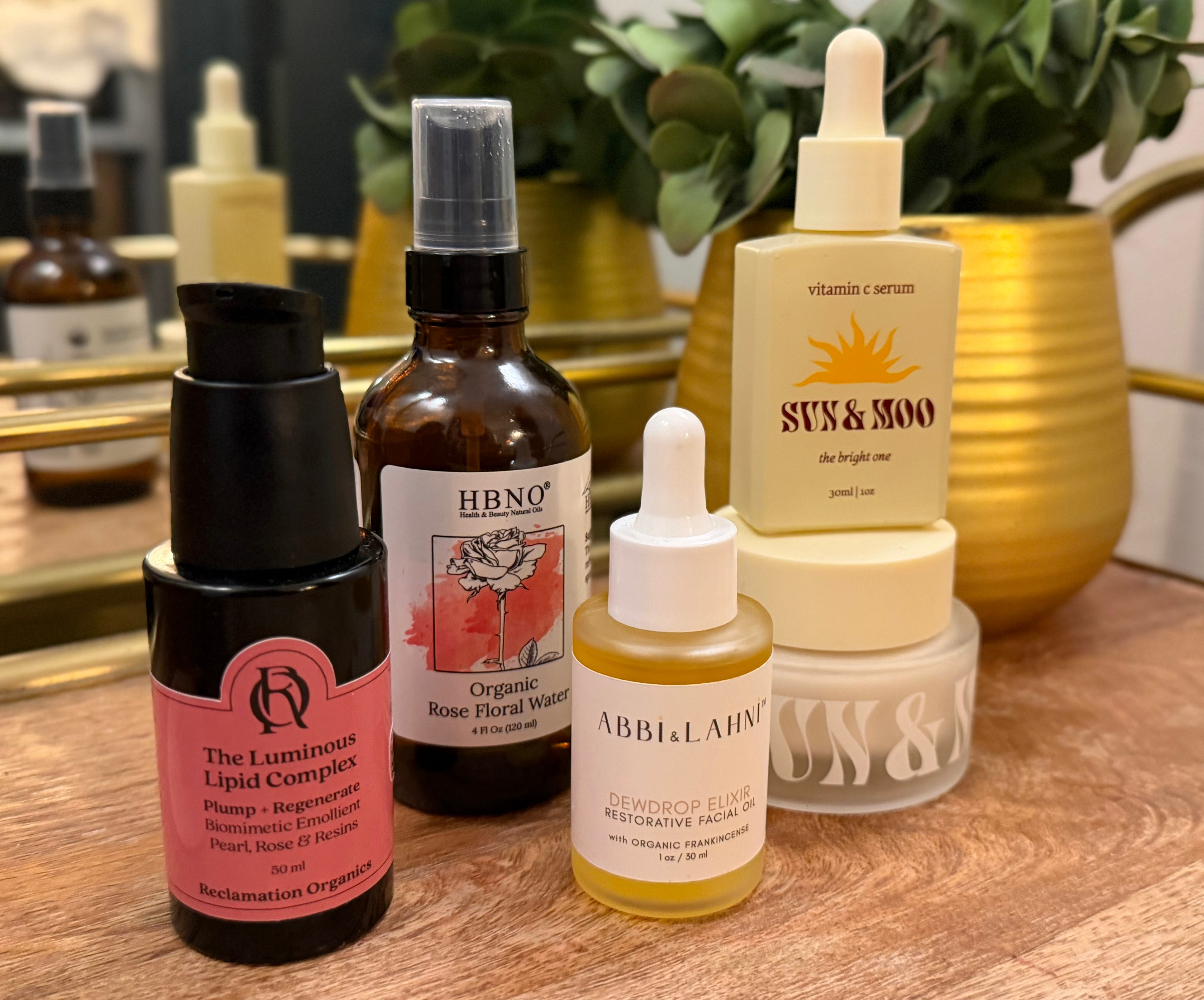
Cleanse — Sometimes I wash my face with a gentle cleanser, sometimes I just use water. My favorite cleanser is Sea Bloom Collagen Cleanser by Abbi & Lahni. In my single ingredient days I washed my face with raw honey and I find that’s still a good option (especially for those who are dealing with active MCAS or MCS).
Refresh — I always use a hydrosol to add moisture to my skin, my very favorite is this organic rose water hydrosol. I will use this multiple times a day for a refresh, and I keep it in the front of the car with me on long road trips for a little refresh.
Serum — I look for serums and moisturizers with a good balance of lipids and oils that work well for me, like jojoba oil and squalane. My favorites are the Dewdrop Elixir by Abbi & Lahni, and for a more active serum I love The Bright One Vitamin C Serum by Sun & Moo.
Moisturizer — As this is the top layer, this can have more occlusive ingredients that seal everything in. My favorite is the Luminous Lipids with Pearl, Rose, and Reishi from Reclamation Organics. In the summer I also like a lighter every day moisturizer like The Beautiful One by Sun & Moo. In winter, as I live in a very dry climate, I often add another thicker face cream with an occlusive layer on top of this (so a larger ratio of tallow, beeswax, or *gasp* petroleum jelly) to fully protect from dry winds. I am looking forward to trying Glow Guard by Abbi & Lahni for our dry high desert winter.
My diet also plays a major contributing role in my skincare, I avoid seed oils and pasteurized milk (raw milk is fine), which both cause acne for me.
My Favorite Skincare Brands
I’ve tried dozens of popular “clean” skincare brands at this point, and I’m sharing with you my top three — as well as two that are very popular in the wellness/clean beauty space that I didn’t love, and why.
Note: I am technically an affiliate for all of these, even the ones I am not recommending. You can trust that these are honest reviews because, well, I’m not recommending all of them. All of the skincare products I’ve tried and liked are linked in my ShopMy Skincare Collection.
Sun & Moo
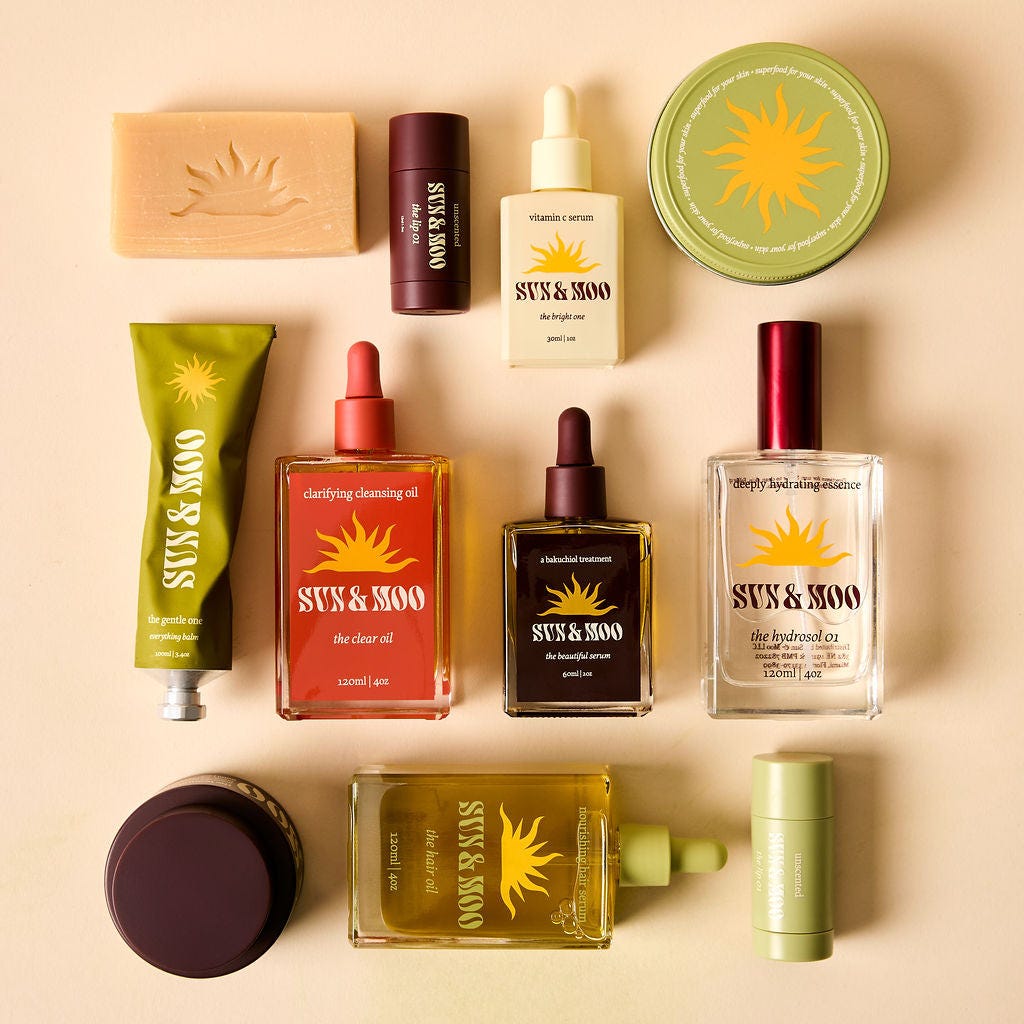
Sun & Moo began as a tallow brand (actually two brands that merged) that has evolved over the years and recently reformulated many of their products — including introducing new, water-based skincare products. I love that this brand has evolved their products as their knowledge of skincare evolves. I predict this will be one of the few tallow skincare companies that evolves and survives as the tallow craze continues to move past its peak. They make my favorite tallow balm that I use on my body and on my kids, The Healer, which was recently reformulated and has such an incredible texture for a tallow balm. The texture of their newly formulated products, especially The Beautiful One face cream, is honestly insane and I can’t wait to try their other new products coming out in the next few months.
Standout Products: The Bright One (Vitamin C Serum), The Beautiful One, and The Healer
You can use code GLITTER for 10% off Sun & Moo
Abbi & Lahni
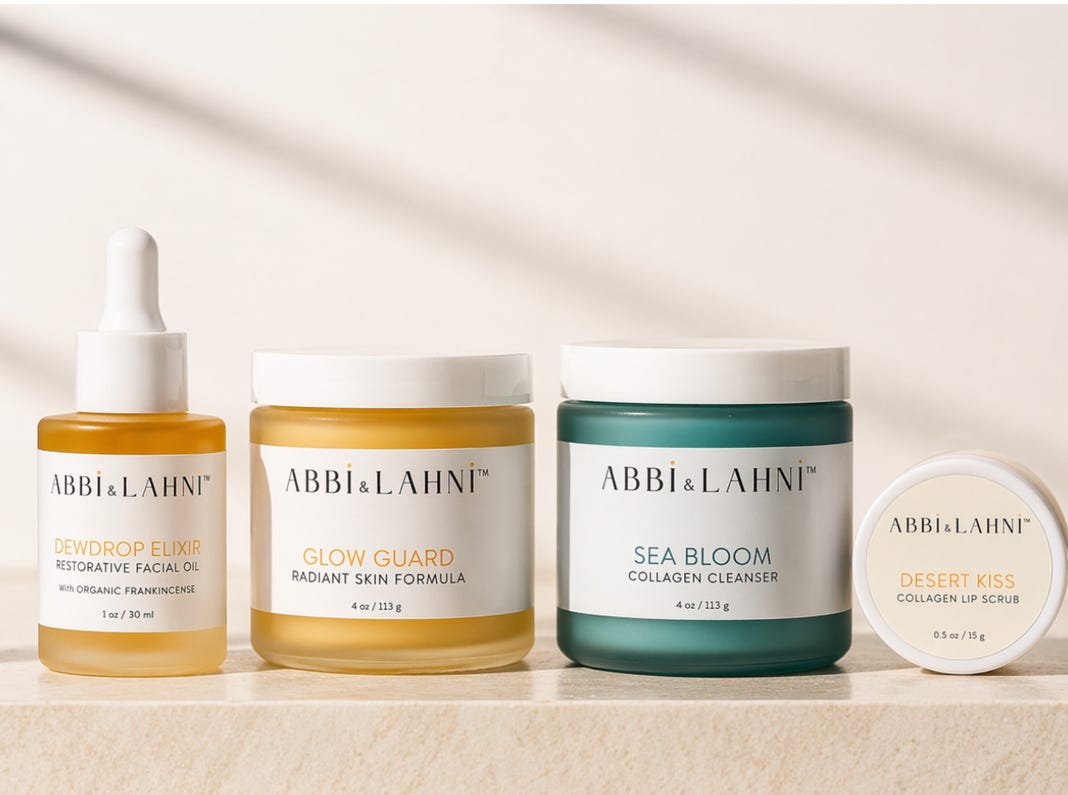
A local to me company, Abbi & Lahni is a luxury beauty brand is formulated right here in the high desert of Sedona. They exclusively use high quality organic ingredients, and there is no hyaluronic acid so their products are especially wonderful in extremely dry climates. My personal favorites are the Sea Bloom Collagen Cleanser and the Dewdrop Elixir serum. The Desert Kiss lip scrub is especially useful in our dry climate and I love using Glow Guard as an all-over body oil, and it’s going to be great in my skincare tool kit this winter.
Standout Products: Dewdrop Elixir with organic frankincense and Sea Bloom Collagen Cleanser
You can use code GLITTER15 for 15% off Abbi & Lahni
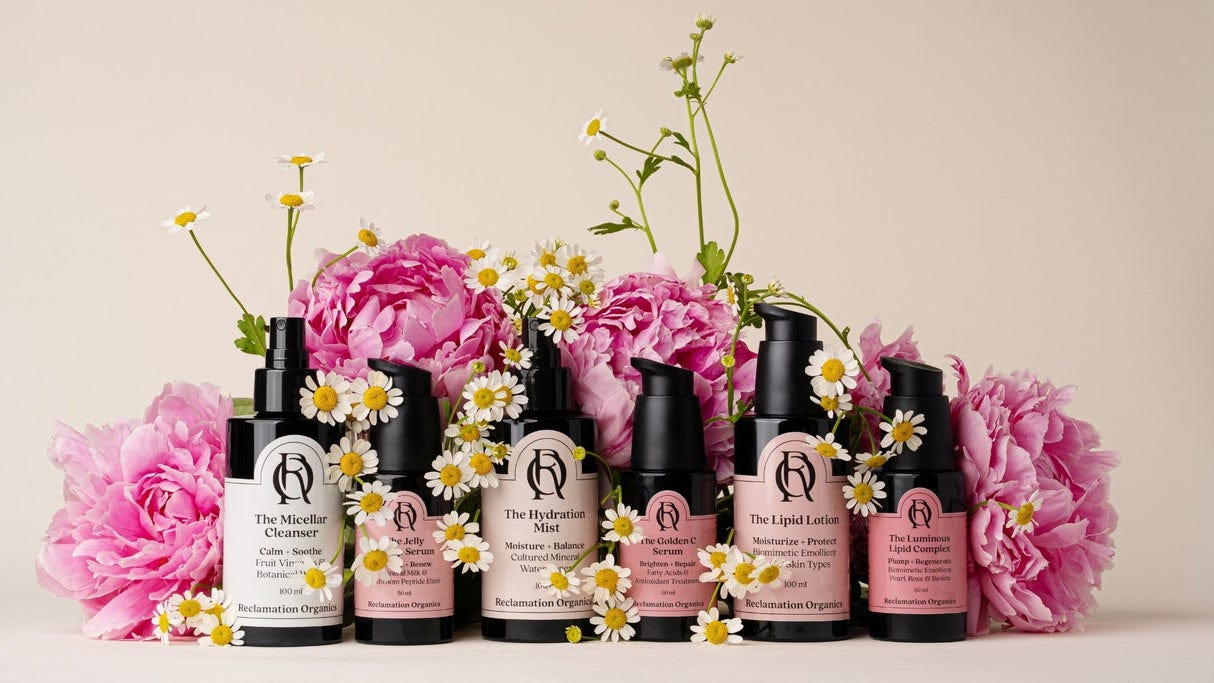
Reclamation Organics
Reclamation Organics is the brand that introduced me to corneotherapy and helped me understand how to protect my skin barrier. The standout product (and possibly my favorite skincare product of all time) is the Luminous Lipid Complex with Pearl, Rose, and Resins, and there is also an unscented (and less expensive) version of the Lipid Lotion. A serum and lotion in one, both of these have essentially the same base ingredients and are designed to be biomimetic to create a skincare product identical to the lipid profile of the skin barrier.
Standout Product: Luminous Lipid Complex with Pearl, Rose, and Resins and fragrance free version of the Lipid Lotion
You can use code GLITTER for 10% off Reclamation Organics
Not-so-Favorite Skincare Brands
Two of the most popular clean skincare brands I see popping up around instagram, especially from influencers sharing their codes, are Primally Pure and Clearstem.
I tried both and I didn’t like either.
While they both are clean brands, and I appreciate the formulations, they just don’t work for me.
Primally Pure was kind enough to send me their Plumping Serum, Plumping Mist, and Plumping Cream. I also tried their Almond Vanilla Body Butter and a lip balm. Frankly, this just confirmed for me the issue with tallow sitting on top of the skin and not truly moisturizing the layers of the skin barrier. While these products didn’t cause any breakouts (which is definitely a win!), they left my skin feeling a bit dry underneath, and led to a dull and dry look under the sheen of tallow. These tallow products also honestly do not feel well formulated in comparison to other tallow forward companies like Sun & Moo — the tallow isn’t balanced, blended and integrated with jojoba and other oils. The mist and serum do not have tallow in them, but I just didn’t feel like these did anything for my skin, honestly. I’m not a skincare formulator, but after all my years of research and trial and error, my guess is that the issue with this routine is that it relies on too high a percentage of tallow and lacks enough of the other lipids (like jojoba or squalane) to match the natural profile of human sebum.
Clearstem is another brand that was kind enough to send me their Hydraglow Moisturizer, Hydraberry Mask, Goldenhour Watermelon Barrier Oil, Pregame Mask, and Bounceback Serum. Now Clearstem seems more popular with people who have acne-prone skin, which I do not, so I just may not be their target market. While I did like the Hydra-line of products and the Watermelon Barrier Oil, I also find their products have just a lot of ingredients that I’m not sure are totally necessary. And I have bigger concerns with the products as a whole — my Hydraglow moisturizer grew mold within a couple months, and the Pregame Mask and Bounceback Serum both have glitter in them, which is the absolute last thing I want in my skincare. The Pregame mask legit looks like something I would have bought at the mall in 1999. Ironically, my code is GLITTER if you want 15% off of Clearstem products.
Conclusion
Learning about the best practices around how to actually benefit from tallow in skincare perfectly captures my biggest frustration with the clean beauty conversation.
We’re constantly searching for heroes and villains.
One ingredient becomes the miracle cure. Another becomes the toxin everyone should avoid.
But it really doesn’t work that way.
There are no miracle cures.
The most important lesson chronic illness taught me wasn’t that every synthetic ingredient is harmful or that every natural ingredient is automatically better. Poison ivy is natural. So is arsenic. Petroleum jelly is synthetic, yet it’s often recommended by dermatologists because it’s remarkably inert and effective at protecting a compromised skin barrier. (And, it has actually been used by indigenous peoples across continents for thousands of years as an occlusive barrier and skincare solution for burns.)
The better question isn’t, “Is this ingredient good or bad?”
It’s, “How does my skin respond to it over time?”
That’s a much less satisfying answer because it doesn’t fit neatly into marketing. It requires curiosity instead of certainty and observation instead of ideology.
Today, my skincare routine looks very different than it did when I first got sick. It’s still simple, but it’s also more nuanced and has multiple, barrier-supporting steps. I’ve stopped chasing miracle ingredients and started paying much closer attention to evidence — both scientific evidence and the evidence my own body gives me.
For me, that’s what clean beauty has ultimately become: not following trends or avoiding ingredients out of fear, but learning to listen carefully enough to know when something is truly working, and when it only seems like it is.
Interested in learning more about health, wellness and beauty? Check out some of our other articles below:


