


Did you think things were gonna get less crazy when we left the Book of Enoch and jumped back into Genesis?
LOL.
This Week
We are reading:
Genesis 12-35
Proverbs 2:16-22, Proverbs 3:1-24
Summary
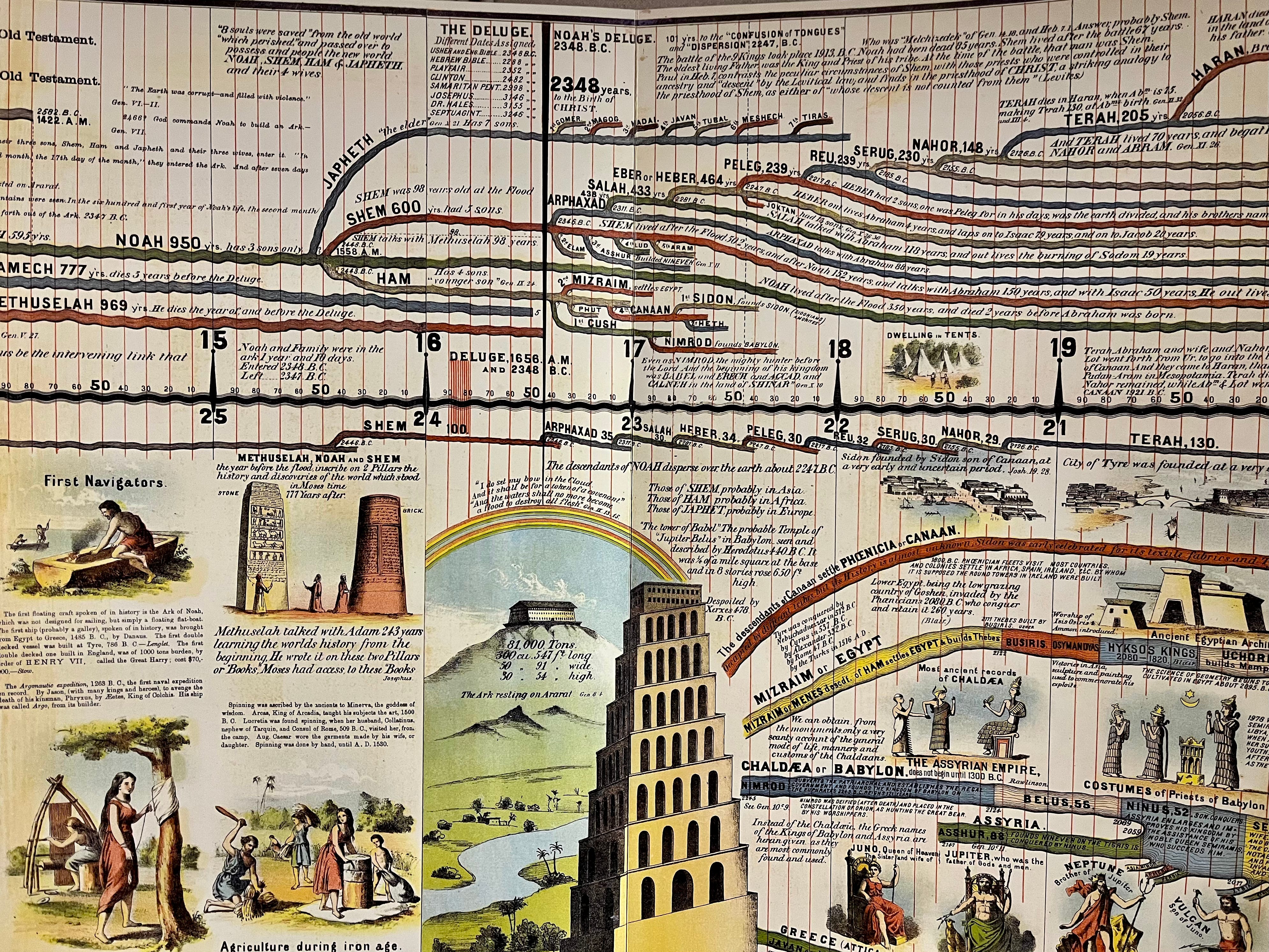
We’re now in the Patriarch time period identified on the Ascension Press timeline (created by Jeff Cavins). This is when most churches pinpoint an actual historical time period, and agree that Abraham was born around 2000 BC.
The Bible actually pinpoints Abraham’s birth as 1948 years after the creation of the world. And the creation date of the world was famously calculated by Archbishop James Ussher (1581-1656), an Irish clergyman and scholar, who determined a creation date of Sunday, October 23rd, 4004 BC based on Biblical genealogies and historical texts. This would mean Abraham was likely born in 2056 BC.
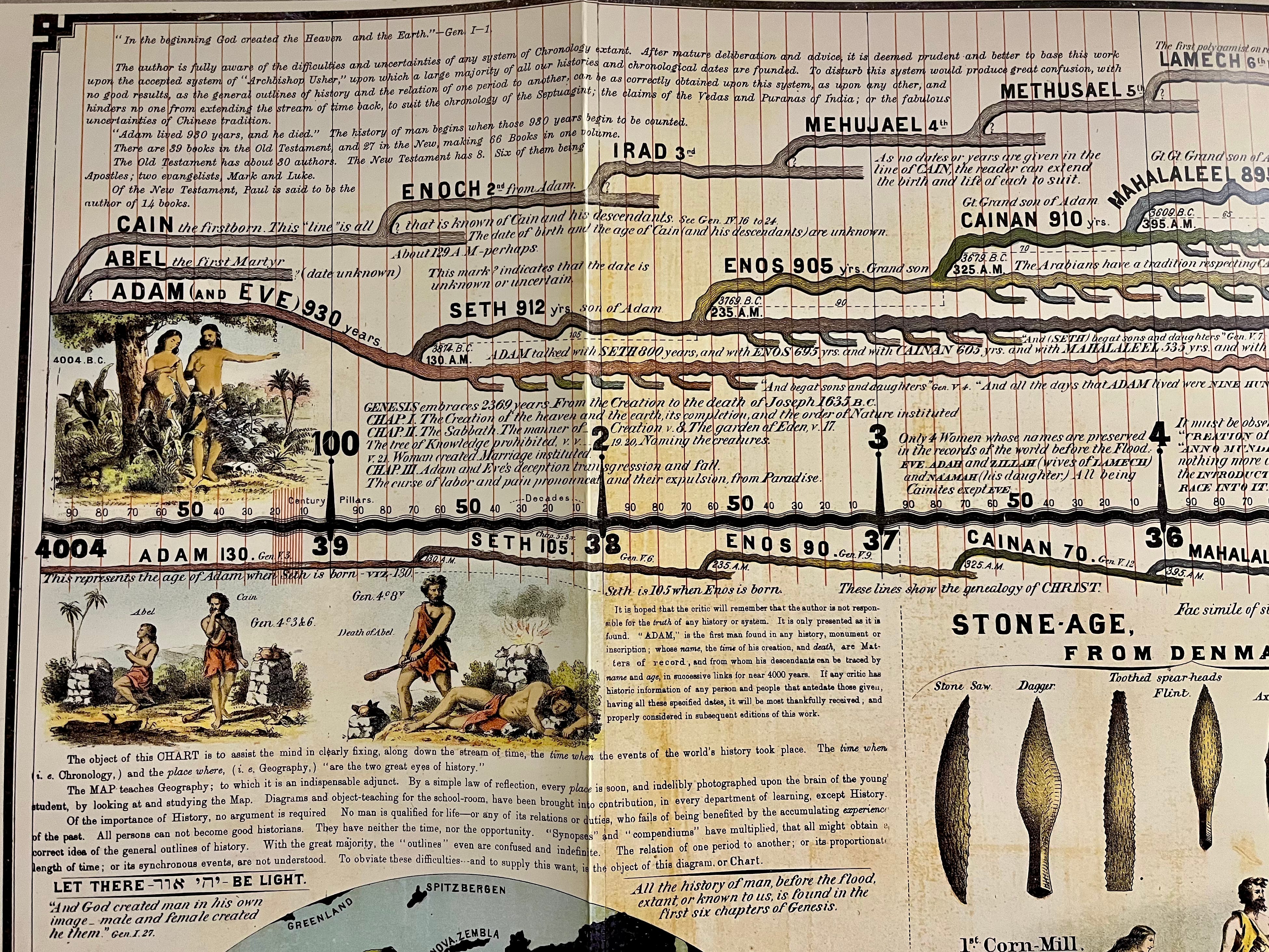
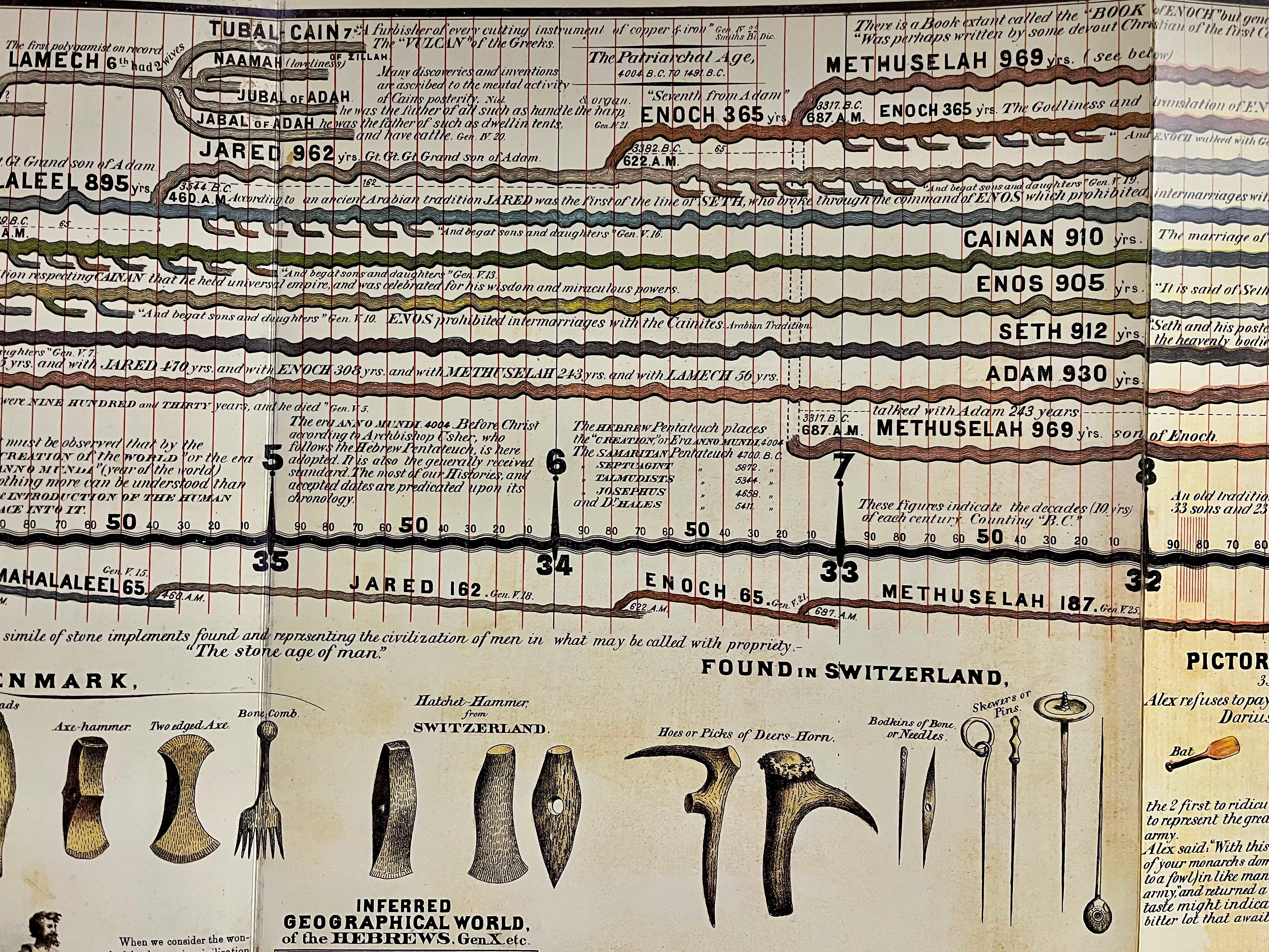
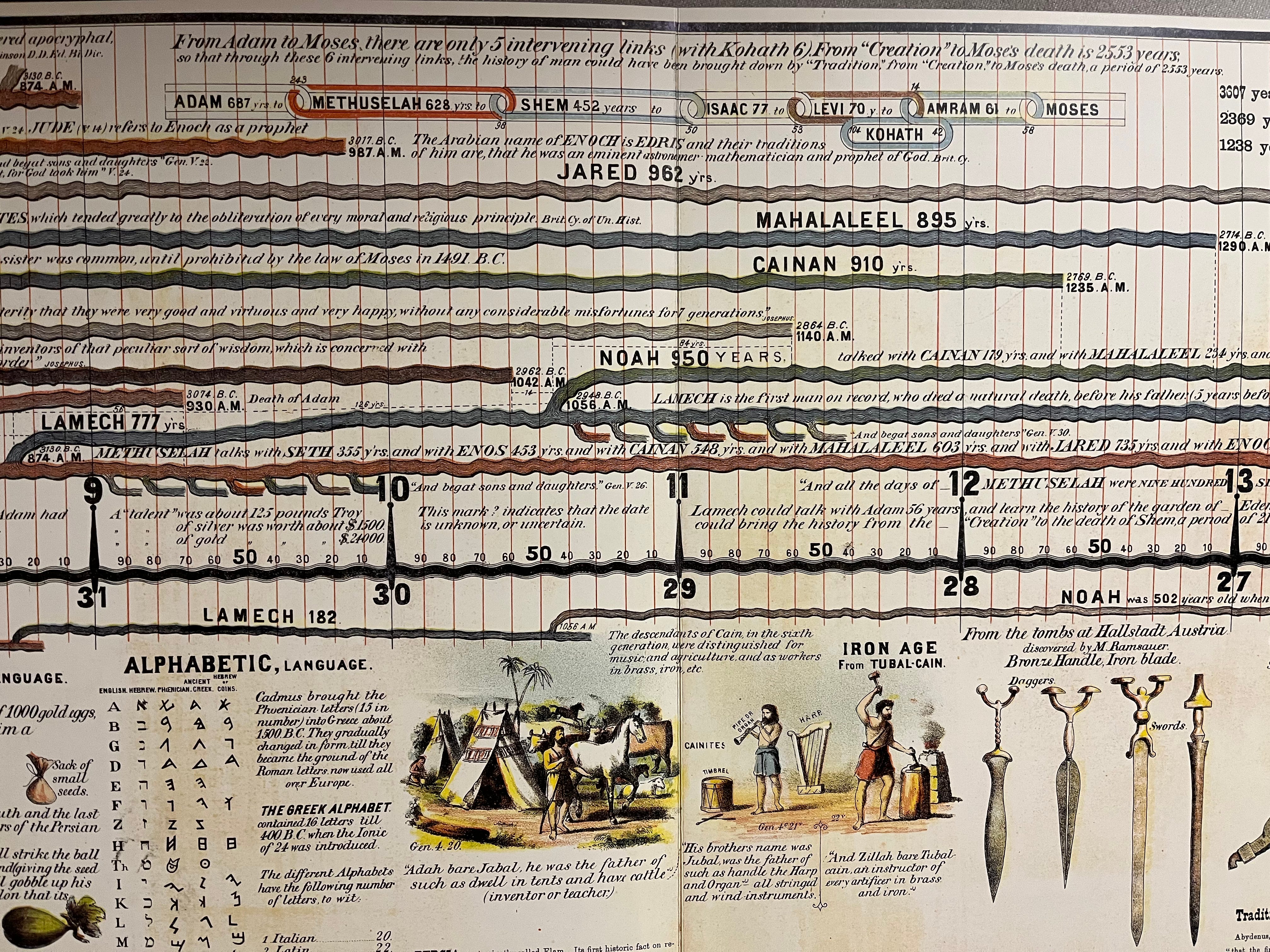
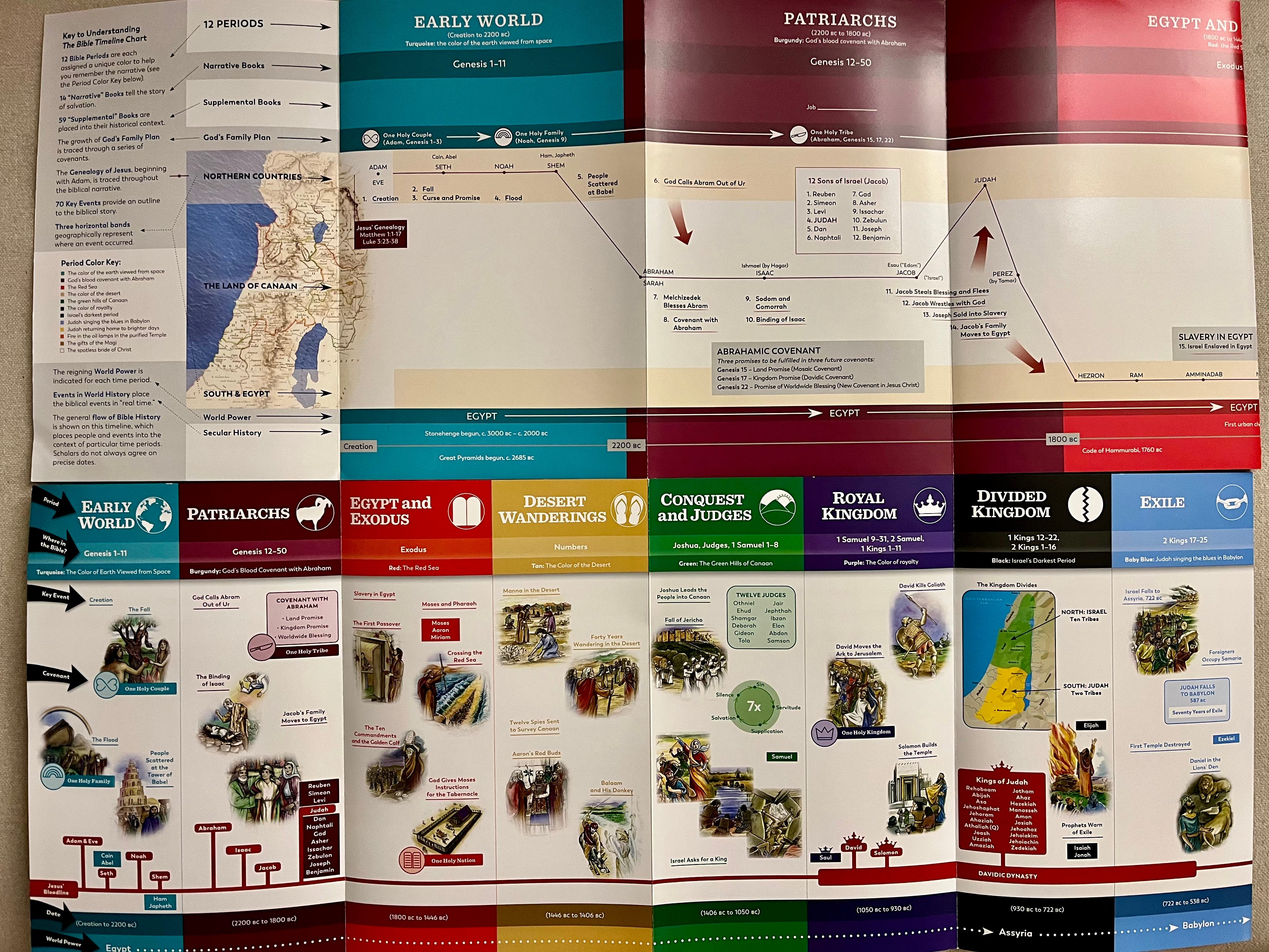
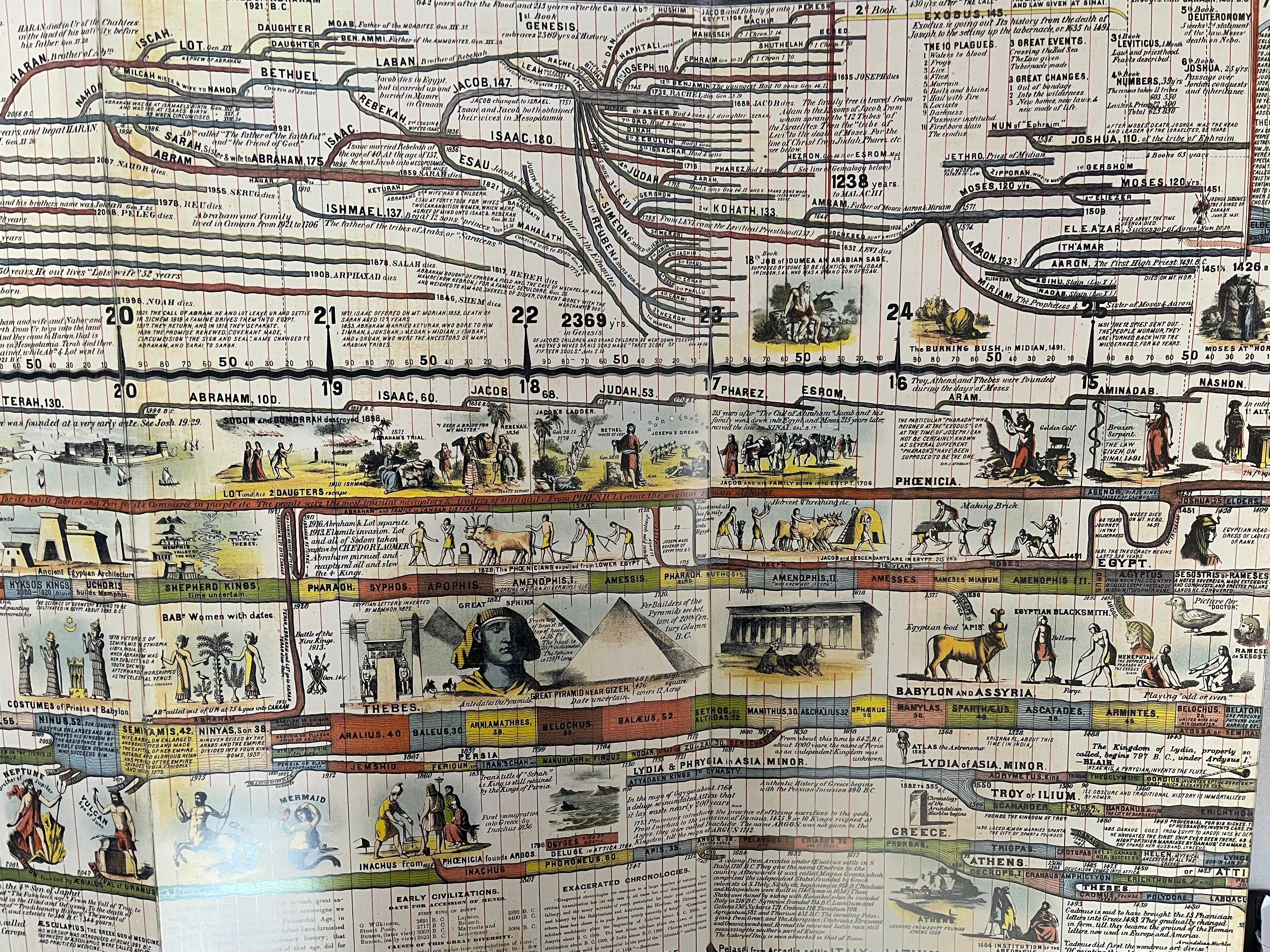
Below are pictures of the Biblical charts that I have for this time frame to help you orient historically — the first set is from Adam’s Chronological Chart of History, and the last is from the Bible Timeline Chart from the Great Adventure Bible.
You can read this however you want, but here is the daily breakdown from our annual plan:
Day 12 — Monday, 1/12 — Genesis 12-15, Proverbs 2:16-19
Day 13 — Tuesday, 1/13 — Genesis 16-19, Proverbs 2:20-22
Day 14 — Wednesday, 1/14 — Genesis 20-22, Proverbs 3:1-4
Day 15 — Thursday, 1/15 — Genesis 23-25, Proverbs 3:5-8
Day 16 — Friday, 1/16 — Genesis 26-28, Proverbs 3:9-12
Day 17 — Saturday, 1/17 — Genesis 29-31, Proverbs 3:13-18
Day 18 — Sunday, 1/18 — Genesis 32-35, Proverbs 3:19-24
For the sake of making this weekly free Bible study sustainable, my daily notes are shorter this week.
Day 12 — Monday, 1/12 — Genesis 12-15, Proverbs 2:16-19
God’s plan to save humanity continues with His covenant with Abraham.
In Genesis 14:18, we have foreshadowing of Jesus with Melchizedek’s offer of bread and wine.
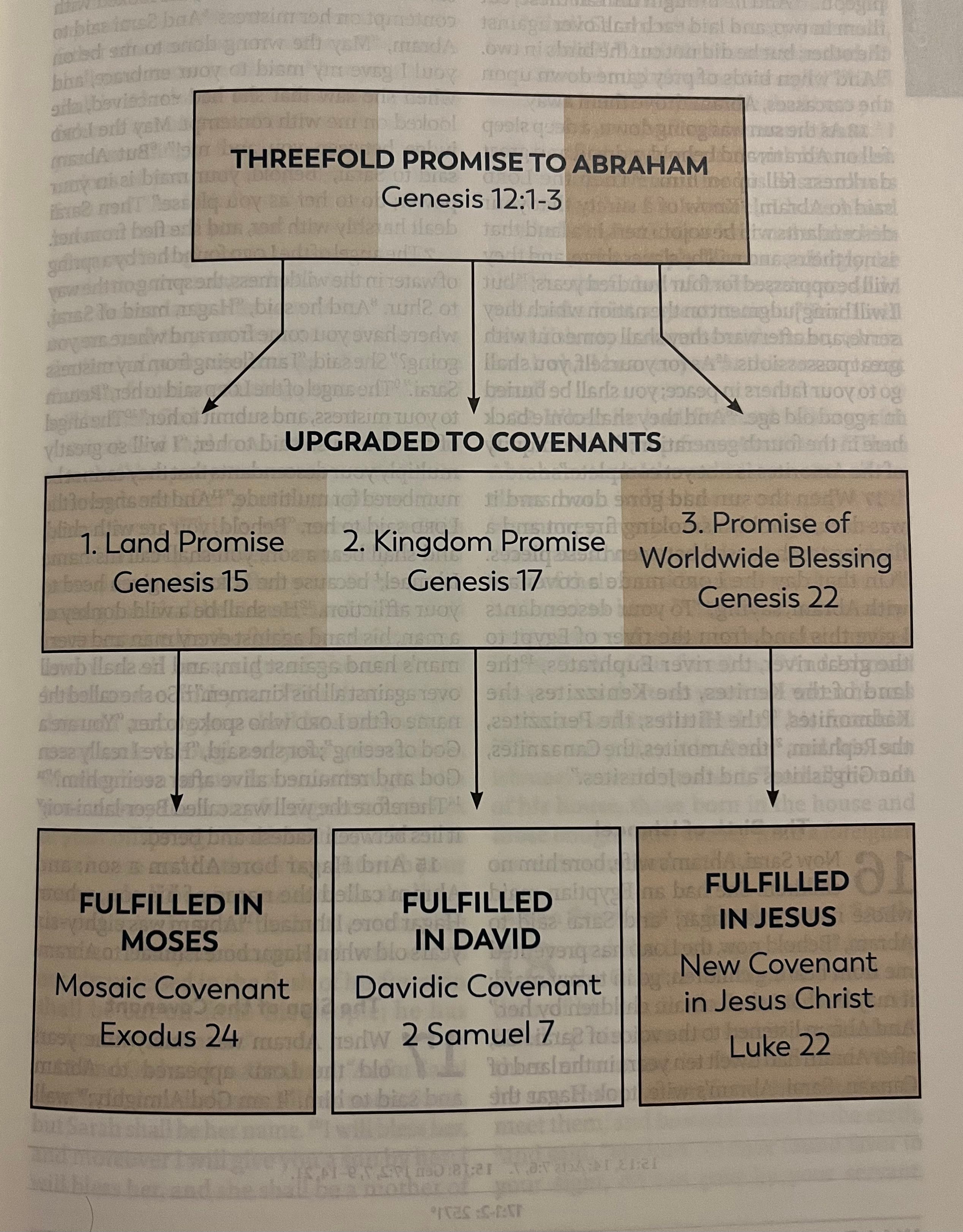
Genesis 15 is a major piece of the ultimate redemption story for humanity. Performing the ancient covenant ritual, God places zero conditions on Abraham and He alone assumes responsibility for its fulfillment — ultimately setting Himself up to die by His own oath to Abraham.
Most remarkably — Genesis 15:1 states “…the word of the LORD came to Abram…” That’s a potential reference to Jesus, as Jesus is the Word of God.
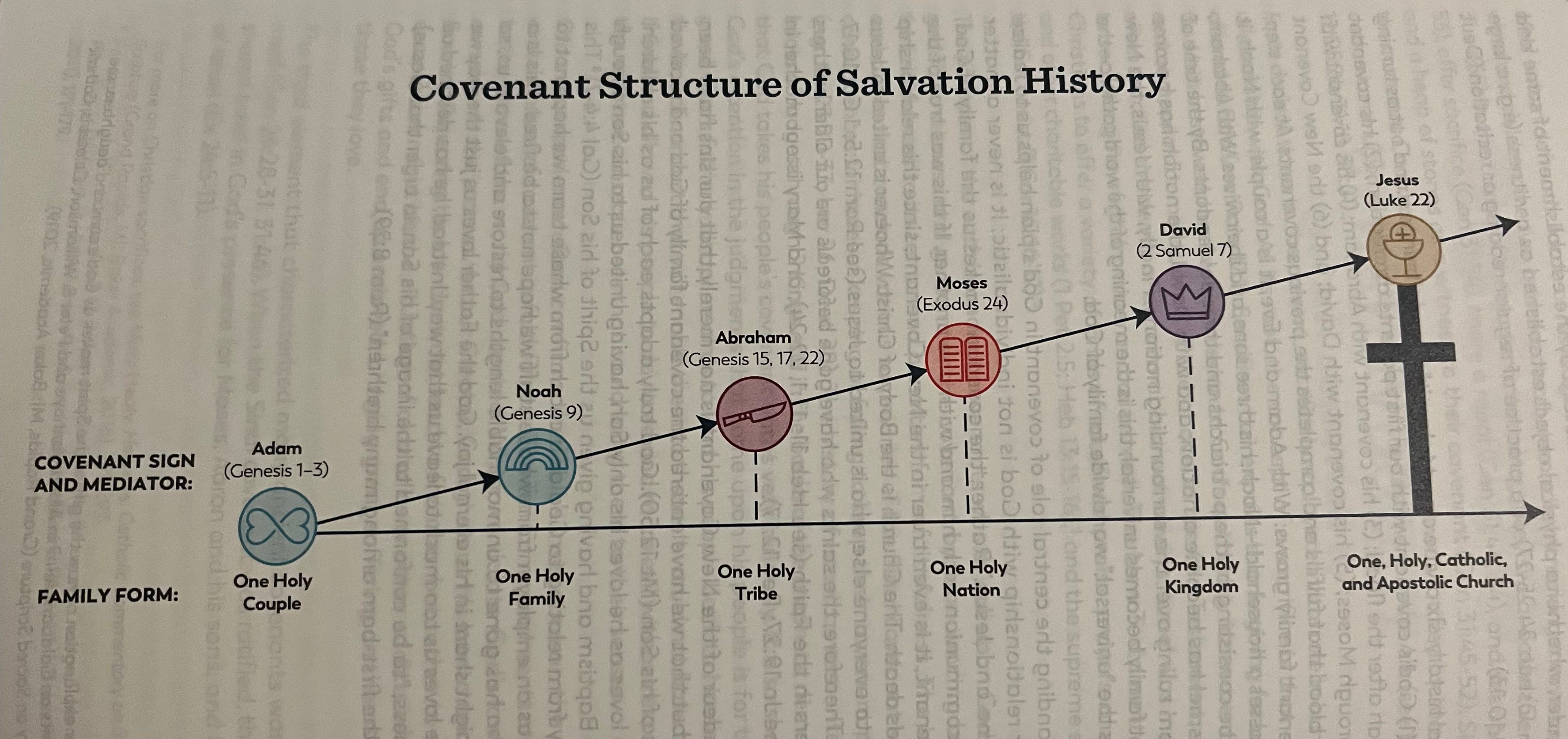
These diagrams of covenants from the Great Adventure Bible are a great way to understand how God’s promises unfold over time, culminating in ultimate salvation.
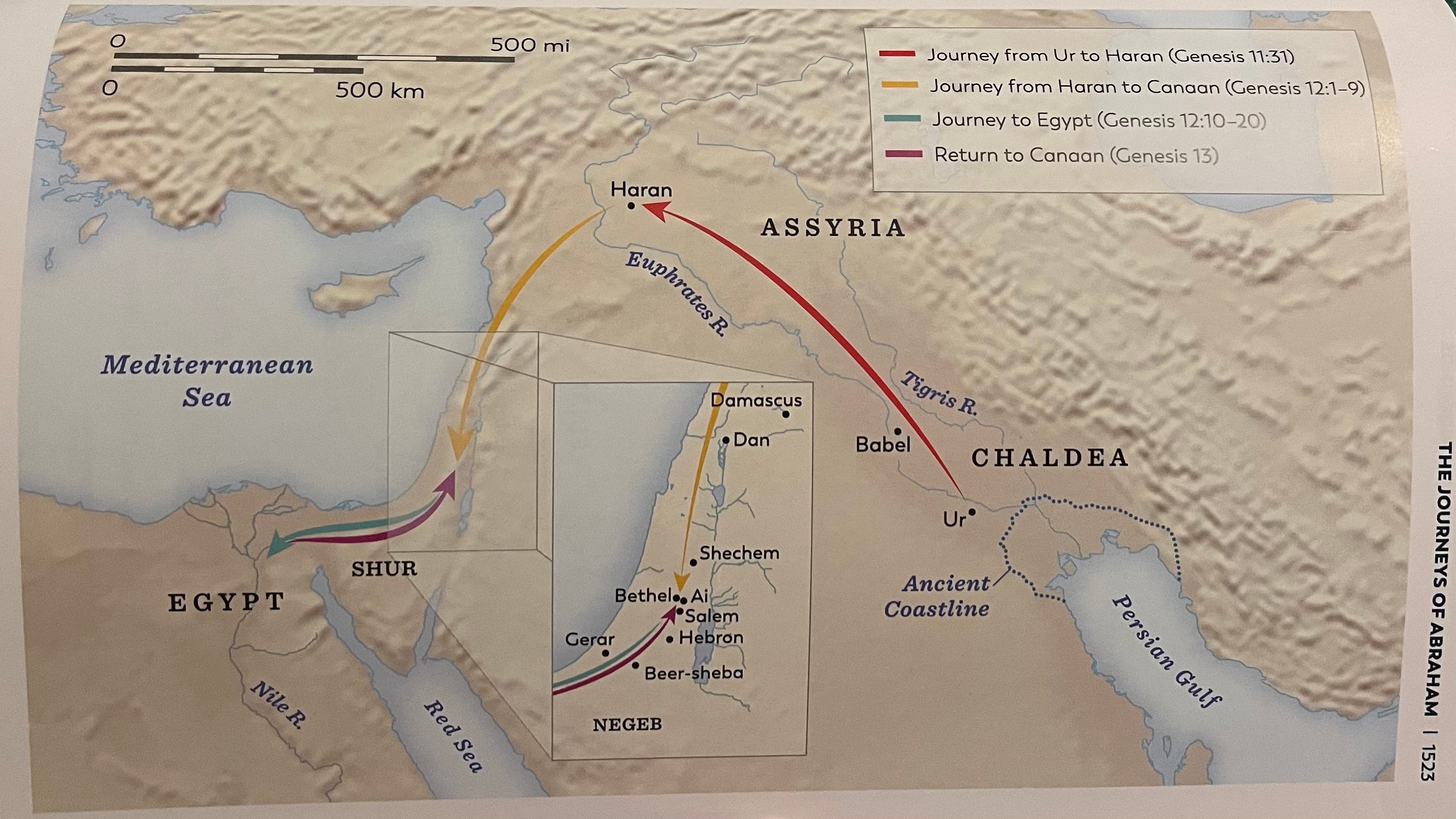
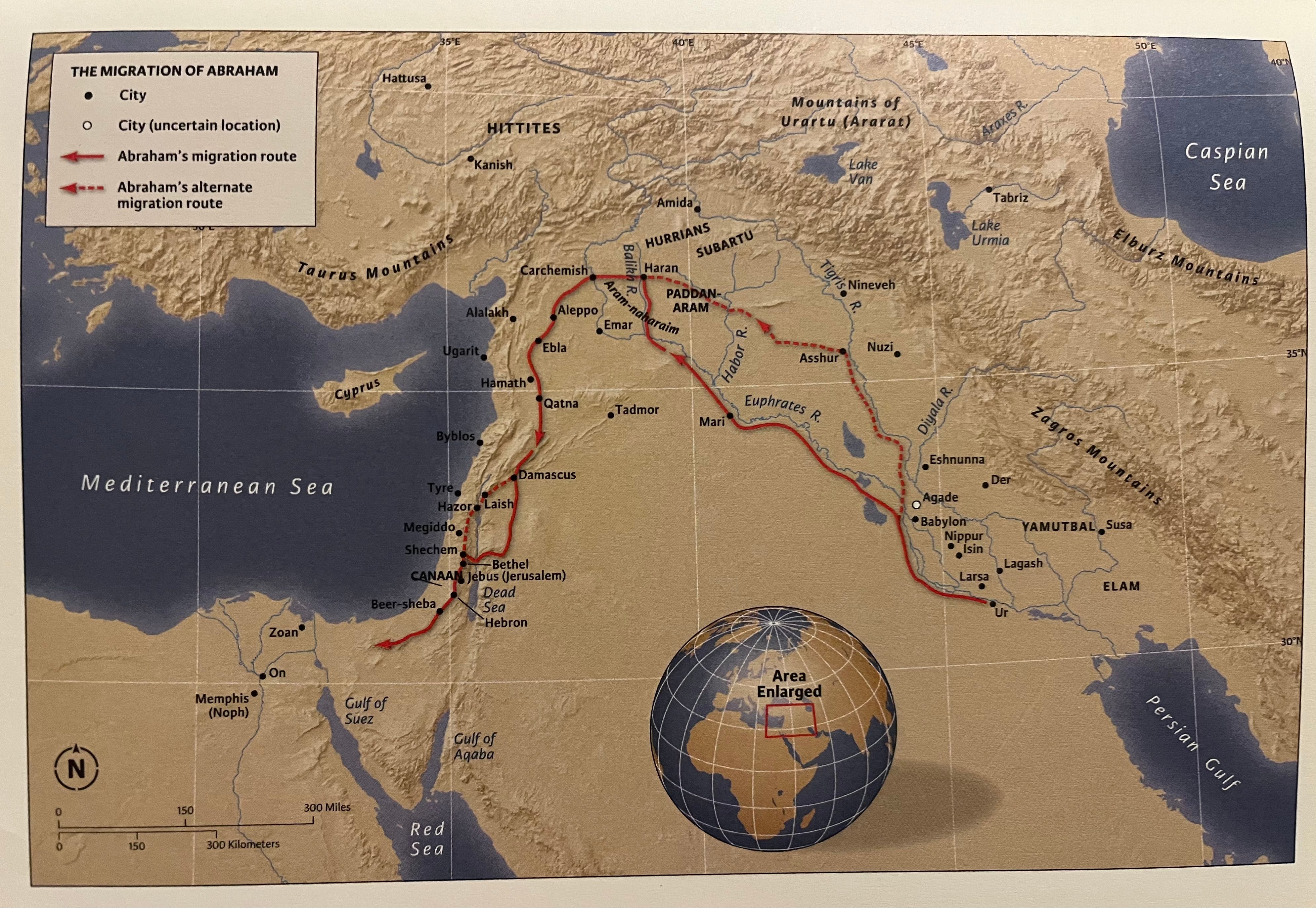
And here are some maps relevant to this week’s readings on Abraham that should help orient you in this time frame if you don’t have a study bible with maps.
Day 13 — Tuesday, 1/13 — Genesis 16-19, Proverbs 2:20-22
Mistake! Abraham and Sarah are impatient about God’s promise to give Abraham descendants and take matters into their own hands when Sarah offers up her servant, Hagar, for Abraham to impregnate, producing Ishmael (whose ancestors later become the Arabs, and Muhammad, who founds Islam).
I’ve always found it interesting that circumcision is commanded on the 8th day of life — which is when babies have a surge of vitamin K, which is critical for blood clotting. How could humans have known this at that time? This had to be wisdom bestowed by God.
Today we have my husband’s favorite Bible verse:
Sarah was afraid, so she denied it, saying, “I didn’t laugh.” But the Lord said, “No, you did laugh.” Genesis 18:15 NLT
Why did God think this was such an important footnote that he repeated it to Moses hundreds of years later? Write this down — Sarah laughed. She said she didn’t laugh but she definitely did.
God’s got jokes.
Abraham also laughs at God when He says He will make Abraham a father. And then God commands Abraham and Sarah name their child Isaac — which is Hebrew for “he laughs.”
Jokes on jokes.I might have to do a whole separate article on the archaeological evidence for Sodom & Gomorrah.
And is the pillar of salt pictured below Lot’s wife? This rock formation is venerated as Lot’s wife and is found near the cave where Lot and his family took shelter, near what is the now site of the Monastery of Saint Lot.

Day 14 — Wednesday, 1/14 — Genesis 20-22, Proverbs 3:1-4
He laughs is born. But what happens next is not comedic. And I don’t think Isaac was laughing at the top of that mountain. Ultimately, this is yet another OT foreshadowing of Jesus — God’s sacrifice of His only begotten son.
The story of Abraham being commanded to sacrifice Isaac is often perceived as confusing, or barbaric, or an example of an unjust God. But by fully understanding the meaning of this passage we can see that this is not the case.
First, God saving Isaac stands in stark contrast to (and as prohibition from) the popular practice of child sacrifice at the time.
Second, by this point, Abraham knew that God had a plan. He had already given him a son from a post-menopausal 90 year old woman. He had promised more descendants than stars in the sky. He knew God would either stop the sacrifice, or bring Isaac back to life, or had some other plan to fulfill the promises He was clearly intent on fulfilling. Abraham’s demonstration of faith and obedience is admirable.
Day 15 — Thursday, 1/15 — Genesis 23-25, Proverbs 3:5-8
Abraham goes to great lengths to ensure Isaac’s wife is not a Canaanite.
Does God have a preference for the second born sons? Abel over Cain, Isaac over Ishmael, Jacob over Esau (this note may or may not have been contributed by Alex, the second born).
Esau sells his birthright to Jacob for lentil stew.
Day 16 — Friday, 1/16 — Genesis 26-28, Proverbs 3:9-12
Isaac is definitely his father’s son claiming Rebekah is his sister. Abimelach constantly saying “She is obviously not your sister!” is so funny to me.
Jacob steals Esau’s blessing with their mom’s help, and while the circumstances are almost comedic (fixing goat skin on him?!) — I am curious about the moral semi-ambiguity here given that God told Rebekah prior to their birth that Jacob would be the chosen son and that Esau would serve him.
Jacob’s ladder resembles the ziggurat temples of Mesopotamia like the Tower of Babel — and becomes a major icon of Freemasonry.
Day 17 — Saturday, 1/17 — Genesis 29-31, Proverbs 3:13-18
In yet another example of Biblical karma, Jacob gets tricked into marrying Leah over Rachel — but then he gets Rachel, the second born, as his second wife.
Bible reading pro-tip — a fun activity while reading the Bible is looking up the meanings of everyone’s names. In Genesis 30 this is especially interesting.
We have an interesting event here of Rachel stealing her father’s household idols, as she escapes with Jacob back to the land of Canaan (which is also a foreshadowing of Exodus) — showing that paganism, viewed through the lens of worshipping the false gods derived from the fallen angels, has by this point proliferated through the ancient world. Rachel appears to believe in the favor of The Most High God, but is taking these idols just in case. Which, unfortunately, will not work out well in the end.
Day 18 — Sunday, 1/18 — Genesis 32-35, Proverbs 3:19-24
After wrestling with a man/God for an entire night to the point that he dislocates his hip, Jacob gets renamed Israel, which means to wrestle with God.
We have yet another instance of sexual assault in just the first book of the Bible — and an absolutely insane revenge story. Listen. Should Simeon and Levi have convinced the prince who raped their sister to circumcise himself and every man in the city, with the secret intention of ambushing and slaughtering the whole city 3 days later as they were recovering? Probably not. It put the whole family in jeopardy. But we once again learn that God’s chosen people are not perfect, and these were very different times. Will this come up again later for the descendants of Simeon and Levi? Most definitely.
We end this week with the death of Isaac — and the emerging existence of Israel.
New Chat Format
We are two weeks in to this Bible study and the chat remains overwhelming. I thought it might calm down after the first week but so far it has not.
In the interest of hopefully making it easier for everyone to discuss — I am going to open a second weekly chat for paying subscribers only. I will prioritize responding to questions, comments, and discussions in the paid chat.
I will also open another free chat this week and will still participate as much as I can in the free chat, but I know I am missing questions, comments, and discussions, and this is my attempt to prioritize how best to support and engage sustainably through the year.
Thank you all for your understanding and for being flexible as I figure out how best to approach this Bible Study.
As always, please feel free to share your thoughts on the week’s readings in the comments below!
In reading the book, "Sitting at the Feet of Rabbi Jesus," (highly recommend), the authors mention that based on Jewish tradition, Issac was in his thirties when Abraham took him to be sacrificed. This may have only been news to me, but when I learned this it changed my outlook on these verses. Before I thought of Issac as a scared child with this knife hovering over him. When learning the Jewish interpretation, I now see the situation as a unified act of obedience. Issac was also willing to make the sacrifice. Both Abraham & Issac were willing to heed to God's direction and not their own, possible foreshadowing even more depth in Jesus' eventual sacrifice? Man's ability to act in free will & choosing to obey God & not forced coercion.
Also, speaking of trees, the Tamarisk Tree, so much there! Genesis 21:33
“Abraham planted a tamarisk tree in Beersheba, and there he called upon the name of the LORD, the Everlasting God.”
“No, you did laugh” took me out 😂